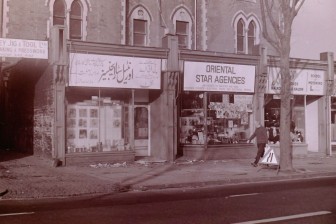
Mohammed Ayub founded the iconic record label Oriental Star Agencies in 1970 and it remained at the Balsall Heath sight...
Mohammed Ayub founded the iconic record label Oriental Star Agencies in 1970 and it remained at the Balsall Heath sight...
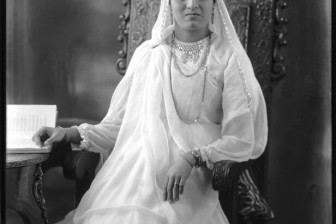
National Portrait GalleryThe National Portrait Gallery was founded in 1856 to encourage, through portraiture, the appreciation and understanding of the...
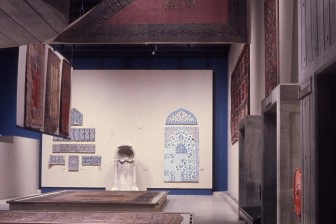
Held in 1976, with the theme of “Unity of Islam”, the festival had more than 6000 objects on display. The...
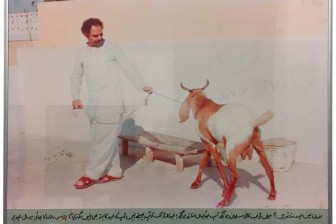
A multidisciplinary artist who has worked with various forms over the years, from performance art to calligraphy, to sculpture, his...
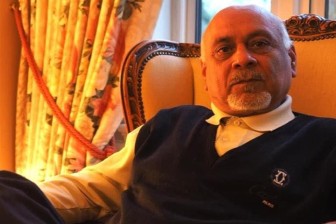
Mahmood Jamal was an author, poet and producer. In 1986, he translated and authored, ‘The Penguin Book of Modern Urdu...
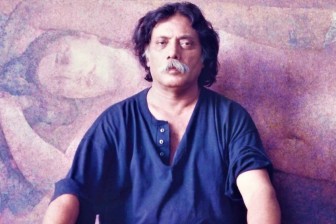
Jamil Naqsh was a British Pakistani artist, a modern expressionist and a traditional miniaturist, whose work revolved heavily around the...
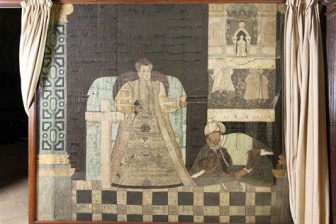
Commissioned by Bess of Hardwick, the sixteenth-century, 'True Faith and Mahomet' embroidery reflects both the friendly trading relationship between Elizabeth...
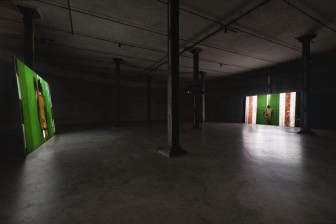
A Tate Modern Exhibition exploring the Israel/Palestine conflict.ABRAHAM ABRAHAM SARAH SARAH was filmed in subterranean chambers in Al-Khalil, or Hebron,...
2023
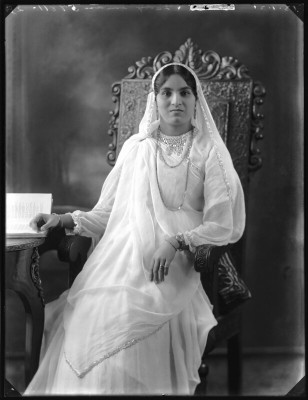
National Portrait Gallery
The National Portrait Gallery was founded in 1856 to encourage, through portraiture, the appreciation and understanding of the people who have made, and are making, British history and culture. Today it promotes engagement with portraiture to a wide-ranging public by conserving, growing and sharing the world’s largest collection of portraits spanning six centuries.
The collection has been organised into three main categories; the primary collection, photographs, and prints and drawings. In June 2023 the gallery reopened following three years of closure for the transformational Inspiring People project. The Inspiring People project comprises a complete re-presentation of the Collection, combined with a significant refurbishment of the building, the creation of public spaces, a more welcoming visitor entrance and public forecourt, and a new Learning Centre.
The Gallery has compiled a comprehensive list of Muslim Sitters and Muslim Artists within its collection.* As the collection rotates its portraits regularly, not all those listed will currently be on display. It is recommended that visitors check before planning a visit to avoid disappointment. If an item you are interested in viewing is not on display, it can be accessed for free by setting up an appointment with the Heinz Archive and Library by emailing archive@npg.org.uk or calling 0207 321 6617.
One of the highlights of the Muslim Sitters collection is an 18th century etching of Sake Dean Mahomed (1759 - 1851). The caption for his portrait states:
Sake Dean Mahomed (Deen Mahomed (né Mahomet))
Shampooing surgeon, restaurateur and author
Sitter in 2 portraits
Born into the Indian 'Nai' (barbers) caste, Mahomed served in the East India Company Army before emigrating to Ireland. He was the first Indian to publish a book in English with The Travels of Dean Mahomet, an autobiography. He converted from Islam to Anglicanism to marry Jane Daly because laws at the time prohibited Protestants marrying non-Protestants. Moving to London, he introduced 'Champi' head massage, practised by barbers in India, to Sir Basil Cochrane's new vapour bath at Portman Square. Eager to start his own business, he established Britain's first Indian restaurant in 1810. The 'Hindoostane Coffee House' was well received but financial struggles forced its closure by 1812. In a strategic move to Brighton, he established a medical practice popularising 'Champi' by promoting its health benefits to the British public. His services were so highly regarded that he was appointed 'Shampooing Surgeon' to George IV and William IV.
*There may be cases in which portraits have multiple sitters, only one of whom may be Muslim, or, similarly, multiple artists.
Relevant Projects:
Chasing Mirrors:Reflections on identity, art and culture is a three-year collaborative project by the National Portrait Gallery, supported by John Lyon's Charity. The project connected contemporary artists with Arabic-speaking young people in the London boroughs of Brent, Barnet and Ealing to explore portraiture and notions of identity and representation. Some of the outputs include, a photo essay on Arabic portraiture today, and an article about Ben Okri’s response to the portrait of Ayuba Suleiman Diallo, a freed West African slave. Part of this project included the careful consideration of traditional Muslim approaches to portraiture and representation.
The National Portrait Gallery in partnership with Canterbury’s Beaney House of Art and Knowledge developed the Mirror Mirror project. This was part of the National Skills Sharing Partnership Programme to curate a new exhibition inspired by the Canterbury Museums and Galleries Vision statement. As part of an examination of the Museums inclusivity and relevance to the communities they serve, the project investigated the statement “Who we were, who we are and who we want to be”. Part of this was the commissioning of a portrait of Dr Sinan Rawi, former Grand Imam of Canterbury Mosque and Lecturer of Electronics, Mathematics and Science at Kent University by artist Orianne Pierrepoint. Portrait artists and sitters announced for bold new project reinterpreting community representation in Canterbury’s Collection - Canterbury Museums & Galleries

Image: Anees Fatimah (née Karim), Lady Imam by Bassano Ltd
Used under Creative Commons License
Spotted an issue Report this record
Loading please wait