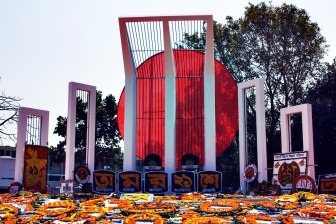
In 1999, a Shaheed Minar (Martyrs’ Monument) was installed in the southwest corner of Altab Ali Park. The monument consists...
In 1999, a Shaheed Minar (Martyrs’ Monument) was installed in the southwest corner of Altab Ali Park. The monument consists...
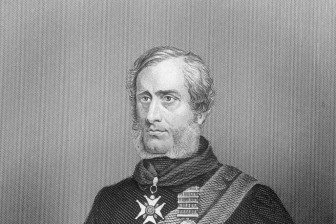
Sir Henry Havelock was a British general renowned for his involvement in India, particularly his successful recapture of Cawnpore from...
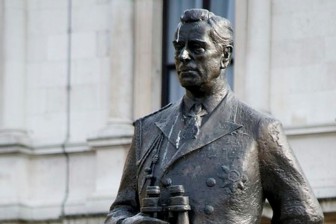
The bronze Mountbatten statue stands on Mountbatten Green, off Horse Guards Road in Whitehall, London. Depicted in his Admiral uniform...
23 March 1795 - 24 November 1857
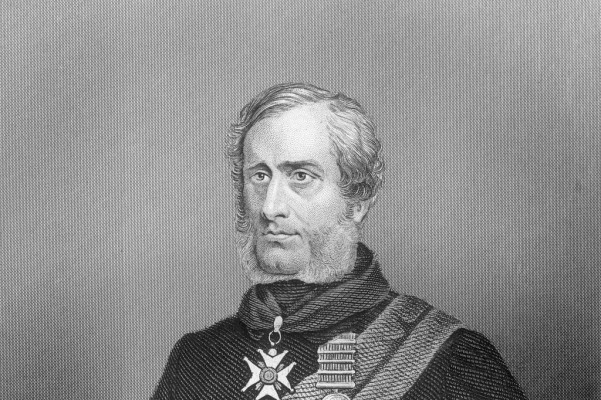
Sir Henry Havelock was a British general renowned for his involvement in India, particularly his successful recapture of Cawnpore from rebels during the Indian Rebellion of 1857.
The Indian Rebellion of 1857 holds great significance as one of the most pivotal protests against British rule before India gained its independence. It began on May 10, 1857, in the town of Meerut, when sepoys, Indian soldiers serving under the British East India Company's army, initiated a mutiny. The rebellion stemmed from various grievances, with the pivotal moment arising when the soldiers were asked to bite off paper cartridges greased with animal fat, specifically beef and pork. This act violated the religious beliefs of Hindus and Muslims, respectively. While certain regions like Bengal, the Bombay Presidency, and the Madras Presidency remained relatively calm, areas like Oudh (northeastern Uttar Pradesh) experienced the rebellion's spread, evolving into a patriotic revolt against the broader European presence.
The rebellion ultimately led to the dissolution of the East India Company in 1858, prompting the British to reorganise the army, financial system, and administration in India. From that point on, India was governed directly by the crown, establishing the new British Raj.
This historical context is important when looking at Sikh and Indian history. The inscription on the statue not only honours General Henry Havelock for his 1857 campaign, fighting against these rebels but also expresses gratitude to the Ferozepur Regiment of the Sikhs. The Ferozepur Regiment was formed after the conclusion of the First Sikh War in 1846, comprised of ex-soldiers from the Khalsa Army. Most of the regiment's recruits hailed from the cis-Sutlej region of Punjab, known as the Malwa area.
The Sikh soldiers were fighting in defence of the British, to prevent the restoration of Mughal rule in India, as they had previously experienced Mughal oppression. Additionally, these Sikh soldiers had little in common with the high-caste Hindu sepoys of the Bengal Army who rebelled. Their contributions were vital to the defeat of the rebels, a fact acknowledged by British generals such as James Outram.
In recognition of their service, General Havelock promoted all Indian ranks in the Ferozepur Regiment "a step in rank" and awarded the 1st Class I O.M. to the Subadar instead of a traditional promotion. As a special distinction for their conduct during the mutiny, the Ferozepur Regiment was granted the privilege of wearing a "red pagri" as their headdress, a tradition that continues to this day.

Jeea Chadha, A little History of the Sikhs
Spotted an issue Report this record
Loading please wait