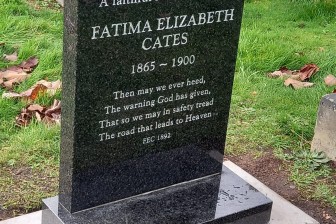
Fatima Elizabeth Cates (5 January 1865-29 October 1900) was probably the first woman to convert to Islam in Merseyside, who...
This collection brings together some of the main places associated with the life of Fatima Elizabeth Cates (1865-1900), who played a leading role in establishing Britain's first mosque community. She was the first woman to convert to Islam in this community in 1887, and she played a leading role in bringing other women to Islam in Merseyside. In what is probably the first obituary for a Muslima convert in Britain, the Manchester Daily Dispatch overstepped in 1900 when it described Fatima as "the first woman ever converted to Islam in England". Nonetheless, there are many genuine firsts to Fatima's name, which this collection highlights.
Fatima Elizabeth Cates (5 January 1865-29 October 1900) was probably the first woman to convert to Islam in Merseyside, who...
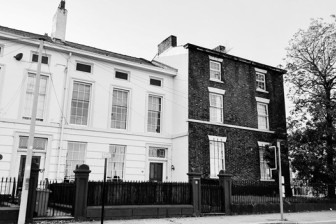
This was the residence of Fatima Elizabeth Cates (1865-1900), as listed in the 1891 Census, among the first women to...
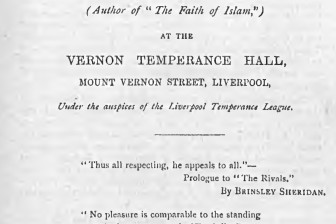
This was the site of the first Muslim prayer hall in the UK, which was formally established as the Liverpool...
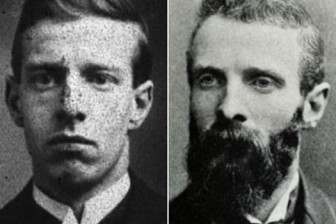
Fatima Elizabeth Cates (1865-1900) lived at "Granada", Victoria Road, in the town of West Kirby on the western side of...
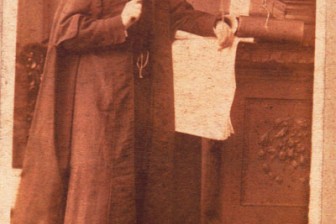
The Magistrates Courts (formerly known as the Police Courts) where the Muslim convert and solicitor William Henry Abdullah Quilliam (1856-1932)...
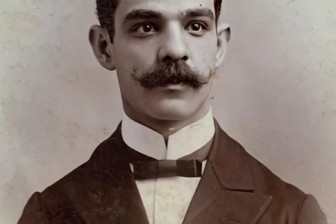
One nineteenth century couple are an early example of an intercultural Muslim marriage. They were Ali and Amy Mokaiesh who...
17 July 1887 - 1889
This was the site of the first Muslim prayer hall in the UK, which was formally established as the Liverpool Muslim Society on 17 July 1887 by three converts to Islam, William Henry "Abdullah" Quilliam (1856-1932), Fatima Elizabeth Cates (1865-1900), and James Ali Hamilton. All three had come out of the local Temperance movement, a global movement in the nineteenth century dedicated to reduction in and eventual prohibition of alcohol. It was housed at what was then 14 Mount Vernon Street, in a rented room that could only be accessed by a staircase to the rear from a sidestreet. At the time it was in a dilapidated state.
Quilliam had with other members of the Liverpool Temperance League opened a temperance hall at these premises at the end of 1886 for the "moral and social improvement" of the local poor. It offered free lectures, singing with piano accompaniment, readings and "magic lantern" shows (the first version of the slide show). It had meetings to encourage young people to pledge to give up alcohol for life.
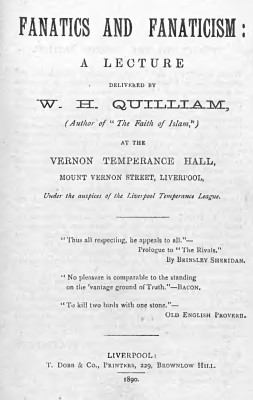
The first recorded Muslim proselytizing lecture was given here on 17 June 1887 called "Fanatics and Fanaticism", which was later published verbatim (the speech having been recorded by a shorthand writer) under the auspices of the Liverpool Temperance League.
The Liverpool Muslim Society worked along similar lines for the two years or so that it operated at this location. Its main activities were a prayer and study meeting on Friday evenings and on Sunday evenings it would hold public meetings. In the beginning these were advertised as non-sectarian but by May 1889 these were more explicitly described as Muslim. The Sunday public event was modelled on the Protestant Sunday Evensong in terms of form but with Islamic content. The format included the singing of hymns, prayers and passages from the Quran read out from the stage, and a sermon, with the congregation sat in rows of seats.
The chief aim of the Society was proselytizing Islam. In the period they were there, another 11 converts joined with the original three of Quilliam, Cates and Hamilton. It was hard work at first with no one else attending but the original three. We know something about the style of preaching involved. It was often indirect, deliberately not making Islam the main subject but rather approaching it through some other topic like teetotalism. It was often quite anti-Christian, contrasting Christianity unfavorably with Islam. And at other times it also touched on the rudiments of Islamic beliefs and teachings.
Once words got out about these meetings, they were often disrupted by local ruffians, and it was alleged this was sometimes at the instigation of hostile local priests. On leaving the meetings they could be abused or manhandled. Although it never deterred her from attending, Fatima Cates often had her face smeared with horse manure. On one occasion in the spring of 1889, a party of Christians stormed a prayer meeting armed with bludgeons and brickbats. One ruffian tried to throw half a brick at Abdullah Quilliam's head, but was prevented from doing so by James Bartholomew Jeffrey (1830-1905), who later converted to Islam that evening, ashamed of the intolerance of his fellow Christians.
After two years, the Liverpool Muslim Society was given notice to quit Mount Vernon Hall as their prejudiced landlord declared that he "would not have it occupied by any person who did not believe in Christ crucified as the Redeemer of the World."
All the streets and the all the buildings (except for the Sacred Heart Catholic Church about 45 metres north of the original site) were demolished long ago to make way for the Royal Liverpool University Hospital. The point on the map marks where England's first mosque community met and prayed together in the first two years of its existence.

H. Mahmood and Y. Birt, Our Fatima of Liverpool (Oldham: Beacon Books, 2023).
Spotted an issue Report this record
Loading please wait