A major site of employment which attracted Pakistani Muslims from Sheffield and Bradford. According to the newsreel source linked to...
Key
- Building
- Blue plaque
- People
- Walks / Tours / Trails
- Museum and Archive
- Heritage Project
- Organisation or Family History
- Cemeteries & graves
- Academia
- Publication and Articles
- Place
- Digital Resources
- Art & Culture
- Film and TV
- Mosques and Shrines
- Monuments /Memorials
Muslim History in Oxford
The Didicot Ordinance Depot at the Vauxhall Barracks, established during the First World War, was a major site of Pakistani...
The UK’s first halal farm, located in Cherwell. In 2002, Lutfi Radwan, a lecturer at the University of Oxford, and...
Site of the first mixed congregational prayer led by a woman (Prof Amina Wadud) in the UK, 18th October 2008....
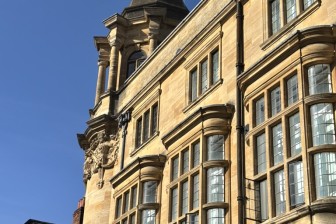
The Oxford Martin School was the sity of of the Oxford Indian Institute, which provided training to Indian civil servants....
Next to the Pitt Rivers Museum is the sire of current Oxford Islamic Society meeting space. There is a rich...
Lubna Arshad became the first Muslim Lord Mayor of Oxford, May 2023.
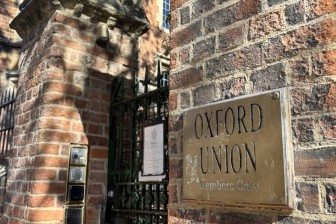
On 3 December 1964, Malcolm X addressed the Oxford Union when he partook in the 'Queen and Country' debate. He...
An anti-racist organisation founded by University of Oxford students in 1956. Its purpose was "To arouse among members of the...
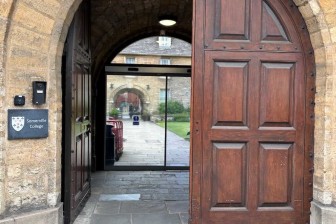
Somerville College houses archival materials related to the Oxford Majlis, which was a student society modeled after the Cambridge Majlis...
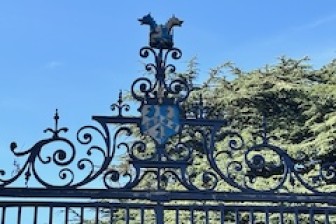
Brothers Wasif Ali and Naseer Ali Mirza became the first racialised minority and Indian students to be enrolled at Trinity...
Founded in 1678, the Ashmolean Museum features an Islamic and Middle East Gallery which exhibits a selection of artifacts made...
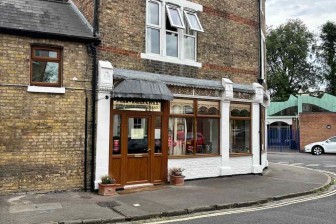
Al Shami restaurant was the site of Oxford's first halal butchers, and was established in the 1960s. Prior to its...
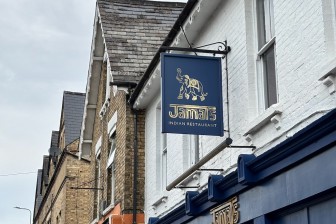
Jamal's Tandoori Restaurant has been a significant place of networking for Muslims across the city. During the 1950s and 1960s,...
Founded in 1921, City of Oxford Motor Services Limited was an important site of employment in the 1950s and 1960s...
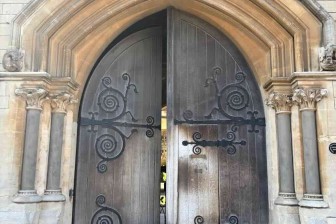
In trying to identify some of the earliest Muslim students to matriculate at the University after the enactment of the...
A mosque and welfare house opened in 1984 to primarily serve the Deobandi sect of Muslims living in Oxford. The...
The Oxford Centre for Islamic Studies was founded in 1985 as a centre for the advanced study of Islam and...
Central Oxford Mosque remains one of the largest places of workship for Muslims in the city. The mosque was founded...
This was an Ahmadiyya Mosque established in the 1980s. It was located on Cowley Road, but the precise location is...
EMBS was founded in 1988 as a self-help business service for racialised minority groups in Oxford. One of its founders...
Founded in 1968, the Bath Street mosque was the first formal site of worship for Oxford's Muslim community, and largely...
The Bangladesh Islamic Centre was founded in the 1980s by the first generation of Bangladeshis to settle in Oxford. Today,...
The association, which was founded in the 1960s by Sher Afzal Khan, was one of the first of its kind...
1896
Somerville College
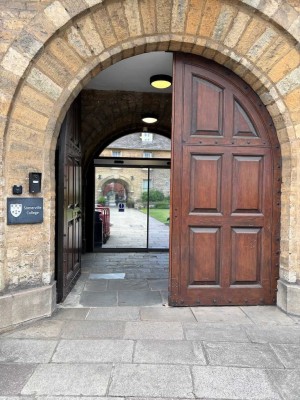
Somerville College houses archival materials related to the Oxford Majlis, which was a student society modeled after the Cambridge Majlis and the Oxford Union. It was a broadly left-wing and anti-imperialist forum for students who came from South Asia, including India, Pakistan, Bangladesh and Sri Lanka. The society hosted debates and social events, with notable speakers including Gandhi and Rabindranath Tagore. Members include Liaquat Ali Khan, who became the first Prime Minister of Pakistan and was heavily involved with the Indian independence movement.
Kamal Hossain, who drafted the first constitution for Bangladesh, reflected on the history of the Majlis in a magazine published in 1986. In it, he highlighted the difficulty with which leaders of independence movements (including him) negotiated their experiences as students at Oxford with the university’s position as an imperial centre. Kamal suggested that these leaders would often discuss their time in Oxford with ambivalence. This poses interesting questions about the extent to which networking and connection-making affected the politicisation of these individuals.

Collections this record belongs to
Sources and Attribution
See: Anuj Mishra, 'Can you revive something that’s long dead?: the Oxford Majlis', Cherwell (1st December 2023). Also see: 'The Majlis in the Mid-Fifties', by Kamal Hossain.
Aleena Din - Aleena is a historian of gender, class and race in modern Britain. Her DPhil research, which was completed at Balliol College and the Faculty of History in 2022, focuses on the migration, settlement and labour experiences of working-class British-Pakistani women who settled in Middlesbrough and Oldham between 1962 and 2002. Aleena is the co-investigator of the community history project 'A Muslim History of Oxford', in collaboration with the national heritage organisation 'Everyday Muslim'. In addition, she is a postdoctoral research associate for the digital humanities project, 'Remaking Britain: South Asian Connections and Networks, 1830 to the Present' at the University of Bristol (2025).
Licensing
Spotted an issue Report this record