1
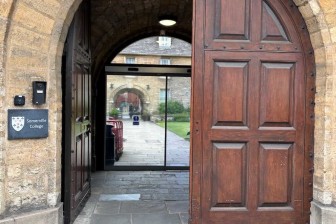
Somerville College houses archival materials related to the Oxford Majlis, which was a student society modeled after the Cambridge Majlis...
Discover the wide-ranging histories of Muslims who settled across the city of Oxford from the late nineteenth century to the present.
This trail is an output of 'A Muslim History of Oxford', a community history project in partnership with the University of Oxford's Community History Hub and Everyday Muslim. The trail was developed in consultation with Uncomfortable Oxford, an Oxford-based social enterprise and tour guide organisation.
Image credit: POX0562439, Notices displayed at Central Oxford Mosque in Bath Street, 2009, Courtesy of the Oxfordshire Historical Centre.
Somerville College houses archival materials related to the Oxford Majlis, which was a student society modeled after the Cambridge Majlis...
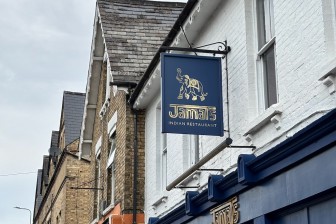
Jamal's Tandoori Restaurant has been a significant place of networking for Muslims across the city. During the 1950s and 1960s,...
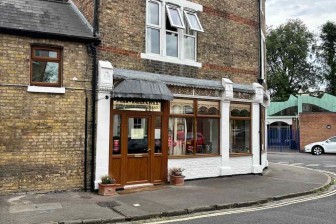
Al Shami restaurant was the site of Oxford's first halal butchers, and was established in the 1960s. Prior to its...
Founded in 1921, City of Oxford Motor Services Limited was an important site of employment in the 1950s and 1960s...
Founded in 1678, the Ashmolean Museum features an Islamic and Middle East Gallery which exhibits a selection of artifacts made...
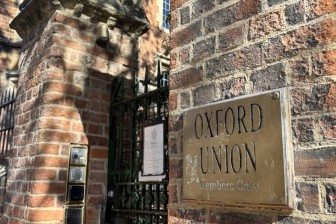
On 3 December 1964, Malcolm X addressed the Oxford Union when he partook in the 'Queen and Country' debate. He...
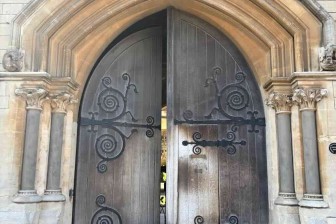
In trying to identify some of the earliest Muslim students to matriculate at the University after the enactment of the...
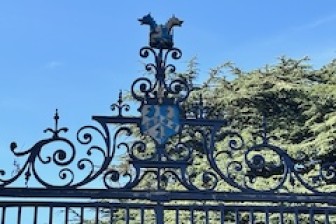
Brothers Wasif Ali and Naseer Ali Mirza became the first racialised minority and Indian students to be enrolled at Trinity...
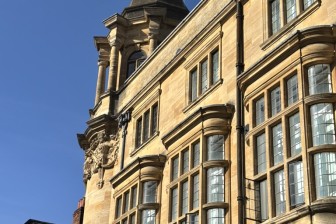
The Oxford Martin School was the sity of of the Oxford Indian Institute, which provided training to Indian civil servants....
Next to the Pitt Rivers Museum is the sire of current Oxford Islamic Society meeting space. There is a rich...
4 December 1877
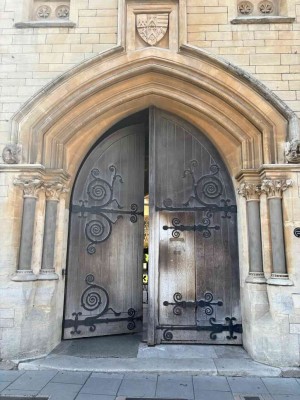
In trying to identify some of the earliest Muslim students to matriculate at the University after the enactment of the Universities Test Act in 1871 – which ended religious discrimination at the universities of Oxford, Cambridge and Durham – we realised that student records did not include information about religious background. It meant adopting a somewhat crude approach of using surnames to identify Muslim students, which posed ethical problems yet seemed to be the only viable way in which we could account for the presence of Muslims at the university.
Amongst the earliest names we encountered was Ahsan Uddin Ahmed. Ahmed was born in Calcutta and was the third son of Nawab Ameer Ali of Khanbahadur. He was admitted to Balliol College on 4 December 1877, aged 18. We know little about Ahmed’s life at the college, and there is no indication that he left the university with a degree. Nonetheless, his matriculation is one of the few concrete pieces of evidence we have about the long presence of Muslims in Oxford.

OUA/UR 1/1/9, Matriculation form Ahsan Ahmed, Balliol 1877, Bodleian Library, Oxford University Archives
Aleena Din - Aleena is a historian of gender, class and race in modern Britain. Her DPhil research, which was completed at Balliol College and the Faculty of History in 2022, focuses on the migration, settlement and labour experiences of working-class British-Pakistani women who settled in Middlesbrough and Oldham between 1962 and 2002. Aleena is the co-investigator of the community history project 'A Muslim History of Oxford', in collaboration with the national heritage organisation 'Everyday Muslim'. In addition, she is a postdoctoral research associate for the digital humanities project, 'Remaking Britain: South Asian Connections and Networks, 1830 to the Present' at the University of Bristol (2025).
Spotted an issue Report this record
Loading please wait