1
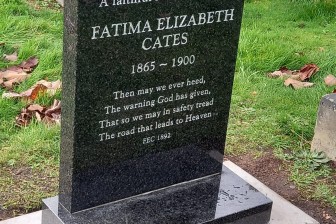
Fatima Elizabeth Cates (5 January 1865-29 October 1900) was probably the first woman to convert to Islam in Merseyside, who...
This collection brings together some of the main places associated with the life of Fatima Elizabeth Cates (1865-1900), who played a leading role in establishing Britain's first mosque community. She was the first woman to convert to Islam in this community in 1887, and she played a leading role in bringing other women to Islam in Merseyside. In what is probably the first obituary for a Muslimah convert in Britain, the Manchester Daily Dispatch overstepped in 1900 when it described Fatima as "the first woman ever converted to Islam in England". Nonetheless, there are many genuine firsts to Fatima's name, which this collection highlights.
Fatima Elizabeth Cates (5 January 1865-29 October 1900) was probably the first woman to convert to Islam in Merseyside, who...
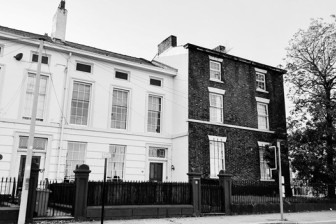
This was the residence of Fatima Elizabeth Cates (1865-1900), as listed in the 1891 Census, among the first women to...
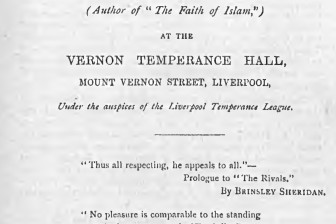
This was the site of the first Muslim prayer hall in the UK, which was formally established as the Liverpool...
Fatima Elizabeth Cates (1865-1900) lived at "Granada", Victoria Road, in the town of West Kirby on the western side of...
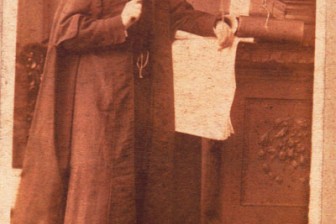
The Magistrates Courts (formerly known as the Police Courts) where the Muslim convert and solicitor William Henry Abdullah Quilliam (1856-1932)...
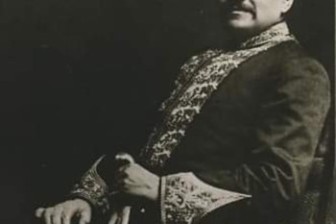
Mustapha Karsa (pictured circa 1900) was born in Damascus in around 1848 to a wealthy landowning family. In 1880-1, Karsa...
1896 - 29 October 1900
Fatima Elizabeth Cates (1865-1900) lived at "Granada", Victoria Road, in the town of West Kirby on the western side of the Wirral Peninsula, with her son, Hubert Haleem (1896-1968) from 1896 until her death at the age of 35. She supported herself by keeping the property as a boarding house and letting furnished apartments. She was unwell in the last two years of her life, and was no longer a regular visitor to the Liverpool Muslim Institute, now some twenty miles distant, but in this period she did paint a vase, decorating it with flowers and verses from the Quran, which she presented to the Institute, where it was displayed on the Institute's stage.
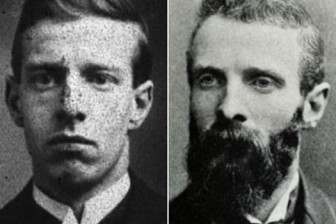
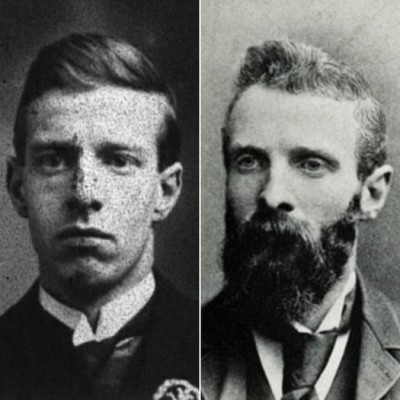
Although at the time of her death it was claimed that Hubert Haleem was the son of her late husband, Hubert Henry Cates (1856-95), this was an impossibility as he was born seventeen months after his father's death at sea in May 1896. Circumstantial evidence points strongly to Abdullah Quilliam being his father, having taken Fatima as a secret, third wife. After Fatima's death, Quilliam became Hulbert Haleem's guardian, and he was an equal beneficiary in Quilliam's will along with all his other surviving children. The attached picture shows the similarities between father and son: Hubert on the left in his mid-twenties and Quilliam on the right in his mid-thirties.

H. Mahmood and Y. Birt, Our Fatima of Liverpool (Oldham: Beacon Books, 2023).
Spotted an issue Report this record
Loading please wait