-(1)-overview.jpg)
Centre for the Study of Islam in the Contemporary World (Al Waleed Centre), University of Edinburgh
AcademiaThe HRH Prince Alwaleed Bin Talal Centre for the Study of Islam in the Contemporary World (Alwaleed Centre), is an...
The HRH Prince Alwaleed Bin Talal Centre for the Study of Islam in the Contemporary World (Alwaleed Centre), is an...
The Centre for the Study of Islam in the UK (Islam UK Centre), based in the School of History, Archaeology...
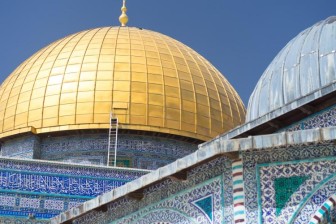
The Centre of Islamic Studies at the School of Oriental and African Studies (SOAS), University of London is focused on...
The Oxford Centre for Islamic Studies is involved in the study of all aspects of the advanced study of Islam,...
-overview.jpg)
The Prince Alwaleed Bin Talal Centre of Islamic Studies, University of Cambridge.Based in the Faculty of Asian and Middle Eastern...
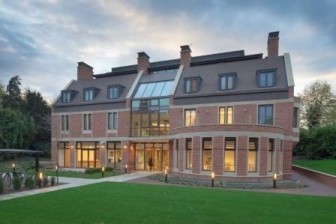
The Woolf InstituteThe Woolf Institute conducts teaching, research and outreach, on relations between followers of the Abrahamic Faiths; Jews, Christians...
The Institute for Middle Eastern and Islamic Studies (IMEIS) at The University of Durham, is based within the School of...
The Aziz FoundationThe Aziz Foundation is a family charitable foundation. Its flagship programme is the Masters Scholarships programme which awards...
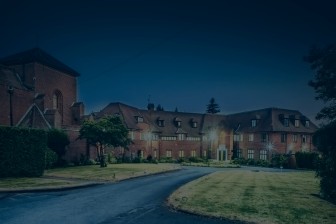
Al-Mahdi InstituteThe Al-Mahdi Institute (AMI) assimilates traditional Twelver seminary scholarship with modern approaches to the study of Islam. The Director...
-overview.jpg)
Cambridge Muslim CollegeCambridge Muslim College is an independent higher education institution, focused on developing and disseminating Muslim thought leadership based...
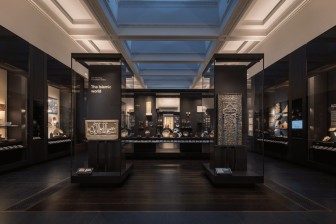
British MuseumFounded in 1753, the British Museum is the world’s first national public museum to cover all fields of human...
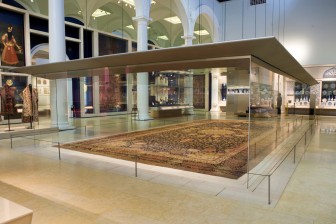
The Victoria and Albert MuseumThe V&A is the world’s leading museum of art, design and performance. Some of the oldest...
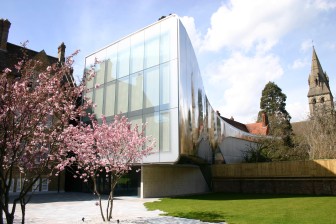
Middle East Centre Archive (MECA): Oxford University: St Anthony's CollegeThe Middle East Centre Archive was founded in 1961 by Elizabeth...
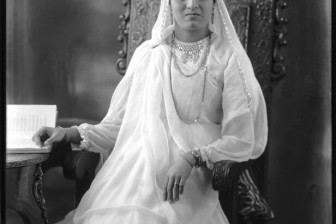
National Portrait GalleryThe National Portrait Gallery was founded in 1856 to encourage, through portraiture, the appreciation and understanding of the...
The Brighton and Hove Museums is a trading name for the Royal Pavilion & Museums Trust. The Trust runs three...
Draft on master document - waiting to check with staff at museum
Founded in 1683, The Ashmolean is the University of Oxford’s Museum of Art and Archaeology. The closest place for prayer...
2023
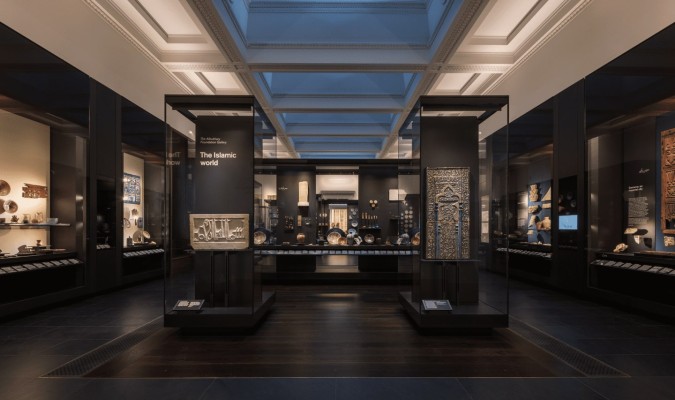
Founded in 1753, the British Museum is the world’s first national public museum to cover all fields of human knowledge. Today, the museum holds over 100,000 historical and contemporary objects representing Islam across the globe. These objects are spread across curatorial departments; Middle East (where the biggest share of objects can be found), Africa, Oceania and the Americas, Asia, Britain, Europe and Prehistory, Coins and Medals, Egypt and Sudan, and Prints and Drawings. Amongst a myriad of other items, the collection includes: archaeological material, contemporary art, paintings and vessels made for royal patrons, and evocative objects of daily life. The collection also includes video and audio resources that can be found here.
If visitors are interested in finding out more about specific objects, the majority of the collection has been digitised and can be explored here.
Any of the objects in the Middle East collection can be accessed for free to view by setting up an appointment with the study room here.
The British Museum’s founding collection is made up of objects from Sir Hans Sloane, who bequeathed his collection to the nation in his will. This founding collection included objects from the Islamic world, for example, an important group of Persian amulets with Quranic descriptions that were translated for Sloane by Suleiman Diallo - an enslaved muslim from Bundu (Senegal). Read more about the history of the collection here.
The Albukhary Foundation Gallery, funded by the Albukhary Foundation, highlights the British Museum’s Islamic collection. The collection can be found in Gallery 42 and 43, comprising a broad and diverse spectrum of the material culture produced in the Islamic world from the 7th century to the present day. It includes a series of regions stretching from West Africa to Southeast Asia. The collection has been catalogued here.
Gallery 42 covers the period up to 1500 through chronological and thematic displays that are permanent, featuring topics such as global trade and exchange and luxury arts. Gallery 43 covers the period from 1500 to the present day, and features a rotating display of courtly culture, textiles and jewellery, artists books and contemporary art.
A relevant past exhibition is ‘Hajj: Journey to the Heart of Islam’. Held in 2012, it was the world's first major exhibition showcasing the story, visually and textually, of the Hajj. The exhibition displayed 200 objects, from 40 public and private collections in 14 countries, largely drawing from the Khalili collection. Alongside these objects, the exhibition also displayed miniature pieces from Ahmed Mater's Magnetism.

https://www.britishmuseum.org/
Reference:
Akbarnia, Ladan., Porter, Venetia., Suleman, Fahmida., Klink-Hoppe, Zeina., Merat, Amandine. The Islamic World: A History in Objects. United Kingdom: WW Norton, 2018.
The Making of the Albukhary Foundation Gallery of the Islamic World. United Kingdom: British Museum, 2018.
Spotted an issue Report this record
Loading please wait