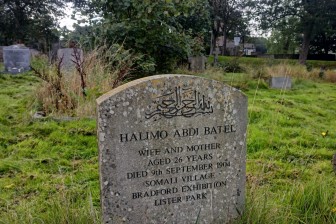
Halimo Abdi Betal (1878-1904) is probably the first Muslim to have been buried in Bradford; she died at the young...
Throughout the nineteenth and early twentieth centuries, imperial nations like Britain, France, Germany, Belgium, the United States and other nations engaged in the display of colonized and racialized peoples, who were exoticised for the purposes of entertainment, education, and for the purported advancement of scientific knowledge, particularly ethnology and anthropology, which did much to underpin the racializing colonial imagination. Muslim peoples were also part of these displays.
These displays of colonized peoples, which some scholars have called "human zoos", were an important part in the popularizing and reinforcing of racist ideas. They also highlight the long-distance travel of people and ideas through imperial systems as exoticized "Others" to the centres of imperial power. First in the great imperial capitals like London and later to provincial cities like Bradford.
What is called the "human zoo" first emerged in 1875, which promoted three features of (i) exoticism, playing up what was different or strange to Europeans, (ii) physical characteristics such as beauty and strength, based on racialized ideas of authentic ethnographic types, and (iii) picturesque customs and practices that would entertain the crowds (music, dance, mock fighting and procession with animals). The human zoo was not altogether new but drew on the centuries-old practice of bringing non-European peoples to Europe, the early nineteenth-century freak shows, the great imperial exhibitions and American circus trade of the mid-nineteenth century. Carl Hagenbeck (1844-1932), the son of an exotic animal importer and owner of a menagerie, displayed his first native peoples, the Lapps (Sami) in 1875, but in the course of his long career he drew on the peoples of Africa, Asia and the Americas. Hagenbeck was one of a number of entrepreneurs who acted as middlemen to bring colonized peoples to be displayed in Europe and North America.
These human zoos played an active role in shaping how white populations understood the "Other", and were influenced by the industrial and colonial culture of host nations, including Britain. Muslims also numbered among these colonized peoples who were put on display in nineteenth- and twentieth-century Britain, and some instances of these form part of this collection.
It is important to understand these exhibitions of colonial subjects not merely as a consequence of imperialism but also as playing an active role in normalising notions of civilizational and race superiority at a popular level: hundreds of thousands of people visited these native villages in places like Sydenham in London, and Bradford. Where possible, it is also important to recover from the colonial archive the agency and dignity of these Muslim peoples who were put on display despite the obvious constraints under which they operated.
Halimo Abdi Betal (1878-1904) is probably the first Muslim to have been buried in Bradford; she died at the young...
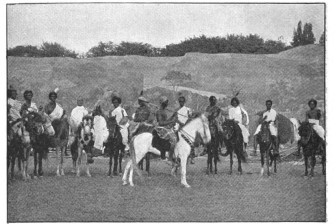
In late April 1895, a group of sixty-six Somalis arrived at the Tilbury Docks aboard the Clan Ross. They came...
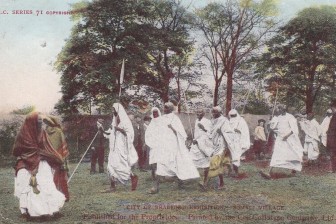
In 1904, the great Bradford Exhibition was held in Lister Park. It was held to inaugurate the newly-built Cartwright Hall,...
Founded in 1678, the Ashmolean Museum features an Islamic and Middle East Gallery which exhibits a selection of artifacts made...
1678
Founded in 1678, the Ashmolean Museum features an Islamic and Middle East Gallery which exhibits a selection of artifacts made in the Islamic world during a period of more than 1,000 years. Museums are not neutral spaces and it is critical it analyse the long-lasting effects of Oxford as an imperial centre and site of knowledge production. What is the significance of having historical materials related to the history of Islam in Oxford? How do locals and scholars interact with them?

Aleena Din - Aleena is a historian of gender, class and race in modern Britain. Her DPhil research, which was completed at Balliol College and the Faculty of History in 2022, focuses on the migration, settlement and labour experiences of working-class British-Pakistani women who settled in Middlesbrough and Oldham between 1962 and 2002. Aleena is the co-investigator of the community history project 'A Muslim History of Oxford', in collaboration with the national heritage organisation 'Everyday Muslim'. In addition, she is a postdoctoral research associate for the digital humanities project, 'Remaking Britain: South Asian Connections and Networks, 1830 to the Present' at the University of Bristol (2025).
Spotted an issue Report this record
Loading please wait