1
The Empire and Partition Collection and Trail were created for Everyday Muslim's Remembering Partition project to raise awareness of the...
The Empire and Partition is a collection of essays written by academics and historians to tell the shared history of the British Empire in India and the partition of India in 1947.
The collection tells the story of this story starting in 1600 when Queen Elizabeth I granted a charter on December 31, 1600, forming the East India Company (EIC). The company traded spices, textiles, and goods in India, gaining influence through territorial and tax control and even a private army.
Over time, the EIC became a ruling power in parts of India, exploiting India's resources, committing atrocities against Indian civilians and employing a "divide-and-rule" strategy, which created tension between ethnic and religious groups. Following the Indian Uprising of 1857, the British government took control of India from the company, turning it into a British colony.
By the mid-1900s, the movement for Indian independence grew stronger and was led by figures such as Mohandas Karamchand Gandhi, Jawaharlal Nehru and Muhammad Ali Jinnah. However, there were significant disagreements about the outcome of Indian independence. Jinnah wanted to secure rights for Muslims and, by 1940, demanded a separate nation for India’s Muslims, whilst Gandhi supported a united India. The British government eventually agreed to grant India its freedom and, later, accepted Jinnah’s demands.
On 15th August 1947, India gained independence, and the country was split into two separate nations: Hindu-majority India and Muslim-majority East and West Pakistan. Pakistan gained its independence a day earlier, on 14th August 1947.
Lord Louis Mountbatten- the last Viceroy of India- played a crucial role in overseeing the country's independence. Sir Cyril Radcliffe was appointed to draw a border between India and Pakistan; the contentious boundary is known as the ‘Radcliffe Line’. Later in 1971, East Pakistan declared its Independence from West Pakistan, and Bangladesh was born. The partition of India was hasty, resulting in the largest mass migration in history, communal violence, the tragic loss of lives and the displacement of millions of people.
Disclaimer: Views expressed in this content are solely those of the author and do not necessarily represent the opinions or beliefs of any organisation involved in the Remembering Partition project.
The Empire and Partition Collection and Trail were created for Everyday Muslim's Remembering Partition project to raise awareness of the...
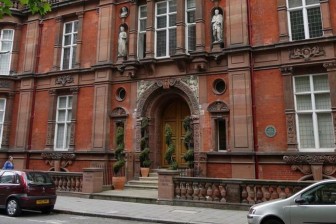
Caxton Hall is a location in which many momentous events occurred, including the assassination of Sir Michael O'Dwyer, the campaign...
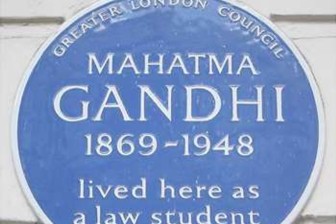
Mohandas Karamchand Gandhi born 2nd of October 1869, more commonly known as Mahatma Gandhi, was born in Porbandar, Kanthiawar, India....
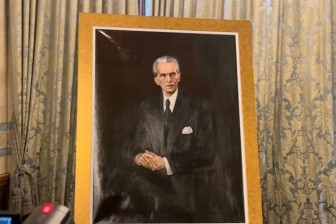
Muhammad Ali Jinnah (1876-1948), also revered as Quaid-i-Azam (Great Leader), was a barrister and politician who played a pivotal role...
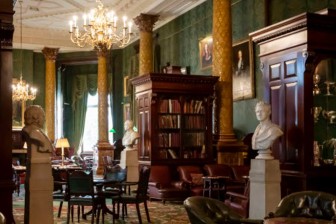
The National Liberal Club (NLC) was established by William Gladstone in 1882, to provide club facilities for Liberal Party campaigners. ...
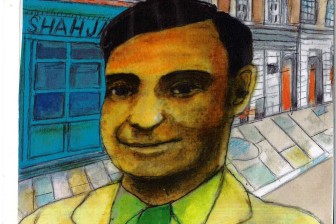
Ayub Ali was born 1st January in 1880, (precise date of birth unknown) in Sylhet, Bangladesh, then a part of...
1 January 1920
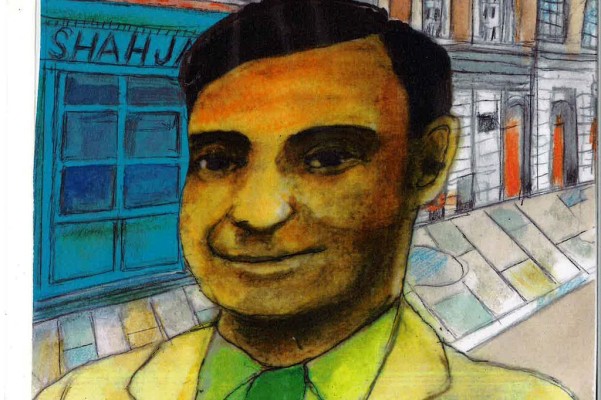
Ayub Ali was born 1st January in 1880, (precise date of birth unknown) in Sylhet, Bangladesh, then a part of British India. Many Bengali men took the 1st of January as their birth date because either they didn’t know or didn’t care about such things, however, it was important to have one when applying for documents e.g. passports etc. He made his way to London around 1st January 1920 (again, precise date unknown) via the United States, having jumped ship in 1919. The precise route and reasoning as to his voyage is unknown.
When he came to England, he set up the Shah Jalal Restaurant at 76 Commercial Street, in the heart of the East End. The food in England was so revolting that many Bengali men were extremely grateful to go somewhere where they could get something decent to eat that wasn’t bland and boring. The café served as a hub for the early Bengali community there.
Ayub Ali took care of Lascars that had jumped ship and were therefore wanted by the ship companies for being in breach of their contract. He gave them free food and shelter and helped them register at India House and the local police station. When they got jobs, many would go on to rent rooms in his house in Sandy’s Row, known locally as ‘Number Thirteen’, where they would continue to receive support from Ali in the form of letter reading and writing and help with remittances to India. He was known by them as ‘Master’ because of his education and the way he had with words.
Ayub Ali Master formalised his social welfare work among Lascars when he founded the Indian Seamen’s Welfare League with Shah Abdul Majid Qureshi in 1943: “To remove the long felt want of the Indian seamen in London to have a center of friendly meeting and recreation of their own, a Club has been recently organised under the name of the ‘Indian Seamen’s Welfare League’. The aim and object of this Club is purely to provide social amenities for the Indian seamen and their friends”.
The organisation had its office in Christian Street and its stated aim was ‘to look after the economic, social and cultural interests of Indian seamen, to provide them with recreation in Great Britain and to communicate with their relatives in India in the event of any misfortunes befalling them’
Letter from Master Ali on behalf of the Indian Seamen’s Welfare League to Clan Line, St Mary Axe, EC3, 22 June 1943. " I am…directed to invite you to a memorial meeting in honour of the Indian seamen who have lost their lives in the course of their duties in this war. The meeting will be held under the auspices of the Indian Seamen’s Welfare League at 4 pm on Sunday, 4th July 1943, at Kings Hall, Commercial Road, Aldgate, London, and E.1. Knowing your interest in the welfare of the Indian seamen, the Welfare League will highly appreciate your presence at such a meeting and will remain grateful for your encouragement and support."
Because Ayub Ali Master was politically active, he was kept under the beady eyes of the authorities; an Indian Political Intelligence file titled ‘Indian Seamen: Unrest and Welfare’ includes numerous government surveillance and police reports on the activities of Lascars in Britain in the 1930s and 1940s, focusing particularly on their strikes and other forms of activism against their pay and conditions.
Ayub Ali Master was also involved with the East End branch of the India League (serving as treasurer at one point) whose meetings were frequently held in his café, and is recorded as present at the 1943 protest meeting of the Jamaat-ul-Muslimin at their dismissal from the East London Mosque by its trustees.
The Indian Seamen’s Welfare League changed its name from the Indian Seamen’s Union. They did not want the organisation to appear too political – in part because they wanted recognition from ship-owners and in part to avoid attention from the police. A letter from Ayub Ali to the Clan Line is a further indication of the organisation’s attempts to build bridges between lascars and their bosses. Despite this, however – and despite Ali’s insistence in the letter of the purely social nature of the League – the inevitable politicisation of an organisation concerned with the welfare of lascars is evident in the very fact of a meeting ‘in honour of the Indian seamen who have lost their lives in the course of their duties in this war’ and who were no doubt labouring under particularly harsh and dangerous conditions in the employ of the ship companies. The organisation’s advisory committee, who worked in the background, included well-known political activists in the India League and Swaraj House – such as D. B. Vakil, Surat Alley, Tarapada Basu, B. B. Ray Chaudhuri, Mrs Haidri Bhattacharji and Said Amir Shah – also casting doubt on its self-description as non-political. So there was no getting away that the Indian Seamen’s Union meant business when it came to social justice.
Ayub Ali Master was also president of the UK Muslim League, reportedly mixing with Liaquat Ali Khan and Jinnah. (The founding fathers of Pakistan). He saw his beloved Bengal divided by the British before they quit India in 1947.
Later when many more Bengalis started travelling to the U.K., he went on to start up a travel agency business, Orient Travels, at 13 Sandy’s Row, which later moved to 96 Brick Lane. Ayub Ali Master reportedly died on 1st April 1980 in Bangladesh, his final resting place his home .

Article by Julie Begum https://danseastendportraits.wordpress.com/2016/12/19/1980-ayub-ali-master/ Image copyright Dan Jones
Spotted an issue Report this record
Loading please wait