1
The Empire and Partition Collection and Trail were created for Everyday Muslim's Remembering Partition project to raise awareness of the...
The Empire and Partition is a collection of essays written by academics and historians to tell the shared history of the British Empire in India and the partition of India in 1947.
The collection tells the story of this story starting in 1600 when Queen Elizabeth I granted a charter on December 31, 1600, forming the East India Company (EIC). The company traded spices, textiles, and goods in India, gaining influence through territorial and tax control and even a private army.
Over time, the EIC became a ruling power in parts of India, exploiting India's resources, committing atrocities against Indian civilians and employing a "divide-and-rule" strategy, which created tension between ethnic and religious groups. Following the Indian Uprising of 1857, the British government took control of India from the company, turning it into a British colony.
By the mid-1900s, the movement for Indian independence grew stronger and was led by figures such as Mohandas Karamchand Gandhi, Jawaharlal Nehru and Muhammad Ali Jinnah. However, there were significant disagreements about the outcome of Indian independence. Jinnah wanted to secure rights for Muslims and, by 1940, demanded a separate nation for India’s Muslims, whilst Gandhi supported a united India. The British government eventually agreed to grant India its freedom and, later, accepted Jinnah’s demands.
On 15th August 1947, India gained independence, and the country was split into two separate nations: Hindu-majority India and Muslim-majority East and West Pakistan. Pakistan gained its independence a day earlier, on 14th August 1947.
Lord Louis Mountbatten- the last Viceroy of India- played a crucial role in overseeing the country's independence. Sir Cyril Radcliffe was appointed to draw a border between India and Pakistan; the contentious boundary is known as the ‘Radcliffe Line’. Later in 1971, East Pakistan declared its Independence from West Pakistan, and Bangladesh was born. The partition of India was hasty, resulting in the largest mass migration in history, communal violence, the tragic loss of lives and the displacement of millions of people.
Disclaimer: Views expressed in this content are solely those of the author and do not necessarily represent the opinions or beliefs of any organisation involved in the Remembering Partition project.
The Empire and Partition Collection and Trail were created for Everyday Muslim's Remembering Partition project to raise awareness of the...
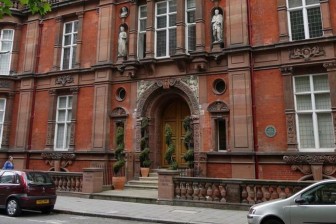
Caxton Hall is a location in which many momentous events occurred, including the assassination of Sir Michael O'Dwyer, the campaign...
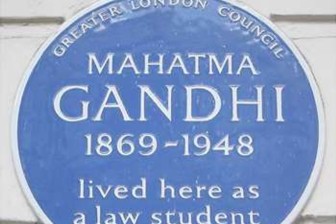
Mohandas Karamchand Gandhi born 2nd of October 1869, more commonly known as Mahatma Gandhi, was born in Porbandar, Kanthiawar, India....
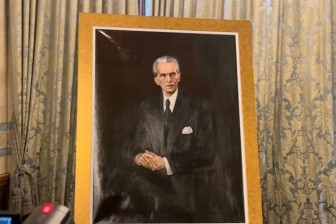
Muhammad Ali Jinnah (1876-1948), also revered as Quaid-i-Azam (Great Leader), was a barrister and politician who played a pivotal role...
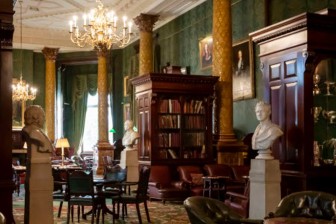
The National Liberal Club (NLC) was established by William Gladstone in 1882, to provide club facilities for Liberal Party campaigners. ...
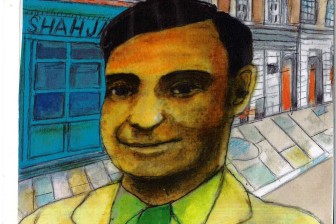
Ayub Ali was born 1st January in 1880, (precise date of birth unknown) in Sylhet, Bangladesh, then a part of...
1882
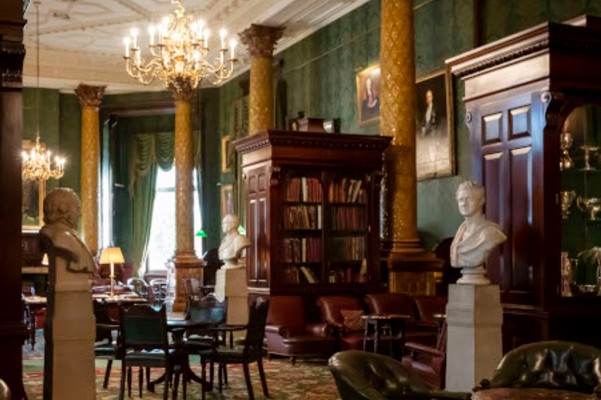
The National Liberal Club (NLC) was established by William Gladstone in 1882, to provide club facilities for Liberal Party campaigners. William Gladstone was a British Liberal politician who in a career lasting over sixty years, served as Prime Minister four separate times (1868–1874, 1880–1885, February–July 1886 and 1892–1894).
The NLC is housed in an impressive neo-Gothic building over the Embankment of the river Thames, and was designed by Alfred Waterhouse. The building is located at No. 1 Whitehall Place, close to the Houses of Parliament, the Thames Embankment and Trafalgar Square. At the end of the hall, opposite the main entrance, is the principal staircase, which rises from the basement to the first floor. It is of elliptical form, and the steps, which are 8 feet wide, are supported at either end by an outer and an inner wall.
The tower staircase ceases when it reaches the fourth floor, but from that point, a smaller spiral leads to the belvedere, at the summit of the tower, from which an almost unique view can be obtained of the river and its bridges towards St. Paul's.
The staircase is a very special architectural feature of the clubhouse, making the centre of the building the chief point of artistic display.
The building also possesses an oil painting of Maharaja Duleep Singh, the last King of Lahore, a copy of the 1854 Oil Painting of Maharaja Duleep Singh by Franz Xavier Wilnterhalter.
Winterhalter was famous for paintings of royalty in the mid-nineteenth century. Among his many regal sitters was Queen Victoria. Winterhalter first visited England in 1842, and returned several times to paint Victoria, Prince Albert and their growing family, painting at least 120 works for them, including the oil painting of Maharaja Duleep Singh in 1854.
Many of his paintings remain in the Royal Collection, on display to the public at Buckingham Palace and other royal residences. The original of this painting is located at Osborne House, Isle of Wight (Queen Victoria’s Summer residence), and is likely that the painting at the NLC was painted by one of Winterhalter’s apprentices, who was taught to paint by copying the brush strokes of the master whilst he worked.
The painting's place at the top of the staircase has revealed an admiration by the leaders of the Liberal Party at the time for the political and government structures in the Kingdom of PunjabAt this point it was ruled by the Sikh Maharaja Ranjit Singh.

Author: Rav Singh, A Little History of Sikhs Sources: http://www.victorianweb.org/art/architecture/clubs/10.html
Wikepedia articles - Gladstone, National Liberal Club, Franz Xavier Winterhalter
Spotted an issue Report this record
Loading please wait