This dissertation was submitted as part of the Tripos Examination in the Faculty of History, Cambridge University, April 2016.
This dissertation was submitted as part of the Tripos Examination in the Faculty of History, Cambridge University, April 2016.
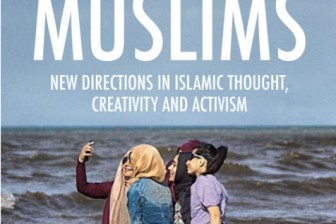
Explores how a new generation are redefining what it means to be a Muslim in Britain todayA new generation of...
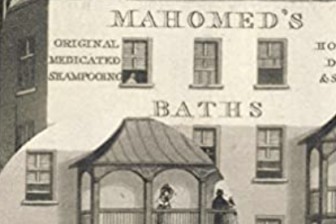
What did Britain look like to the Muslims who visited and lived in the country in increasing numbers from the...
-(1)-overview.jpg)
The HRH Prince Alwaleed Bin Talal Centre for the Study of Islam in the Contemporary World (Alwaleed Centre), is an...
The Centre for the Study of Islam in the UK (Islam UK Centre), based in the School of History, Archaeology...
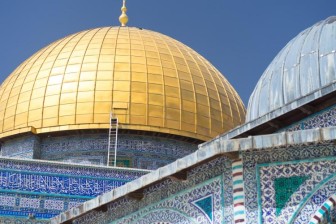
The Centre of Islamic Studies at the School of Oriental and African Studies (SOAS), University of London is focused on...
The Oxford Centre for Islamic Studies is involved in the study of all aspects of the advanced study of Islam,...
-overview.jpg)
The Prince Alwaleed Bin Talal Centre of Islamic Studies, University of Cambridge.Based in the Faculty of Asian and Middle Eastern...
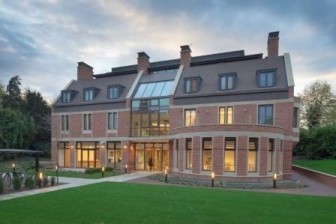
The Woolf InstituteThe Woolf Institute conducts teaching, research and outreach, on relations between followers of the Abrahamic Faiths; Jews, Christians...
The Institute for Middle Eastern and Islamic Studies (IMEIS) at The University of Durham, is based within the School of...
The Aziz FoundationThe Aziz Foundation is a family charitable foundation. Its flagship programme is the Masters Scholarships programme which awards...
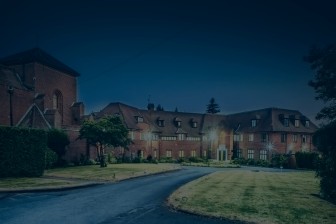
Al-Mahdi InstituteThe Al-Mahdi Institute (AMI) assimilates traditional Twelver seminary scholarship with modern approaches to the study of Islam. The Director...
-overview.jpg)
Cambridge Muslim CollegeCambridge Muslim College is an independent higher education institution, focused on developing and disseminating Muslim thought leadership based...
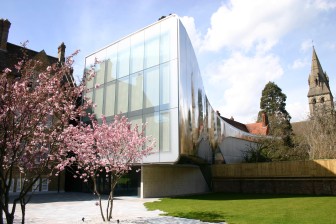
Middle East Centre Archive (MECA): Oxford University: St Anthony's CollegeThe Middle East Centre Archive was founded in 1961 by Elizabeth...
Ebrahim College was established in 2003 as a Darul Uloom style seminary appropriate for the modern world. The aim was...
CIRE is a London-based research centre dedicated to research that will inform Islamic thought, Islamic sciences and Islamic education. It...

Al-Salam Institute was established in Oxford (UK) in 2006 in order to provide students and working professionals with the opportunity...
EMBS was founded in 1988 as a self-help business service for racialised minority groups in Oxford. One of its founders...
The Oxford Centre for Islamic Studies was founded in 1985 as a centre for the advanced study of Islam and...
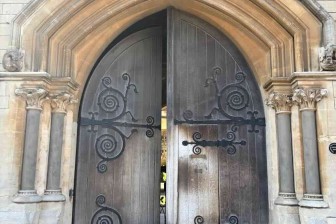
In trying to identify some of the earliest Muslim students to matriculate at the University after the enactment of the...
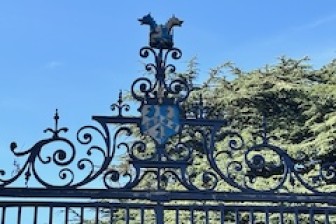
Brothers Wasif Ali and Naseer Ali Mirza became the first racialised minority and Indian students to be enrolled at Trinity...
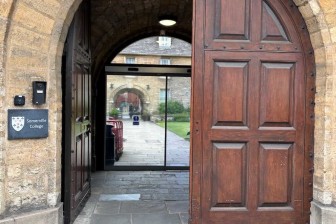
Somerville College houses archival materials related to the Oxford Majlis, which was a student society modeled after the Cambridge Majlis...
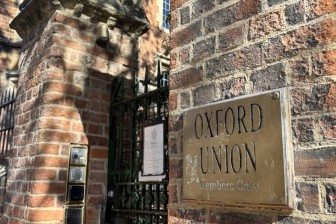
On 3 December 1964, Malcolm X addressed the Oxford Union when he partook in the 'Queen and Country' debate. He...
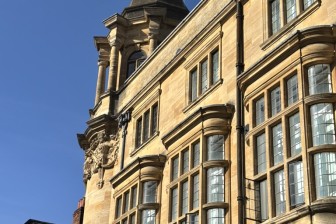
The Oxford Martin School was the sity of of the Oxford Indian Institute, which provided training to Indian civil servants....
3 December 1964
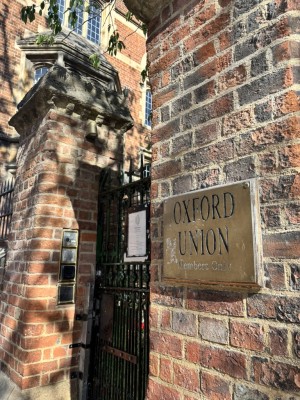
On 3 December 1964, Malcolm X addressed the Oxford Union when he partook in the 'Queen and Country' debate. He was invited by Eric Abrahams, a Rhodes Scholar from Jamaica and president of the Oxford Union. The motion for the debate was 'extremism in the defence of liberty is no vice; moderation in the pursuit of justice is no virtue'. Before his visit to Oxford, Malcolm had travelled across Africa and the Middle East, where he encountered Algerian resistance fighters and African nationalists. He also went to Smethwick, where he was invited by Avtar Singh Jouhl of the Indian Workers' Association, where racialised minority residents were regularly confronted with racist violence, and were contending with the election campaign of Conservative MP candidate Peter Griffiths, in what is now dubbed as the most racist election campaign in British history.
Malcolm was experiencing an intellectual and ideological transformation which culminated with his trip to Oxford, months before his assassination. The debate was also moment of national significance, as it was filmed and broadcasted by the BBC.
The Oxford Union has long been a site of intellectual exchange in which student activists have often engaged, by partaking in debates or protesting the presence of controversial figures. The Middle East Society, for example, proposed the motion 'Israel's refusal to the political rights of Palestinians has been obstructive to peace in the Middle East' in a joint event with the Oxford Union Michaelmas 1987. Their speakers included Edward Said. The only other event they hosted that term was a lecture titled 'The Role of Women in Islam', delivered by Cambridge professor Bassim Mussalam.

See: Stephen Tuck, The Night Malcolm X Spoke at the Oxford Union : A Transatlantic Story of Antiracist Protest (Berkeley: University of California Press, 2014).
JMOX SOC Box M9, Middle East Society Michaelmas 1987 term card, John Johnson Collection, Bodleian Library, University of Oxford, Oxford.
Aleena Din - Aleena is a historian of gender, class and race in modern Britain. Her DPhil research, which was completed at Balliol College and the Faculty of History in 2022, focuses on the migration, settlement and labour experiences of working-class British-Pakistani women who settled in Middlesbrough and Oldham between 1962 and 2002. Aleena is the co-investigator of the community history project 'A Muslim History of Oxford', in collaboration with the national heritage organisation 'Everyday Muslim'. In addition, she is a postdoctoral research associate for the digital humanities project, 'Remaking Britain: South Asian Connections and Networks, 1830 to the Present' at the University of Bristol (2025).
Spotted an issue Report this record
Loading please wait