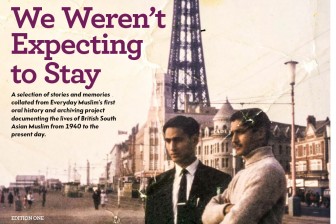
‘We Weren’t Expecting to Stay,’ is Everyday Muslim's first archive collection. The collection consists of; video and audio recordings of...
‘We Weren’t Expecting to Stay,’ is Everyday Muslim's first archive collection. The collection consists of; video and audio recordings of...
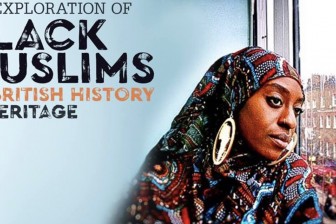
Exploring the Diversity of Black British Muslim Heritage in LondonThis archive is a unique borne digital archive consisting of important...
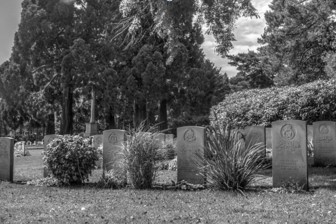
Brookwood Cemetery is a Grade I listed Historic Park & Garden. It was also known as the London Necropolis or...
This dissertation was submitted as part of the Tripos Examination in the Faculty of History, Cambridge University, April 2016.
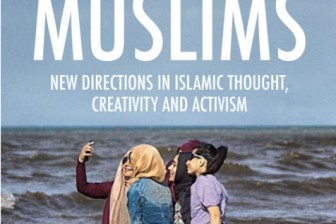
Explores how a new generation are redefining what it means to be a Muslim in Britain todayA new generation of...
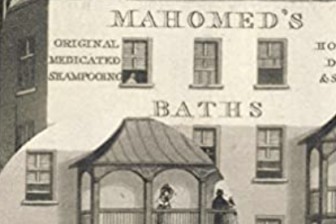
What did Britain look like to the Muslims who visited and lived in the country in increasing numbers from the...
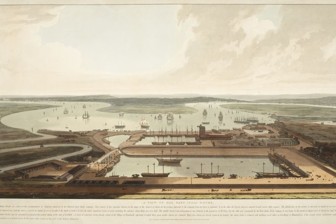
On the 31st of December 1600, Queen Elizabeth I granted a royal charter to more than two hundred City of...
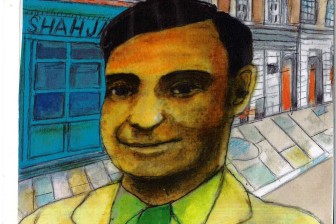
Ayub Ali was born 1st January in 1880, (precise date of birth unknown) in Sylhet, Bangladesh, then a part of...
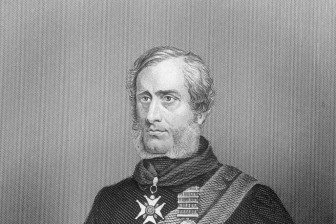
Sir Henry Havelock was a British general renowned for his involvement in India, particularly his successful recapture of Cawnpore from...
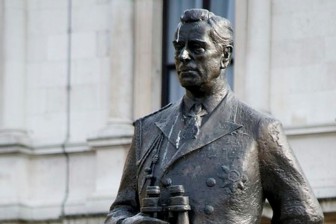
The bronze Mountbatten statue stands on Mountbatten Green, off Horse Guards Road in Whitehall, London. Depicted in his Admiral uniform...
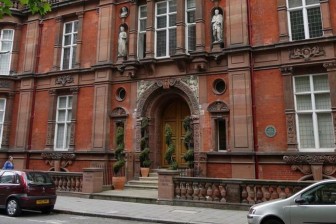
Caxton Hall is a location in which many momentous events occurred, including the assassination of Sir Michael O'Dwyer, the campaign...
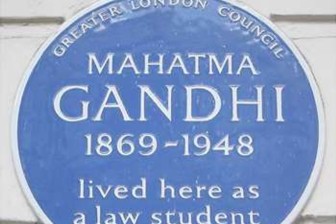
Mohandas Karamchand Gandhi born 2nd of October 1869, more commonly known as Mahatma Gandhi, was born in Porbandar, Kanthiawar, India....
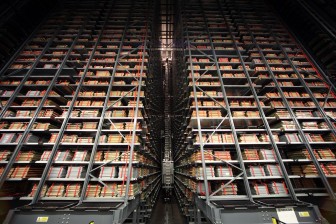
The British Library is home to the India Office Records collection, an extensive collection of archives relating to the administration...
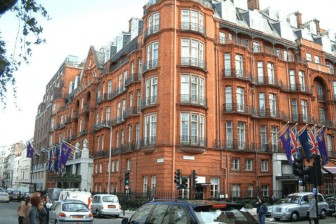
The history of Bangladesh's independence can be traced to the 1947 Partition of British India, and to the history of...
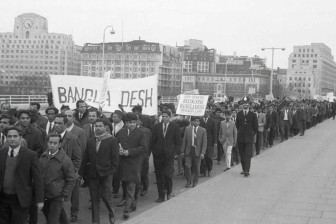
Millions of souls Nineteen seventy onehomeless on Jessore Road under the Gray sunA million dead, the millions who canWalk toward...
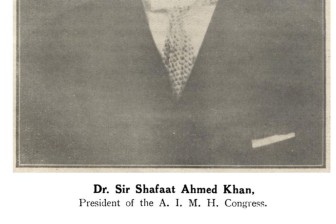
The India Round Table Conferences were a series of 3 talks between 1930-1932. The purpose of these talks was to...
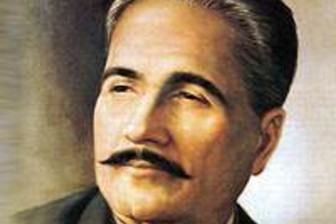
Allama Iqbal is widely considered one of the ideological founding figures of Pakistan and also holds the status of national...
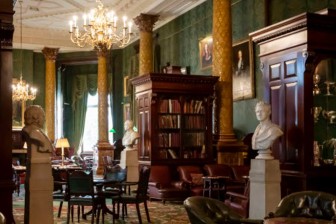
The National Liberal Club (NLC) was established by William Gladstone in 1882, to provide club facilities for Liberal Party campaigners. ...
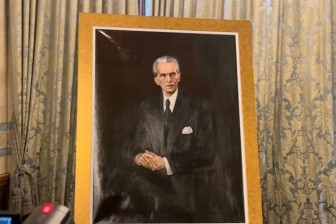
Muhammad Ali Jinnah (1876-1948), also revered as Quaid-i-Azam (Great Leader), was a barrister and politician who played a pivotal role...
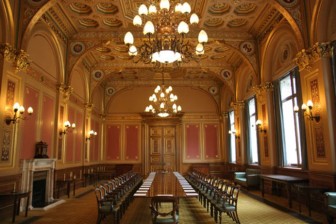
Originally constructed in 1868 as a set of government offices, including the India Office and later the Colonial and Home...
The Empire and Partition heritage trail is based on a collection of essays written by academics and historians to tell...
The Empire and Partition Collection and Trail were created for Everyday Muslim's Remembering Partition project to raise awareness of the...
The Bangladesh Islamic Centre was founded in the 1980s by the first generation of Bangladeshis to settle in Oxford. Today,...
Founded in 1968, the Bath Street mosque was the first formal site of worship for Oxford's Muslim community, and largely...
EMBS was founded in 1988 as a self-help business service for racialised minority groups in Oxford. One of its founders...
This was an Ahmadiyya Mosque established in the 1980s. It was located on Cowley Road, but the precise location is...
Central Oxford Mosque remains one of the largest places of workship for Muslims in the city. The mosque was founded...
The Oxford Centre for Islamic Studies was founded in 1985 as a centre for the advanced study of Islam and...
A mosque and welfare house opened in 1984 to primarily serve the Deobandi sect of Muslims living in Oxford. The...
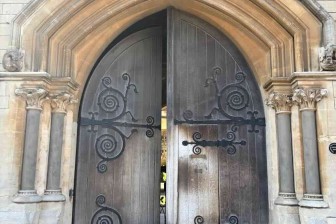
In trying to identify some of the earliest Muslim students to matriculate at the University after the enactment of the...
Founded in 1921, City of Oxford Motor Services Limited was an important site of employment in the 1950s and 1960s...
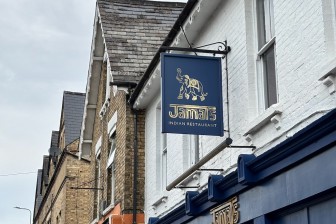
Jamal's Tandoori Restaurant has been a significant place of networking for Muslims across the city. During the 1950s and 1960s,...
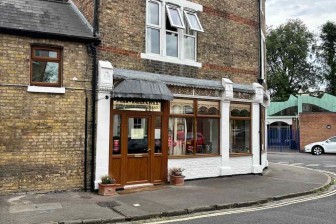
Al Shami restaurant was the site of Oxford's first halal butchers, and was established in the 1960s. Prior to its...
Founded in 1678, the Ashmolean Museum features an Islamic and Middle East Gallery which exhibits a selection of artifacts made...
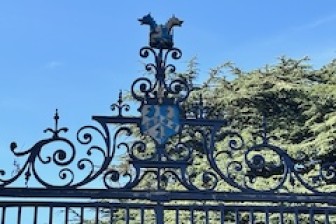
Brothers Wasif Ali and Naseer Ali Mirza became the first racialised minority and Indian students to be enrolled at Trinity...
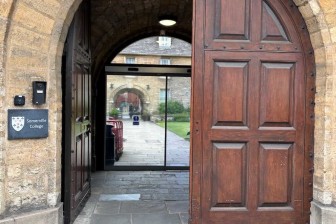
Somerville College houses archival materials related to the Oxford Majlis, which was a student society modeled after the Cambridge Majlis...
An anti-racist organisation founded by University of Oxford students in 1956. Its purpose was "To arouse among members of the...
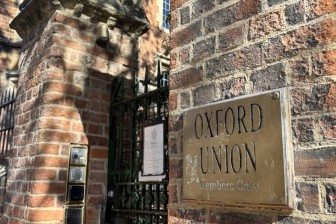
On 3 December 1964, Malcolm X addressed the Oxford Union when he partook in the 'Queen and Country' debate. He...
Lubna Arshad became the first Muslim Lord Mayor of Oxford, May 2023.
Next to the Pitt Rivers Museum is the sire of current Oxford Islamic Society meeting space. There is a rich...
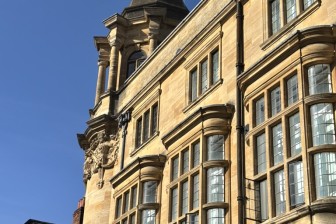
The Oxford Martin School was the sity of of the Oxford Indian Institute, which provided training to Indian civil servants....
Site of the first mixed congregational prayer led by a woman (Prof Amina Wadud) in the UK, 18th October 2008....
The association, which was founded in the 1960s by Sher Afzal Khan, was one of the first of its kind...
The Didicot Ordinance Depot at the Vauxhall Barracks, established during the First World War, was a major site of Pakistani...
A major site of employment which attracted Pakistani Muslims from Sheffield and Bradford. According to the newsreel source linked to...
The UK’s first halal farm, located in Cherwell. In 2002, Lutfi Radwan, a lecturer at the University of Oxford, and...
20 December 1600 - 1 June 1874
On the 31st of December 1600, Queen Elizabeth I granted a royal charter to more than two hundred City of London investors to set up a new company. This Tudor London stock-based enterprise was called ‘Governor and Company of Merchants of London trading into the East Indies’ and subsequently became known as the East Indian Company (EIC).
Having seen the success of the Dutch in bypassing the need for the Portuguese middle-man to attain access to Asia’s spices, the English sought to follow suit. At the time, spices such as nutmeg, mace, pepper and clove were in high demand in Europe and very valuable. These spices were earlier introduced to Europe by Venitian traders who picked them up from the Levant, brought by traders from the east by sea and desert by boat and on camels back.
By the late 15th Century, the Portuguese had managed to round the Cape of Good Hope by sailing and entering Asian water and had started to bring eastern spices directly to Europe by ship, cutting many other sources of spices to Europe. Being the main spice supplier to Europe for about a century the Portuguese were able to profit handsomely from their spice monopoly. Understanding this, the Dutch successfully made their way to Asia in 1596 to attain direct access to these precious products. The EIC was created by panic-stricken London merchants, worried about a Dutch monopoly, who hurriedly set up the new corporation.
The first English EIC voyage to Asia was led by Captain James Lancaster who earlier had fought in England’s Spanish Armada war and had also taken several English ships successfully from 1591-93 up to the western coast of present-day Malaysia. Unfortunately, none of the ships returned safely and very few survived.
The first voyage, consisting of four ships and a smaller victual vessel, left Woolwich in London on February 1601 and returned in September 1603 with the vessels filled with spices. Following the success of the first voyage other voyages followed in quick successions.
It was during these first few voyages to Asia, the English learnt about the trade across the Indian Ocean, South East Asia and the Far East, including Japan and China, and the demands for Indian textiles in the Indonesian archipelago. They witnessed trading ships from Gujrat, Bengal, Malabar, and Coromandel Burma in ports in Sumatra and Java, in present-day Indonesia. They also saw Chinese traders engaged in trade and the cultivation of pepper and rice in South East Asia. In 1608, the third voyage of the EIC first reached the soil of India in Surat, a thriving trading centre in Gujarat, to sell English goods and purchase Indian textiles, in exchange for spices in Indonesia.
Pepper was more widely available – in Sumatra, Java and Malabar. All places with powerful local rulers. In contrast, small Malukan islands, where nutmeg/mace and clove grew, were not under any strong rulers. The Dutch quickly moved to exploit these spices, and from the beginning aimed to overthrow the Portuguese and exclude the English from a share of this highly lucrative trade in nutmeg/mace and clove. By the 1620s, the Dutch succeeded in expelling the English from their headquarters in Bantan (Bantam) in 1682, which led to the English turning their efforts to India.
In 1639, the EIC was granted a piece of land by the local ruler of the Coromandel coast, which became known as Madras from Madraspatnam, an area overlooking the Bay of Bengal. The EIC’s ever-increasing demand for textiles encouraged many traders and textile makers to settle in Madras. In time they helped to expand the settlement. Madras then became another major source of Indian textiles, initially for the South East Asian market, but later supplying enormous demand at home in England.
Subsequently, more than a decade later, in 1651, an English trading base, known as a factory, was established with permission from the Mughals. The factory included warehouses to bring, buy and sell goods for and from England, the latter being in much larger quantity and mainly consisting of many varieties of textiles.
The marriage of Charles II to Portuguese princess Catherine of Braganza resulted in the establishment of the first English sovereign territory in India, which was later leased to the EIC by the King. In the long run, this proved beneficial for the EIC, England and later Britain. As part of the Princess’s dowry, the Portuguese crown gifted Bombay to the English. Initially, King Charles saw no use of Bombay and it cost him money to run the colony without any return. So in 1668, Bombay was granted to the EIC through a lease agreement.
In the 1680s, after the English were expelled from their Asian headquarters in Banten (Bantam) in West Java by the Dutch, the English decided to refocus and adopt a new more aggressive posture in Asia, similar to what the Dutch had done for more than eight decades. The English sought to establish fortified settlements in western India and the Bay of Bengal. What became known as the Anglo- Moghul wars followed – more precisely two wars were fought, one in western India where the main battle took place in Bombay, and the other was fought in Hugli area of Bengal and on Orissa coasts, with a failed attempt to conquer Chittagong. This was the result of the alternative approach – a more aggressive posture - introduced by Josiah Child, the Governor of the East India Company, where brutal force and guns were used in their failed attempt to force the Moghuls to accept English demands and establish fortified settlements in the region.
The siege of Bombay started in early 1689 and lasted for about fifteen months (2) which was a result of a series of attempts by the EIC to demonstrate their power, organise a show of force and pressuring the Moghuls to accept intolerable trading and tax concessions. A few months before the siege, the EIC had captured a ship en route to Mecca full of pilgrims. The siege started after the English had captured a grain ship taking supplies to Siddi Yakut Khan’s forces engaged in wars on the Moghul side. As a result, and on the orders of Emperor Aurangzeb, Siddi Yakut Khan, a powerful admiral, invaded Bombay island, advanced with speed and forced the EIC to barricade themselves in Bombay Castle, the house of the Governor. Eventually, the English were forced to capitulate and surrender. The failed invasion led to the EIC having to plead forgiveness and pay a large sum of compensation to the Moghuls.
More or less simultaneously, the EIC was engaged in a war in Bengal, which led to them being forced to evacuate from Hugly, fight several small battles against the Moghul forces without any success and then set off to try and capture Chittagong, Bengal. This was done to demonstrate the power of the EIC. Unfortunately for the EIC, the invasion of Chittagong didn’t go to plan. English ships arriving near the port of Chittagong, sent some men to find out about the nature of the Moghul forces in the city who then wrote to the king of Arakan to join the English in their war against the Moghuls and to capture Chittagong. The English thought the Arakanese would readily join them as they were expelled from Chittagong in 1667 by the Moghuls. However, the Arakanese showed no interest in joining the English in a war against the Moghuls in Chittagong. The English then decided to sail to Madras, abandoning their desire to conquer Chittagong and establish a fortified settlement in Bengal.
Luckily, for the EIC, the proportion of trade provided by them was significant enough for Emperor Aurangzeb to allow trade between the EIC and India to continue. In Bengal, they were given three small villages on the shores of the Hughli River to re-establish their factory. On the location of these three villages, grew the city of Calcutta (Kolkata).
In 1707, the death of Aurangzeb led to the beginning of the downfall of the Moghul empire, as regions became divided between different aspirants, allowing the EIC to slowly increase their influence. This resulted in the creation of an electrically charged political landscape of the region and made way for foreign traders to wage war. One particular battle was the Battle of Plassey (1757), financed by the infamous bankers of the Moghul period, the Jagath Seths. Robert Clive was able to pay off three Generals of the five divisions of Siraj Ud-Dhula's army. This led to the defeat of Siraj ud Dhula's army.
Just seven years after Plassey, came the Battle of Buxar where a similar betrayal from high personnel and a heavily financed and armed EIC led to the defeat of the last Moghul emperor, Shah Alam. He was forced to sign over the Diwani giving the EIC tax-collecting control of the three richest provinces, Bengal, Bihar and Orissa. (3)
In the next few years, pillaging and looting increased dramatically with many EIC officers using the money taken from Bengal to buy properties in the UK and positions in the British parliament. The looting, mismanagement and destruction of the local systems of administration, the high taxation, and the EIC’s lack of resource distribution after natural disasters in the region, something under Mughal rule would be a state response, leading to the Bengal famine of 1769-1771. Some put the figure of the number of lives lost to approx. 10 million, one-third of the Bengal’s population (4).
The destruction of the over 1000-year-old Bengal textile industry, occurred due to a series of reasons. On the one hand, the EIC squeezed the captured production by forcing the weavers and their agents to sell them products at a vastly reduced rate whilst simultaneously and mostly preventing foreign competitors to buy from traders. These imported textiles were purchased by the EIC using Bengal taxes, causing an outward flow of resources from Bengal. On the other hand, a few decades after the battle of Plassey, came the English 1780s Industrial Revolution. The EIC began to flood the Indian market with textiles produced in England.
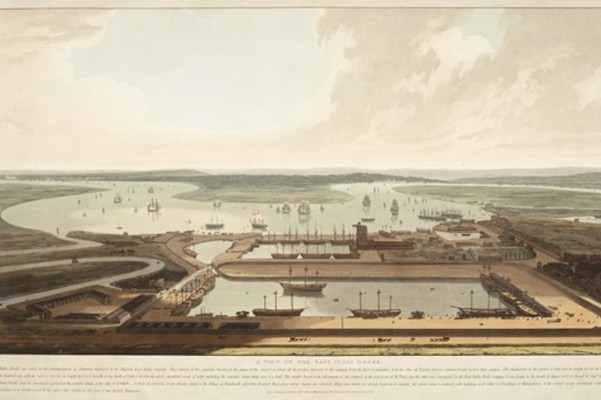
In 1805 the East Indian Dock was created, as produce from around the globe reached Britain in great numbers. Consequently, thefts from ships waiting on the Thames, increased. Around the docks, warehouses were built to house products for loading and unloading. Warehouses for auctioning the products of the world were mostly based in the city. Not much of the dock stands today, except the dock basin whose redevelopment is currently being explored. (5)
The abuses by EIC officers in India, the famines and the rapidly increasing size of the British possessions in India led to a series of parliamentary decisions to reform and change the role of the EIC and its possessions.
By 1833 the British government stopped EIC’s trading operation and restricted it to governing its Indian Empire. After the Mutiny of 1857, the control of India was transferred from the EIC to the British Crown, when the British Raj was established. In 1877, Queen Victoria was proclaimed the Empress of India.
A decision was taken to close down the East India Company after more than 250 years of commerce, which took more than another decade before all the EIC paperwork could be completed for its official closure in 1874.

Author: Samra Abbass in collaboration with Dr M Ahmedullah Sources: (1)
https://faminetales.exeter.ac.uk/collections/show/5 (4)
https://www.thehistoryoflondon.co.uk/the-east-india-docks/ (5)
https://www.nationaltrust.org.uk/discover/history/what-was-the-east-india-company#cb-349658226
Images: https://www.thehistoryoflondon.co.uk/the-east-india-docks/3/
The History of London. (2023). The East Indian Docks. Retrieved from The History of London: https://www.thehistoryoflondon.co.uk/the-east-india-docks/#:~:text=For%20150%20years%20the%20East%20India%20Docks%20were,India%20Company%20ships%20trading%20with%20the%20Far%20East.
Chaudhuri, K. (1978). The Trading World of Asia and the English East India Company: 1660-1760. Cambridge: Cambridge University Press. doi:10.1017/CBO9780511563263
Spotted an issue Report this record
Loading please wait