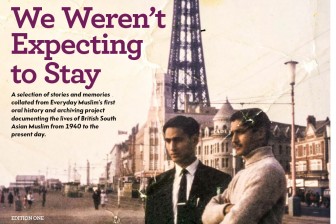
‘We Weren’t Expecting to Stay,’ is Everyday Muslim's first archive collection. The collection consists of; video and audio recordings of...
‘We Weren’t Expecting to Stay,’ is Everyday Muslim's first archive collection. The collection consists of; video and audio recordings of...
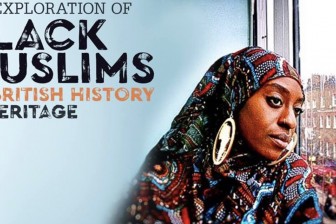
Exploring the Diversity of Black British Muslim Heritage in LondonThis archive is a unique borne digital archive consisting of important...
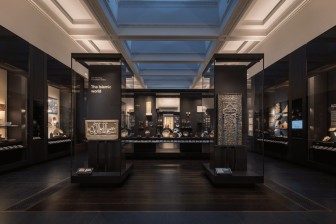
British MuseumFounded in 1753, the British Museum is the world’s first national public museum to cover all fields of human...
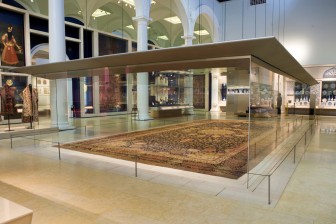
The Victoria and Albert MuseumThe V&A is the world’s leading museum of art, design and performance. Some of the oldest...
-(1)-overview.jpg)
Overview: The Birmingham Qur'an is known as the oldest Qur'an in the world.Radiocarbon dating of the parchment on which the...
The Brighton and Hove Museums is a trading name for the Royal Pavilion & Museums Trust. The Trust runs three...
Draft on master document - waiting to check with staff at museum
Founded in 1683, The Ashmolean is the University of Oxford’s Museum of Art and Archaeology. The closest place for prayer...
In 2014, the Colourful Heritage teamed up with Glasgow Life to create Scotland’s first dedicated physical archive based at the...
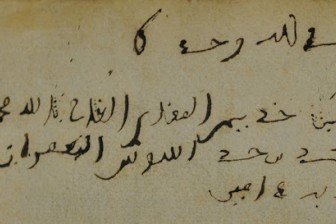
This was entered on 4 March 1682 by the then Moroccan Ambassador, Mohammed bin Hadou, who had been sent to...
Founded in 1678, the Ashmolean Museum features an Islamic and Middle East Gallery which exhibits a selection of artifacts made...
Next to the Pitt Rivers Museum is the sire of current Oxford Islamic Society meeting space. There is a rich...
2015
-(1)-desktop.jpg)

-(1)-thumb.jpg)
-(1)-thumb.jpg)
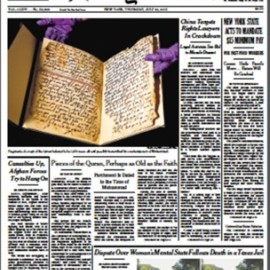
Overview:
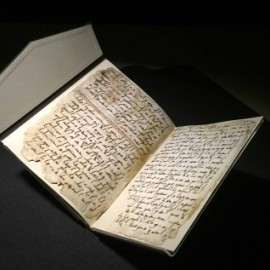
The Birmingham Qur'an is known as the oldest Qur'an in the world.
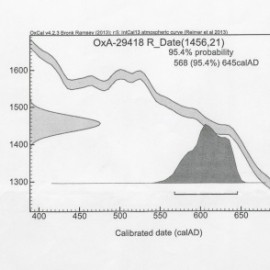
Radiocarbon dating of the parchment on which the text is written places it between 568-645CE. The most captivating aspect of the manuscript is that it is from the first century of Islam, indicating that it was close to the time of the Prophet Muhammad (SAW) and the rule of the first three caliphs.
The remaining pages of the Qur'an contain parts of Surah Al-Kahf, Surah Maryam and Surah Ta'ha.
-
The Birmingham Qur’an Manuscript, written in an early form of Arabic script known as Ḥijāzi, contains sections of surahs 18-20 of the Islamic holy book. In 2014, the parchment on which the text was written was radiocarbon dated by the University of Oxford, which revealed with 95.4% certainty that it was from the period between 568 and 645. This means that the manuscript likely dates back to the first century of Islam, during the time of the Prophet Muhammad and the first three Caliphs, who ruled from about 632 to 650. The Qur’an in its current form was established under the third Caliph, Uthman, around 650. The Birmingham manuscript is one of the earliest surviving fragments of the Qur’an and is part of the Mingana Collection of 3,000 Middle Eastern manuscripts at the Cadbury Research Library, University of Birmingham. The collection was assembled in the 1930s by Quaker philanthropist Edward Cadbury to promote Birmingham as a centre for religious studies. The radiocarbon result indicates a date range of 568-645 with 95.4% probability.
Spotted an issue Report this record
Loading please wait