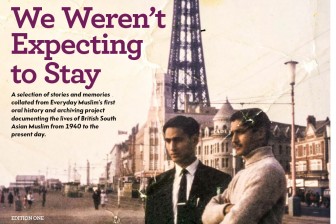
‘We Weren’t Expecting to Stay,’ is Everyday Muslim's first archive collection. The collection consists of; video and audio recordings of...
‘We Weren’t Expecting to Stay,’ is Everyday Muslim's first archive collection. The collection consists of; video and audio recordings of...
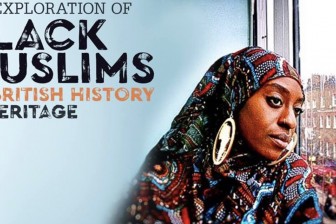
Exploring the Diversity of Black British Muslim Heritage in LondonThis archive is a unique borne digital archive consisting of important...
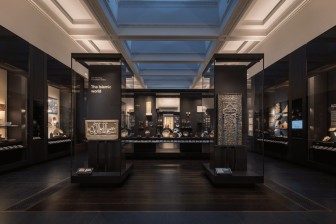
British MuseumFounded in 1753, the British Museum is the world’s first national public museum to cover all fields of human...
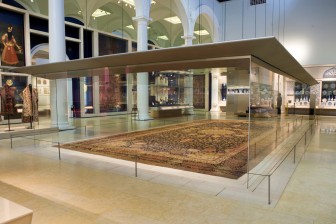
The Victoria and Albert MuseumThe V&A is the world’s leading museum of art, design and performance. Some of the oldest...
-(1)-overview.jpg)
Overview: The Birmingham Qur'an is known as the oldest Qur'an in the world.Radiocarbon dating of the parchment on which the...

The Brighton and Hove Museums is a trading name for the Royal Pavilion & Museums Trust. The Trust runs three...
Draft on master document - waiting to check with staff at museum
Founded in 1683, The Ashmolean is the University of Oxford’s Museum of Art and Archaeology. The closest place for prayer...
In 2014, the Colourful Heritage teamed up with Glasgow Life to create Scotland’s first dedicated physical archive based at the...
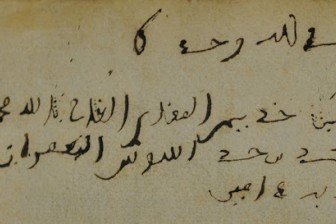
This was entered on 4 March 1682 by the then Moroccan Ambassador, Mohammed bin Hadou, who had been sent to...
Founded in 1678, the Ashmolean Museum features an Islamic and Middle East Gallery which exhibits a selection of artifacts made...
Next to the Pitt Rivers Museum is the sire of current Oxford Islamic Society meeting space. There is a rich...
1958
Next to the Pitt Rivers Museum is the sire of current Oxford Islamic Society meeting space. There is a rich repository of materials related to Islamic Society at the Weston Library, held within the John Johnson collection. The collection includes term cards, advice booklets and event posters dating back to 1958.
The specificity of Oxford as a transient space meant analysing ‘Muslimness’ in an urban context that is distinctly different from other places in the UK. Whilst the notion of ‘town’ and ‘gown’ is often synonymous with the University of Oxford and its relationship with locals, our research revealed a more complex relationship, in which Muslims within the university often negotiated their own exclusions within the institution, which influenced the creation of student organisations that, at times, made connections with Muslims within the city. This includes a Muslim Welfare House on Stanley Road, East Oxford, where students were encouraged to visit in help guides produced by ISOC in the 1980s.

JMOX SOC 18, Islamic Society, John Johnson Collection, Bodliean Library,University of Oxford, Oxford.
Aleena Din - Aleena is a historian of gender, class and race in modern Britain. Her DPhil research, which was completed at Balliol College and the Faculty of History in 2022, focuses on the migration, settlement and labour experiences of working-class British-Pakistani women who settled in Middlesbrough and Oldham between 1962 and 2002. Aleena is the co-investigator of the community history project 'A Muslim History of Oxford', in collaboration with the national heritage organisation 'Everyday Muslim'. In addition, she is a postdoctoral research associate for the digital humanities project, 'Remaking Britain: South Asian Connections and Networks, 1830 to the Present' at the University of Bristol (2025).
Spotted an issue Report this record
Loading please wait