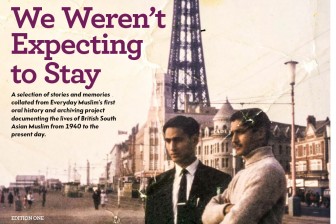
‘We Weren’t Expecting to Stay,’ is Everyday Muslim's first archive collection. The collection consists of; video and audio recordings of...
‘We Weren’t Expecting to Stay,’ is Everyday Muslim's first archive collection. The collection consists of; video and audio recordings of...
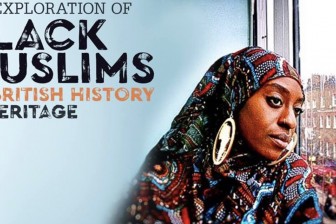
Exploring the Diversity of Black British Muslim Heritage in LondonThis archive is a unique borne digital archive consisting of important...
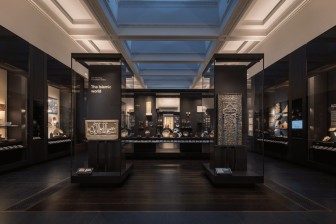
British MuseumFounded in 1753, the British Museum is the world’s first national public museum to cover all fields of human...
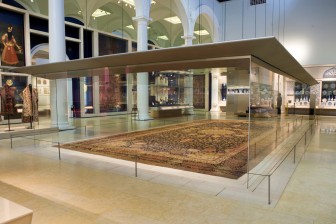
The Victoria and Albert MuseumThe V&A is the world’s leading museum of art, design and performance. Some of the oldest...
-(1)-overview.jpg)
Overview: The Birmingham Qur'an is known as the oldest Qur'an in the world.Radiocarbon dating of the parchment on which the...

The Brighton and Hove Museums is a trading name for the Royal Pavilion & Museums Trust. The Trust runs three...
Draft on master document - waiting to check with staff at museum
Founded in 1683, The Ashmolean is the University of Oxford’s Museum of Art and Archaeology. The closest place for prayer...
In 2014, the Colourful Heritage teamed up with Glasgow Life to create Scotland’s first dedicated physical archive based at the...
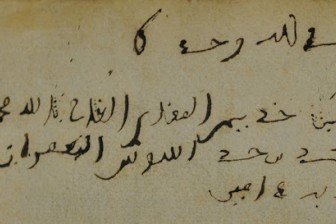
This was entered on 4 March 1682 by the then Moroccan Ambassador, Mohammed bin Hadou, who had been sent to...
Founded in 1678, the Ashmolean Museum features an Islamic and Middle East Gallery which exhibits a selection of artifacts made...
Next to the Pitt Rivers Museum is the sire of current Oxford Islamic Society meeting space. There is a rich...
18 June 2023
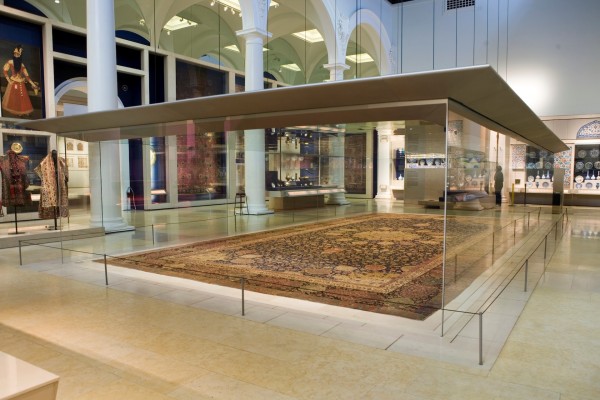
The V&A is the world’s leading museum of art, design and performance. Some of the oldest pieces in their permanent collection are from Egypt, Syria, and Iran - considered high points in the history of Art and Design. In 2004, the V&A museum created a dedicated Middle East section, which sits within the Asia Department.
Today, the V&A holds over 19,000 items from the Middle East and North Africa. Its earliest objects are textiles from Pharaonic Egypt, but the majority of its collection spans from the early Islamic period (the 7th century) to the early 20th century. These objects are spread across multiple departments. Most are held by the Middle East Collection; highlights from this collection are displayed in both the Jameel Gallery of Islamic Art, and the Curtain Foundation Ceramics Galleries. Further objects related to the Middle East are held in the Photography, and Prints and Drawings departments, viewable in the Prints and Drawings Study Room. All the above mentioned Galleries can be visited free of charge, however the Prints and Drawing Study Room requires prior request/booking.
On Islamic architecture, the V&A holds 3,374 prints from the photo archive of Professor Sir Keppel Archibald Cameron Creswell (1879 – 1974). This archive features hundreds of unpublished views of Egyptian monuments built in the late Mamluk (15th century) and early Ottoman periods (16th century). The majority of the views are of Egypt, but the collection also includes views of Syria, Palestine, Jordan, Iraq, Tunisia and Turkey. The V&A also holds photographs from other photographers working in the region, such as Pascal Sebah (1823 – 86), Felix Bonfils (1831 – 85) and Gabriel Lekegian (1850s – 1920s).
The Jameel Gallery of Islamic Art displays highlights from the Islamic Middle East Collection. The Islamic Middle East Collection also includes objects from the pre-islamic period, for example pharaonic objects. All 19,000 objects are digitised and viewable online, including the objects displayed in the gallery.
Other relevant collections areas of the V&A include, The V&A's photography collection which houses many photographs of the Middle East, and The Art Architecture Design and Digital collection which also contains objects by artists in the Middle East.
The Jameel Prize is a prestigious award for contemporary art and design inspired by Islamic tradition, held every two years. The prize is devoted to contemporary design inspired by Islamic tradition. Each prize, there is an open call for submissions and nominations from artists across the world. Eight finalists are selected, with their work exhibited at the V&A, and the winner is awarded with a monetary prize. The Prize then tours to international venues.
The Jameel Fellowship programme invites contemporary artists and designers to the museum for artistic residencies throughout the year. The artists are based in the museum, and invited to respond to the V&A collections and build on their practice. The Fellowship series is organised by the V&A’s Jameel Curator, Rachel Dedman.
DesignLab Nation is the V&A's national secondary schools programme. Their work consists of a programme of in-depth projects that explore new ways of engaging secondary school students with design. Alongside this, the museum organises a series of loan exhibitions to museums and places elsewhere in the country to expand the reach of the V&A’s collection and expertise outside of London.
The V&A has conducted research on the Alhambra Palace, focusing on architectural plasterwork, Nasrid ceramics, and 19th century photographs of the Palace. They have posted a series of films that show the progress of their investigation, with interviews from experts working on the ground in Granada and behind the scenes at the V&A.
The V&A, in collaboration with SOAS University and the Royal College of Arts, runs a series of in person and online paid courses related to the Islamic World. For example, The Arts of the Islamic World: Objects in Context (online) and the Italy and the Islamic World 1300 - 1700.

‘Photograph by Peter Kelleher © Victoria and Albert Museum, London.’
Spotted an issue Report this record
Loading please wait