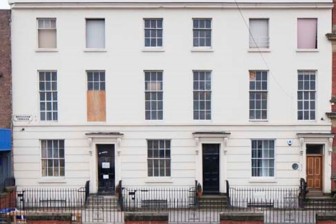
The Liverpool Muslim Institute at 8 Brougham Terrace was purchased by Abdullah Quilliam and the mortgages for 11, and 12....
The Liverpool Muslim Institute at 8 Brougham Terrace was purchased by Abdullah Quilliam and the mortgages for 11, and 12....
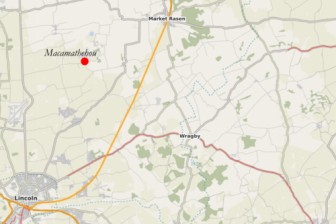
Origins of 'Macamatheou' In 2001, the local name Macamathehou became of interest by Kenneth Cameron, John Field and John Insley...
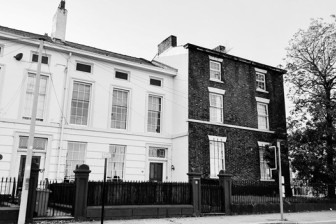
This was the residence of Fatima Elizabeth Cates (1865-1900), as listed in the 1891 Census, among the first women to...
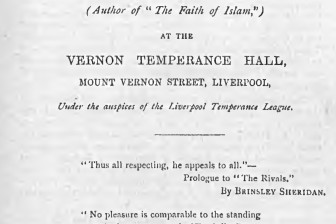
This was the site of the first Muslim prayer hall in the UK, which was formally established as the Liverpool...
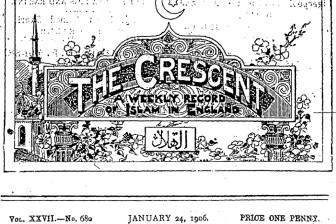
The first location of the printing offices of the first Muslim periodical published in Britain, the weekly Crescent (1893-1908), the...
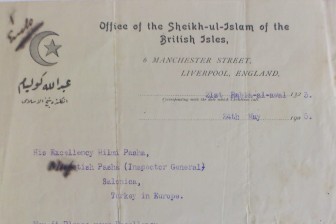
The chambers of Quilliam and Sons, headed by a convert to Islam, the lawyer and journalist, William Henry Abdullah Quilliam...
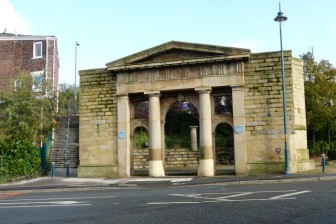
Stalybridge Town Hall was built in 1831. It saw two additional extensions during the Victorian period and was one of...
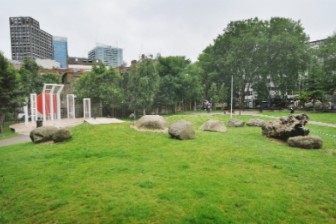
Altab Ali Park can be found on the intersection of Adler Street, White Church Lane and Whitechapel Road. This green...
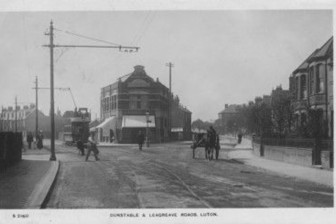
Bury Park is a district in Luton, United Kingdom, known for its significant Muslim community. The area has a long...
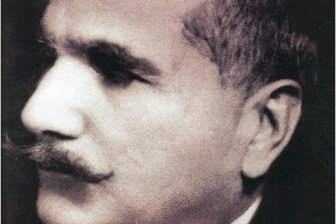
Allama Iqbal was the greatest poet-philosopher of the Indian Subcontinent whose poetry in the Urdu language is considered among the...
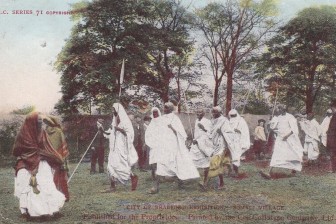
In 1904, the great Bradford Exhibition was held in Lister Park. It was held to inaugurate the newly-built Cartwright Hall,...
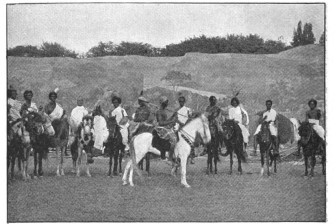
In late April 1895, a group of sixty-six Somalis arrived at the Tilbury Docks aboard the Clan Ross. They came...
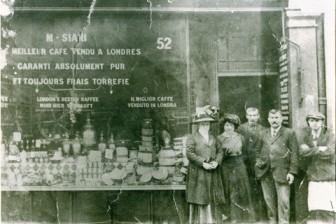
Built in 1887, Algerian Coffee Stores is one of London's oldest existing Cafes. Opened by Algerian Muslim, Mr Hassan, this...
Founded in 1921, City of Oxford Motor Services Limited was an important site of employment in the 1950s and 1960s...
Site of the first mixed congregational prayer led by a woman (Prof Amina Wadud) in the UK, 18th October 2008....
The Didicot Ordinance Depot at the Vauxhall Barracks, established during the First World War, was a major site of Pakistani...
A major site of employment which attracted Pakistani Muslims from Sheffield and Bradford. According to the newsreel source linked to...
The UK’s first halal farm, located in Cherwell. In 2002, Lutfi Radwan, a lecturer at the University of Oxford, and...
1882
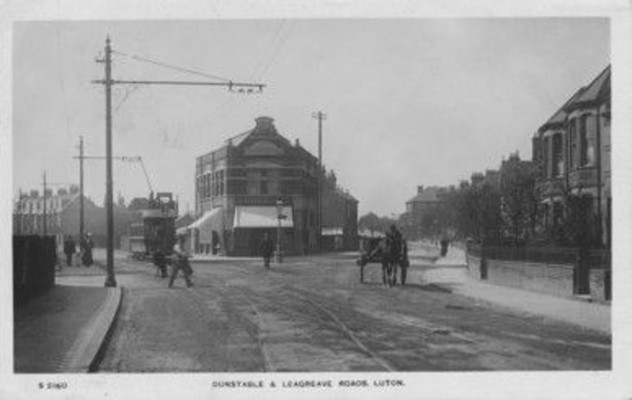

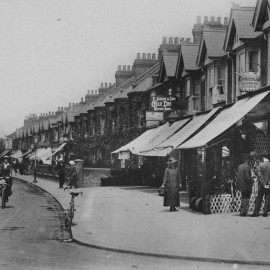
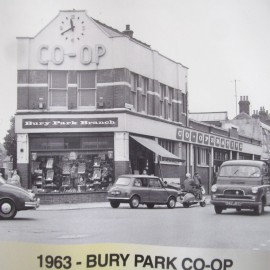
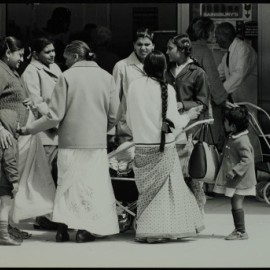
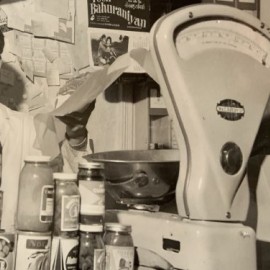
Bury Park is a district in Luton, United Kingdom, known for its significant Muslim community. The area has a long history of immigration, with many South Asian immigrants, particularly from Pakistan and Bangladesh, settling in the area in the 1960s and 70s. This was a result of post-war labour shortages and the UK government's policy of encouraging immigration from Commonwealth countries. Over the years, the Muslim population in Bury Park continued to grow, with many families being joined by newer arrivals from other parts of the UK and abroad. Today, Bury Park remains an important centre of Muslim life and culture in the UK.
Today, Bury Park is home to a diverse Muslim community, with a range of different ethnicities and cultural backgrounds. The area has a number of mosques, Islamic schools, halal restaurants, and shops selling Islamic goods, which cater to the needs of the local Muslim population. The community is known for its strong sense of identity and commitment to Islamic values, with many local organizations and groups dedicated to promoting Muslim culture and supporting the needs of the community.
Bury Park has undergone significant changes over time, both in terms of its physical appearance and its social and cultural makeup.
In the early 20th century, Bury Park was a primarily working-class area with a mix of small shops and factories. However, following World War II, the area experienced an influx of South Asian migrants, particularly from Pakistan and Bangladesh, who came to the UK to work in factories and other industries.
As the Muslim population in Bury Park grew, the area began to take on a more distinctly Islamic character, with the establishment of mosques, Islamic schools, halal restaurants, and shops selling Islamic goods. Today, Bury Park is a vibrant and diverse community, home to a range of different ethnicities and cultures.
Charity work is an important part of the Muslim community in Bury Park, and many organisations and groups are involved in fundraising and supporting various causes throughout the year. These include local charities such as the Luton Foodbank, as well as international organisations such as Islamic Relief and Human Appeal.
Love Luton is an annual event that takes place in the town centre of Luton, but is also attended and supported by the Bury Park community. The event aims to showcase the best of what Luton has to offer and to bring people from different communities and backgrounds together. Love Luton features live music, food and drink stalls, arts and crafts, and other family-friendly activities.
Ramadan is a particularly important time of year for the Muslim community in Bury Park, as it is a month-long period of fasting and spiritual reflection. During Ramadan, many mosques and community centres in the area hold daily iftar meals to break the fast, which are open to everyone regardless of their faith or background.
Eid al-Fitr, which marks the end of Ramadan, is also a major celebration in Bury Park and throughout the Muslim world. The community comes together to pray, exchange gifts, and enjoy festive meals and activities. In addition, many organizations and groups in Bury Park organize community events and activities during Eid, including food festivals, bazaars, and children's activities.
Overall, Bury Park is a vibrant and active community that places great importance on charitable work, community engagement, and interfaith dialogue.
https://www.lutonheritageforum.org/coverage_decade/1960s
https://sainsburyarchive.org.uk/catalogue/search/branch/ref/p1015-luton-bury-park-1011-west-side-centre-1968-1990-sainsburys-branch/view_as/list
Spotted an issue Report this record
Loading please wait