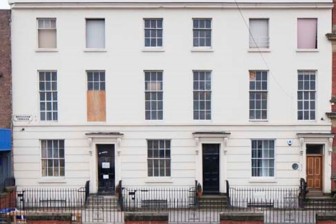
The Liverpool Muslim Institute at 8 Brougham Terrace was purchased by Abdullah Quilliam and the mortgages for 11, and 12....
The Liverpool Muslim Institute at 8 Brougham Terrace was purchased by Abdullah Quilliam and the mortgages for 11, and 12....
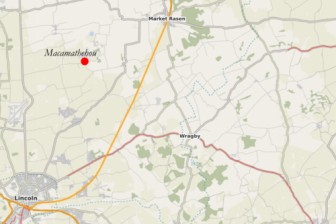
Origins of 'Macamatheou' In 2001, the local name Macamathehou became of interest by Kenneth Cameron, John Field and John Insley...
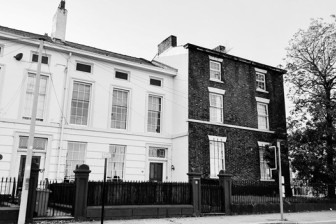
This was the residence of Fatima Elizabeth Cates (1865-1900), as listed in the 1891 Census, among the first women to...
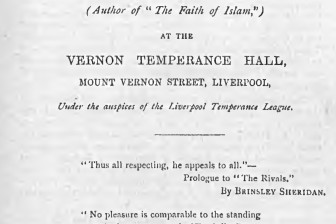
This was the site of the first Muslim prayer hall in the UK, which was formally established as the Liverpool...
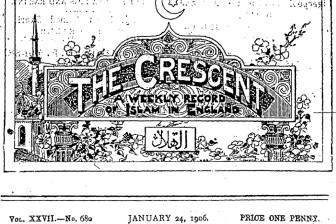
The first location of the printing offices of the first Muslim periodical published in Britain, the weekly Crescent (1893-1908), the...
The chambers of Quilliam and Sons, headed by a convert to Islam, the lawyer and journalist, William Henry Abdullah Quilliam...
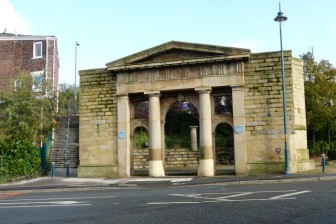
Stalybridge Town Hall was built in 1831. It saw two additional extensions during the Victorian period and was one of...
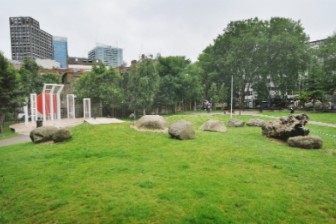
Altab Ali Park can be found on the intersection of Adler Street, White Church Lane and Whitechapel Road. This green...
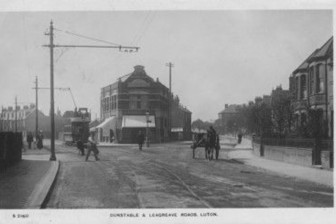
Bury Park is a district in Luton, United Kingdom, known for its significant Muslim community. The area has a long...
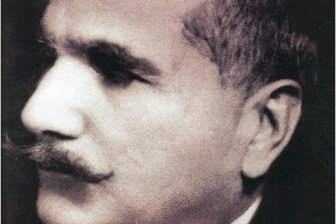
Allama Iqbal was the greatest poet-philosopher of the Indian Subcontinent whose poetry in the Urdu language is considered among the...
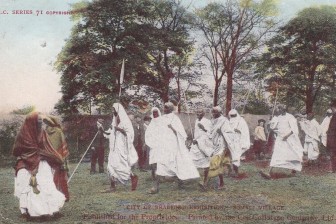
In 1904, the great Bradford Exhibition was held in Lister Park. It was held to inaugurate the newly-built Cartwright Hall,...
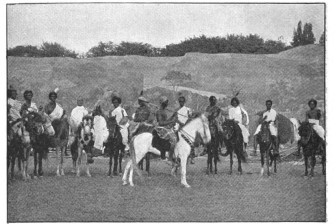
In late April 1895, a group of sixty-six Somalis arrived at the Tilbury Docks aboard the Clan Ross. They came...
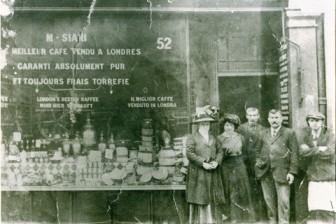
Built in 1887, Algerian Coffee Stores is one of London's oldest existing Cafes. Opened by Algerian Muslim, Mr Hassan, this...
Founded in 1921, City of Oxford Motor Services Limited was an important site of employment in the 1950s and 1960s...
Site of the first mixed congregational prayer led by a woman (Prof Amina Wadud) in the UK, 18th October 2008....
The Didicot Ordinance Depot at the Vauxhall Barracks, established during the First World War, was a major site of Pakistani...
A major site of employment which attracted Pakistani Muslims from Sheffield and Bradford. According to the newsreel source linked to...
The UK’s first halal farm, located in Cherwell. In 2002, Lutfi Radwan, a lecturer at the University of Oxford, and...
1894
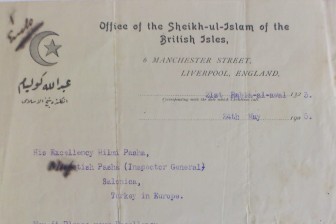
The chambers of Quilliam and Sons, headed by a convert to Islam, the lawyer and journalist, William Henry Abdullah Quilliam (1856-1932), which were based at 15 and later 6 Manchester Street. Besides its legal practice, Quilliam's clerks were also busy with mailing out the Liverpool Muslim Institute's newspaper and journal (The Crescent and The Islamic World respectively), and his son Billal did his pupilage under him, and continued to run the chambers after Quilliam senior was struck off as a solicitor in 1909.
Manchester Street did not survive the construction of the Queensway Tunnel, and was replaced by Old Haymarket, which follows the line of the original road. Where the offices at no. 15 once stood on the eastern side of the Old Haymarket is now a mix of greenery and parking for buses.
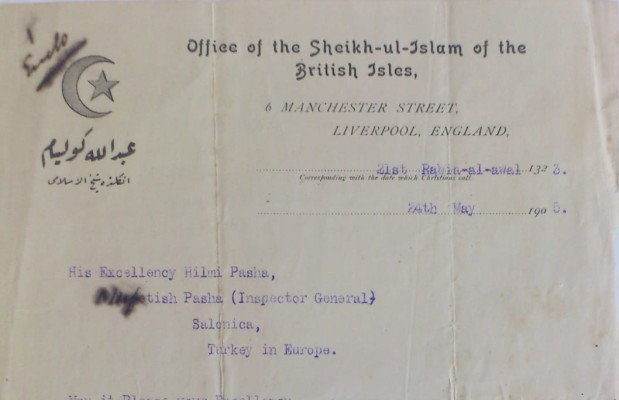
Quilliam's chambers were also used as the Office of the Sheikh-ul-Islam of the British Isles, and some of this letter-headed correspondence is preserved in the Ottoman archives (see picture). As Matt Sharp shows, there is no evidence in the Ottoman archive on Quilliam and the Liverpool Muslims (some 200 documents) that Quilliam was officially granted this office by the caliph, as Quilliam claimed. Instead, the office came out of a special meeting of the Liverpool Muslim Institute in October 1894 when it was proposed and accepted by a vote of its members. That said, the Ottomans never publicly challenged Quilliam's claim of a caliphal grant, so it is safe to assume they thought it was of greater benefit to them not to challenge this claim. Sultan Abdul Hamid II was certainly a patron of Quilliam's, awarding him and his family other honours and roles, and he sent Quilliam on two missions, one to open a mosque in Lagos in 1894 and the other in 1905 on a fact-finding mission to Walachia to report back on unrest there.
Quilliam did his own articles in October 1873-8 under William Radcliffe, a Tory Mayor of the city, of Radcliffe and Smith of 12 Sweeting Street. As a lawyer, Quilliam developed a good reputation in the city and was dubbed “The Attorney-General of the City of Liverpool” by the Liverpool Courier, acting as “solicitor to many trade unions, such as the journeymen bakers, upholsterers, brickmakers, and coppersmiths”, and working between 35 and 40 advocacy cases per week by the mid-1890s, often in defence of working men and the poor. A decade later, the Liverpool Freeman reported that Quilliam had built up “the biggest advocacy practice in the North of England, frequently twelve or fourteen cases a day spread over the Stipendiary’s Court, the County Court, the Coroner’s Court, the County Magistrate’s Court, and some of the sub-urban courts.”
This place is just a few minutes walk from where Quilliam defended many of his clients (see entry on Liverpool Magistrates or Police Courts), which does survive as a Grade II listed building although it is no longer in use and lies derelict.

R. Geaves, Islam in Victorian Britain (Markfield: Kube, 2010).
M.A. Sharp, “On Behalf of the Sultan: The Late Ottoman State and the Cultivation of British and American Converts to Islam”, Ph.D. thesis, University of Pennsylvania, Near Eastern Languages and Civilizations, 2020.
Spotted an issue Report this record
Loading please wait