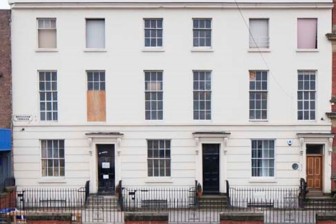
The Liverpool Muslim Institute at 8 Brougham Terrace was purchased by Abdullah Quilliam and the mortgages for 11, and 12....
The Liverpool Muslim Institute at 8 Brougham Terrace was purchased by Abdullah Quilliam and the mortgages for 11, and 12....
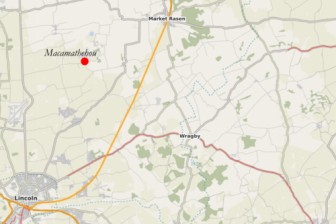
Origins of 'Macamatheou' In 2001, the local name Macamathehou became of interest by Kenneth Cameron, John Field and John Insley...
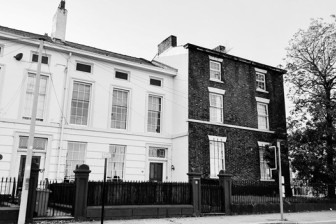
This was the residence of Fatima Elizabeth Cates (1865-1900), as listed in the 1891 Census, among the first women to...
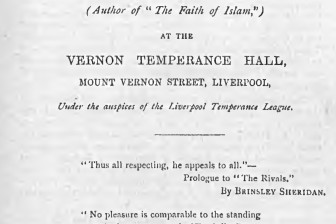
This was the site of the first Muslim prayer hall in the UK, which was formally established as the Liverpool...
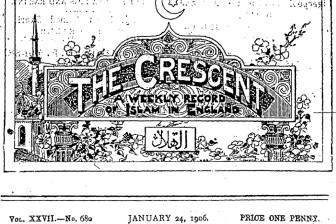
The first location of the printing offices of the first Muslim periodical published in Britain, the weekly Crescent (1893-1908), the...
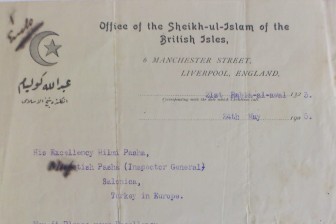
The chambers of Quilliam and Sons, headed by a convert to Islam, the lawyer and journalist, William Henry Abdullah Quilliam...
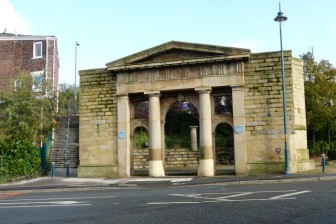
Stalybridge Town Hall was built in 1831. It saw two additional extensions during the Victorian period and was one of...
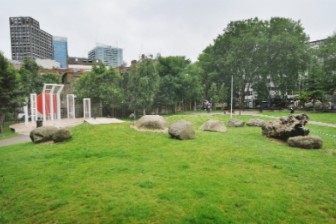
Altab Ali Park can be found on the intersection of Adler Street, White Church Lane and Whitechapel Road. This green...
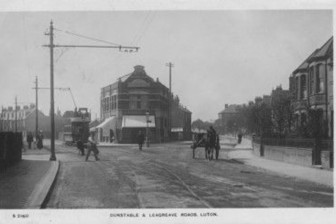
Bury Park is a district in Luton, United Kingdom, known for its significant Muslim community. The area has a long...
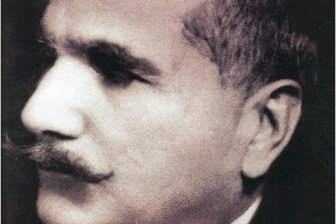
Allama Iqbal was the greatest poet-philosopher of the Indian Subcontinent whose poetry in the Urdu language is considered among the...
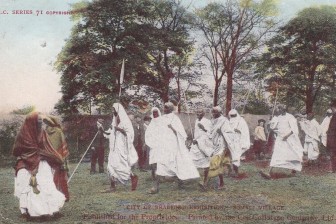
In 1904, the great Bradford Exhibition was held in Lister Park. It was held to inaugurate the newly-built Cartwright Hall,...
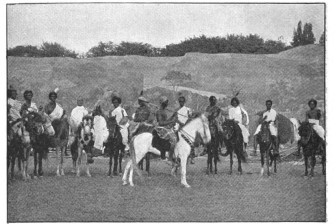
In late April 1895, a group of sixty-six Somalis arrived at the Tilbury Docks aboard the Clan Ross. They came...
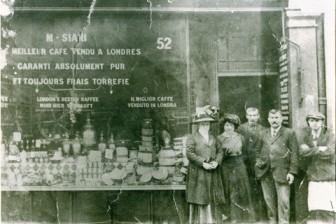
Built in 1887, Algerian Coffee Stores is one of London's oldest existing Cafes. Opened by Algerian Muslim, Mr Hassan, this...
Founded in 1921, City of Oxford Motor Services Limited was an important site of employment in the 1950s and 1960s...
Site of the first mixed congregational prayer led by a woman (Prof Amina Wadud) in the UK, 18th October 2008....
The Didicot Ordinance Depot at the Vauxhall Barracks, established during the First World War, was a major site of Pakistani...
A major site of employment which attracted Pakistani Muslims from Sheffield and Bradford. According to the newsreel source linked to...
The UK’s first halal farm, located in Cherwell. In 2002, Lutfi Radwan, a lecturer at the University of Oxford, and...
17 July 1887 - 1889
This was the site of the first Muslim prayer hall in the UK, which was formally established as the Liverpool Muslim Society on 17 July 1887 by three converts to Islam, William Henry "Abdullah" Quilliam (1856-1932), Fatima Elizabeth Cates (1865-1900), and James Ali Hamilton. All three had come out of the local Temperance movement, a global movement in the nineteenth century dedicated to reduction in and eventual prohibition of alcohol. It was housed at what was then 14 Mount Vernon Street, in a rented room that could only be accessed by a staircase to the rear from a sidestreet. At the time it was in a dilapidated state.
Quilliam had with other members of the Liverpool Temperance League opened a temperance hall at these premises at the end of 1886 for the "moral and social improvement" of the local poor. It offered free lectures, singing with piano accompaniment, readings and "magic lantern" shows (the first version of the slide show). It had meetings to encourage young people to pledge to give up alcohol for life.
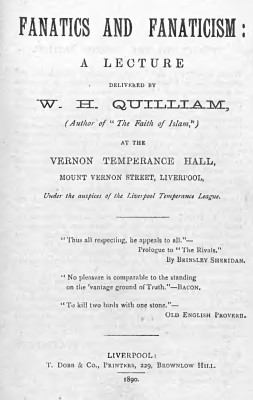
The first recorded Muslim proselytizing lecture was given here on 17 June 1887 called "Fanatics and Fanaticism", which was later published verbatim (the speech having been recorded by a shorthand writer) under the auspices of the Liverpool Temperance League.
The Liverpool Muslim Society worked along similar lines for the two years or so that it operated at this location. Its main activities were a prayer and study meeting on Friday evenings and on Sunday evenings it would hold public meetings. In the beginning these were advertised as non-sectarian but by May 1889 these were more explicitly described as Muslim. The Sunday public event was modelled on the Protestant Sunday Evensong in terms of form but with Islamic content. The format included the singing of hymns, prayers and passages from the Quran read out from the stage, and a sermon, with the congregation sat in rows of seats.
The chief aim of the Society was proselytizing Islam. In the period they were there, another 11 converts joined with the original three of Quilliam, Cates and Hamilton. It was hard work at first with no one else attending but the original three. We know something about the style of preaching involved. It was often indirect, deliberately not making Islam the main subject but rather approaching it through some other topic like teetotalism. It was often quite anti-Christian, contrasting Christianity unfavorably with Islam. And at other times it also touched on the rudiments of Islamic beliefs and teachings.
Once words got out about these meetings, they were often disrupted by local ruffians, and it was alleged this was sometimes at the instigation of hostile local priests. On leaving the meetings they could be abused or manhandled. Although it never deterred her from attending, Fatima Cates often had her face smeared with horse manure. On one occasion in the spring of 1889, a party of Christians stormed a prayer meeting armed with bludgeons and brickbats. One ruffian tried to throw half a brick at Abdullah Quilliam's head, but was prevented from doing so by James Bartholomew Jeffrey (1830-1905), who later converted to Islam that evening, ashamed of the intolerance of his fellow Christians.
After two years, the Liverpool Muslim Society was given notice to quit Mount Vernon Hall as their prejudiced landlord declared that he "would not have it occupied by any person who did not believe in Christ crucified as the Redeemer of the World."
All the streets and the all the buildings (except for the Sacred Heart Catholic Church about 45 metres north of the original site) were demolished long ago to make way for the Royal Liverpool University Hospital. The point on the map marks where England's first mosque community met and prayed together in the first two years of its existence.

H. Mahmood and Y. Birt, Our Fatima of Liverpool (Oldham: Beacon Books, 2023).
Spotted an issue Report this record
Loading please wait