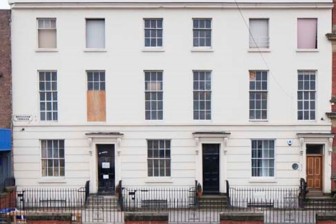
The Liverpool Muslim Institute at 8 Brougham Terrace was purchased by Abdullah Quilliam and the mortgages for 11, and 12....
The Liverpool Muslim Institute at 8 Brougham Terrace was purchased by Abdullah Quilliam and the mortgages for 11, and 12....
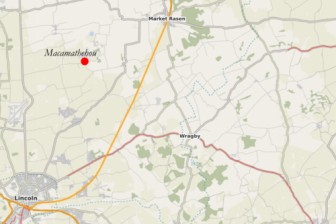
Origins of 'Macamatheou' In 2001, the local name Macamathehou became of interest by Kenneth Cameron, John Field and John Insley...
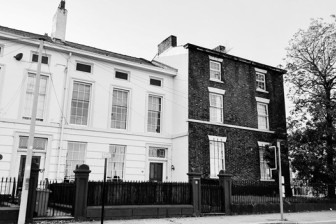
This was the residence of Fatima Elizabeth Cates (1865-1900), as listed in the 1891 Census, among the first women to...
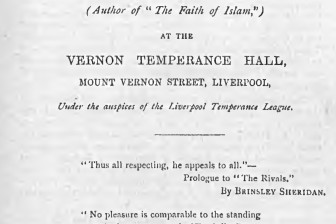
This was the site of the first Muslim prayer hall in the UK, which was formally established as the Liverpool...
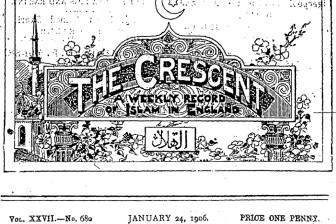
The first location of the printing offices of the first Muslim periodical published in Britain, the weekly Crescent (1893-1908), the...
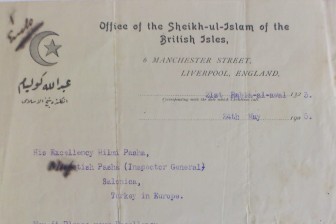
The chambers of Quilliam and Sons, headed by a convert to Islam, the lawyer and journalist, William Henry Abdullah Quilliam...
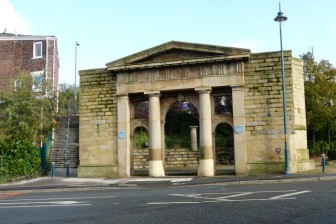
Stalybridge Town Hall was built in 1831. It saw two additional extensions during the Victorian period and was one of...
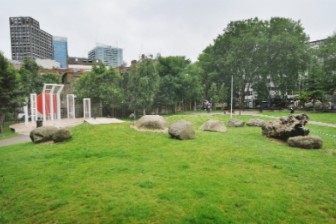
Altab Ali Park can be found on the intersection of Adler Street, White Church Lane and Whitechapel Road. This green...
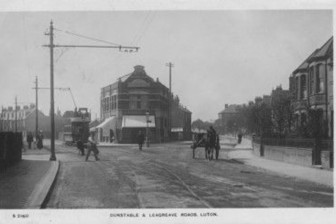
Bury Park is a district in Luton, United Kingdom, known for its significant Muslim community. The area has a long...
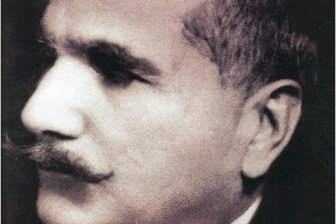
Allama Iqbal was the greatest poet-philosopher of the Indian Subcontinent whose poetry in the Urdu language is considered among the...
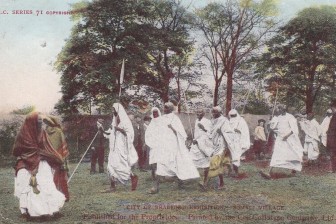
In 1904, the great Bradford Exhibition was held in Lister Park. It was held to inaugurate the newly-built Cartwright Hall,...
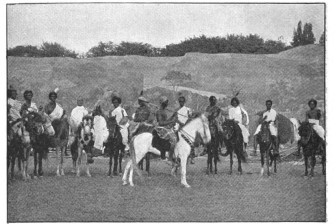
In late April 1895, a group of sixty-six Somalis arrived at the Tilbury Docks aboard the Clan Ross. They came...
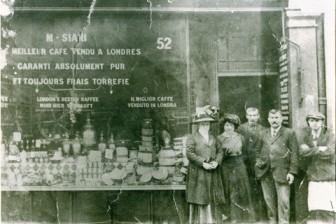
Built in 1887, Algerian Coffee Stores is one of London's oldest existing Cafes. Opened by Algerian Muslim, Mr Hassan, this...
Founded in 1921, City of Oxford Motor Services Limited was an important site of employment in the 1950s and 1960s...
Site of the first mixed congregational prayer led by a woman (Prof Amina Wadud) in the UK, 18th October 2008....
The Didicot Ordinance Depot at the Vauxhall Barracks, established during the First World War, was a major site of Pakistani...
A major site of employment which attracted Pakistani Muslims from Sheffield and Bradford. According to the newsreel source linked to...
The UK’s first halal farm, located in Cherwell. In 2002, Lutfi Radwan, a lecturer at the University of Oxford, and...
2001
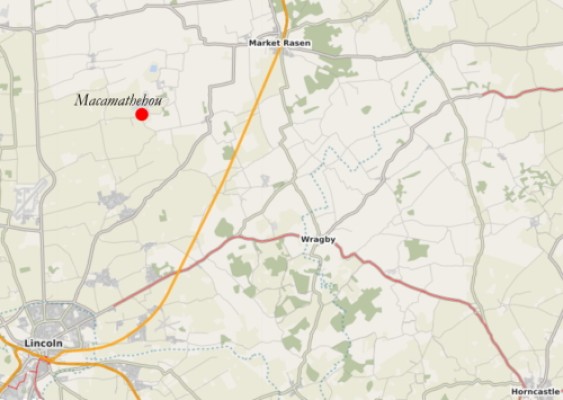
In 2001, the local name Macamathehou became of interest by Kenneth Cameron, John Field and John Insley in the Place-Names of Lincolnshire VI (PNL). Within this, they identify two elements of the name, one being Old Norse (the North Germanic language of medieval Norway, Iceland, Denmark and Sweden up to the 14th century) meaning 'mound, or barrow' and the Middle English Macomet/Mecamethe which is said to have derived from the Prophet Muhammad (pbuh).
The name 'Macomet/Mecamethe does not work as a common Middle English name that has derived from the name 'Muhammad/Mahomet', instead it is indicative of the word heathen or pagan idols, which is largely based upon the dominating Christian belief during the 12-14th century, that Muslims worshipped the Prophet Muhammad (pbuh) as a God (an incorrect belief). This conclusion that the name means heathen or idols is one that is supported by PNL who agree with this claim.
Richard Coate argues that in Spridlington Parish, 'Macamatheou' is a name that means 'heathen mound' and there are a multitude of references to 'heathen' barrows which underpin this claim. There are, of course, disputes to this claim, with some people arguing that the name 'Macametheou' could potentially be derived from the name Mahomet/Muhammad as the names relating to the meanings of mounds and barrows were often people who had large estates or land within the area.

Cameron, Field and Insley, Place-Names of Lincolnshire VI, p. 211.
Dr Caitlin R Green, 'Macamathehou in Lincolnshire and the evidence for people named Muhammad in medieval England'
Spotted an issue Report this record
Loading please wait