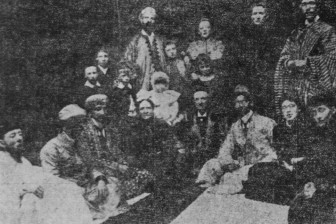
This entry includes information about the personal life of Abdullah Quilliam (1856-1932) and in particular about the two families in...
This is collection of places in Liverpool related to the life of Abdullah Quilliam (1856-1932), the founder of Britain's first attested mosque community in 1887, covering his multiple roles as a religious leader, as a lawyer, as a journalist, as a trade unionist and political activist, as well as his personal life.
This entry includes information about the personal life of Abdullah Quilliam (1856-1932) and in particular about the two families in...
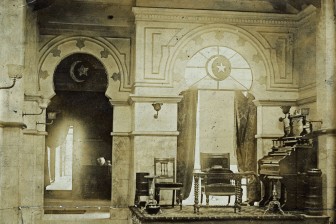
8 Brougham Terrace was the site of Britain's first attested mosque community, called the Liverpool Muslim Institute (LMI). It was...
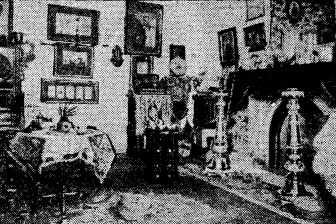
Built by the Quilliam Family, four generations lived in this house from the 1870s to the 1950s. Includes some biographical...
-Lord-Mayor-Liverpool,-MQRWU-President-and-founder-of-Liverpool-FC-overview.jpg)
A philanthropic body under the Poor Law Reform Act of 1832. Built workhouses, housing, schools and hospitals, including the famous...
The Medina Home for Children was the first orphanage founded by Muslims in the UK, and was established in 1896....
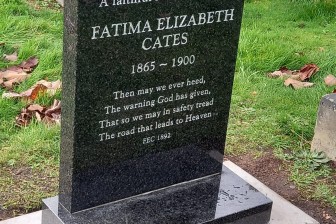
Fatima Elizabeth Cates (5 January 1865-29 October 1900) was probably the first woman to convert to Islam in Merseyside, who...
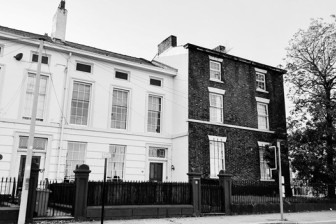
This was the residence of Fatima Elizabeth Cates (1865-1900), as listed in the 1891 Census, among the first women to...
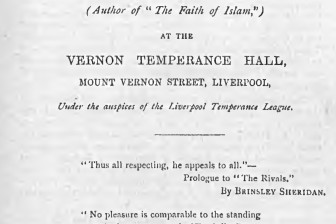
This was the site of the first Muslim prayer hall in the UK, which was formally established as the Liverpool...
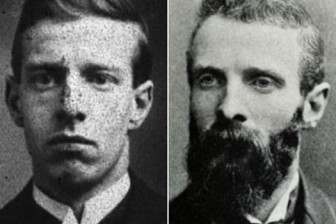
Fatima Elizabeth Cates (1865-1900) lived at "Granada", Victoria Road, in the town of West Kirby on the western side of...
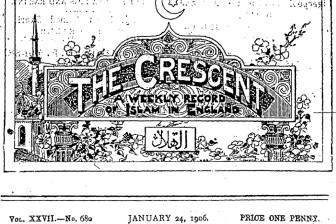
The first location of the printing offices of the first Muslim periodical published in Britain, the weekly Crescent (1893-1908), the...
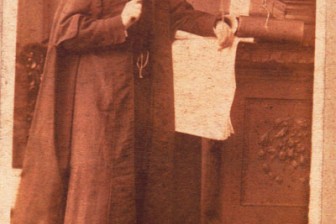
The Magistrates Courts (formerly known as the Police Courts) where the Muslim convert and solicitor William Henry Abdullah Quilliam (1856-1932)...
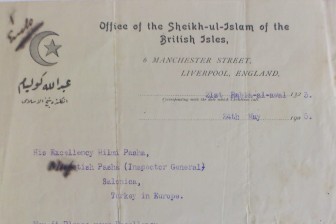
The chambers of Quilliam and Sons, headed by a convert to Islam, the lawyer and journalist, William Henry Abdullah Quilliam...
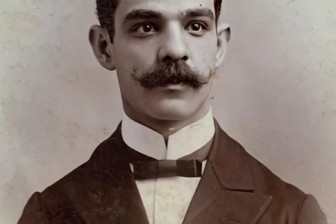
One nineteenth century couple are an early example of an intercultural Muslim marriage. They were Ali and Amy Mokaiesh who...
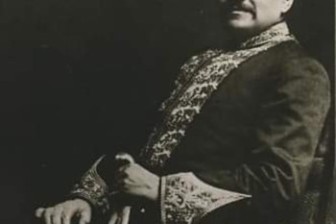
Mustapha Karsa (pictured circa 1900) was born in Damascus in around 1848 to a wealthy landowning family. In 1880-1, Karsa...
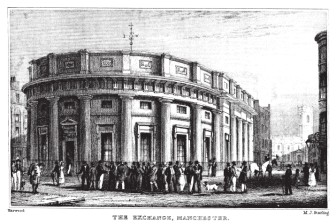
Abdullah Ydlibi [Idlibi] (c.1820-85) came from a family of Arab notables in administration, politics and trade, with branches in Damascus...
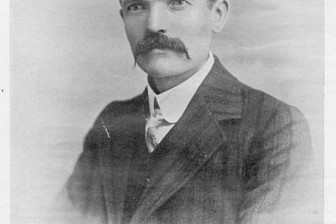
Yahya Parkinson (1874-1918), Scottish Muslim poet, essayist, and critic, was born in Kilwinning, Ayrshire, Scotland, of Irish descent. Born John...
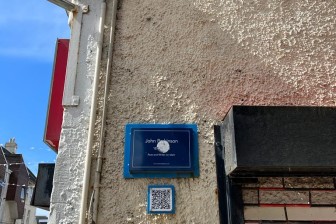
104 Main Street in Kilwinning, Ayrshire, was the birthplace and primary residence of John Parkinson (1874-1814), Britain's founding Muslim poet....
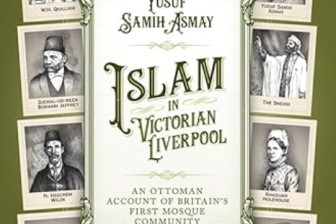
Islam in Victorian Liverpool is a unique eyewitness account dating from 1895 of Britain's first mosque community by an Ottoman...
14 January 1893 - 27 May 1908
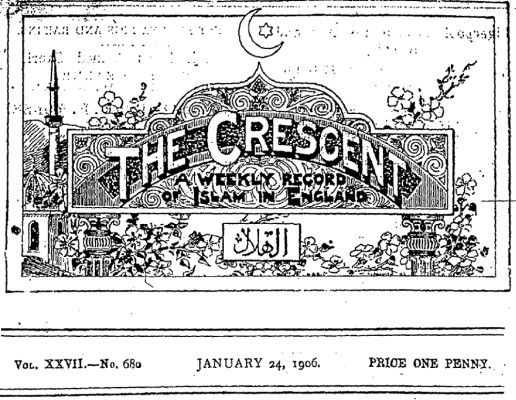

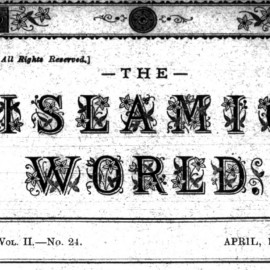
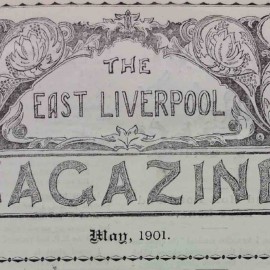
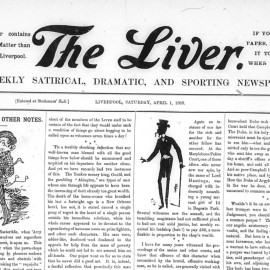
The first location of the printing offices of the first Muslim periodical published in Britain, the weekly Crescent (1893-1908), the first issue of which was published on 14 January 1893. Its founding editor was the journalist and lawyer William Henry Abdullah Quilliam (1856-1932), and it was established with funds from Indian Muslim associations. It ran for over 800 issues and was distributed internationally to over 80 countries (the final issue, no. 801, was published on 27 May 1908). It was even more widely distributed than the famous Al-Manar periodical from Egypt. The other famous publication was the monthly journal, the Islamic World (1893-1906), and two lesser known local newspapers: the short-lived Liver (1893-4) was more political, while The East Liverpool Magazine (1900-6) was more satirical. The press also produced the Islamic literature of the Liverpool Muslim Institute as well as sets of photographs of members of the community.
The Crescent began as an eight-page weekly but eventually expanded to 16 pages. It featured news of the events held and the social lives of Liverpool Institute members. It reproduced accounts and lectures of events at the mosque. It serialized longer articles that were later published as pamphlets, and it regularly published poetry and sometimes fiction by Institute members. It reproduced coverage of the Institute from both the local and international press. It was also a source of news about the Muslim world and the fledgling Muslim communities in the West. While it is an invaluable record and a remarkable achievement for a small, largely working class Muslim community, Quilliam would be periodically accused of printing exaggerations and even outright lies at times in the Crescent to further his own interests. This means that as invaluable as this source is, it should be treated with care and tested against other primary sources from the time.
On the other hand, The Islamic World, launched in May 1893, was at its foundation a monthly political journal that targeted an international pan-Islamist audience, which included Ottoman officials and Muslim intellectuals, who submitted their letters and articles to the journal rather than to its sister weekly newspaper. It promoted a version of Pan-Islamism that hewed more closely to the message of Islamic unity under the leadership of the Ottoman caliphate that Istanbul promoted during the rule of Abdul Hamid II. One Ottoman official at the Press Foreign Office in Constantinople described the journal as "an interpreter of the Mussulaman religion" that protects Islam "against the prejudices and imputations of the Christian world." The scholar Amjad Muhsen S. Dajani argues that it was more influential in its day than Jamal al-Din al-Afghani's al-Urwat al-Wuthqa because the latter was less widely distributed and lacked the patronage of ruling Muslim elites that The Islamic World enjoyed. The Islamic World listed its patrons as Sultan Abdul Hamid II, King Abdur-Rahman of Afghanistan and his sone Prince Nasrullah Khan as well as 23 other high-ranking Muslim officials and notables. It saw its role, Dajani argues, as "using English to promote unity between British Muslims and Muslims elsewhere in the world". In 1896, Quilliam claimed that The Islamic World was exchanged with a hundred other journals in 15 different languages.
The original site at 32 Elizabeth Street no longer exists. Today the original buildings have gone and it is now part of the campus of Liverpool University, but the northern half of Elizabeth Street remains in place, and its end point marks the proximate location of the printing press on the western side of the current road's terminus. Later the press moved to be housed at the Liverpool Muslim Institute at 8-12 Brougham Terrace.
However, a detailed description of the press at 32 Elizabeth Street survives from the 1895 account by the Ottoman journalist and travel writer, Yusuf Samih Asmay (ca.1865-1942):
"Three ground-floor rooms that open on to one another in a house at 32 Elizabeth Street in Liverpool accommodates Quilliam's printing press where The Crescent and other works published in the name of the Liverpool Muslim Institute are printed.
The monthly paper called The Islamic World is also printed here. [...]
The newspapers printed here serve as the [Institute's] means of communication with the Muslim persons and countries that Quilliam sends them to. [...] As mentioned, the printing press consists of three sections, the first of which is the manager's room, the second is the typesetter's room, and the third is the printing press.
In the whole world, according to Mr. Quilliam, it is only the publications of this printing press that will gather together the ideas of Turks, Arabs, Persians, Indians, Afghans and other nations of Islam in one place thus making them one family. By its newspapers promoting the idea of Islamic unity all Muslims will be gathered under Quilliam's banner, so they will politically prevail over other nations."
While Quilliam served as editor-in-chief, he also employed deputy editors at times (particularly while he was away), a compositor and a printer. The experienced journalist and American convert Nafeesah Keep (1844-1925) served as deputy editor for six months in 1895. The Ottoman archives preserve a letter from Keep to the caliph Sultan Abdul Hamid II in August 1895 asking for refuge within the empire where she could earn a living as a writer and translator from French or German into English. Her letter reveals that she had worked as an unpaid volunteer at the printing press from February to June 1895 for long hours daily (between 8-18 hours) until her money ran out. Thereafter she was put on a subsistence wage of 10 shillings a week, but this was not enough to pay for her lodgings, food or medicine (so she was starving).
Additionally there is a possibility that one the senior convert married couples, George Khalid Smith and Alice Amina Bertha Bowman (1854-1940), worked respectively as Quilliam's printer (formerly a detective) and compositor (formerly a writer), given their change of profession to these roles with the establishment of the press. Both had converted in the first two years of the Liverpool Muslim community's life, Khalid in 1887 and Amina in 1888.
Y. S. Asmay, Islam in Victorian Liverpool (Swansea: Claritas Books, 2021 [1896]).
A.M.S. Dajani, "The Islamic World, 1893-1908", Victorian Periodicals Review, 47/3, Fall 2014, 454-75.
H. Mahmood and Y. Birt, Our Fatima of Liverpool (Oldham: Beacon Books, 2023).
Spotted an issue Report this record
Loading please wait