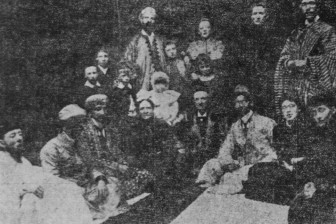
This entry includes information about the personal life of Abdullah Quilliam (1856-1932) and in particular about the two families in...
This is collection of places in Liverpool related to the life of Abdullah Quilliam (1856-1932), the founder of Britain's first attested mosque community in 1887, covering his multiple roles as a religious leader, as a lawyer, as a journalist, as a trade unionist and political activist, as well as his personal life.
This entry includes information about the personal life of Abdullah Quilliam (1856-1932) and in particular about the two families in...
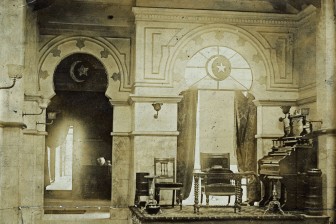
8 Brougham Terrace was the site of Britain's first attested mosque community, called the Liverpool Muslim Institute (LMI). It was...
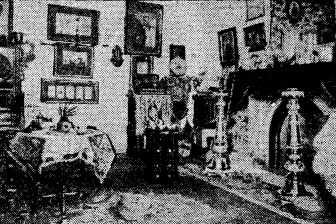
Built by the Quilliam Family, four generations lived in this house from the 1870s to the 1950s. Includes some biographical...
-Lord-Mayor-Liverpool,-MQRWU-President-and-founder-of-Liverpool-FC-overview.jpg)
A philanthropic body under the Poor Law Reform Act of 1832. Built workhouses, housing, schools and hospitals, including the famous...
The Medina Home for Children was the first orphanage founded by Muslims in the UK, and was established in 1896....
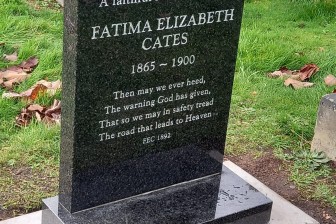
Fatima Elizabeth Cates (5 January 1865-29 October 1900) was probably the first woman to convert to Islam in Merseyside, who...
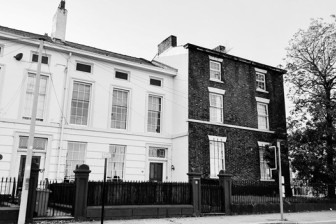
This was the residence of Fatima Elizabeth Cates (1865-1900), as listed in the 1891 Census, among the first women to...
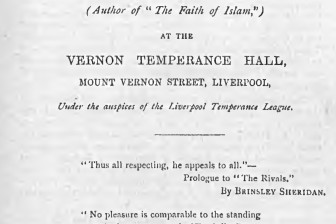
This was the site of the first Muslim prayer hall in the UK, which was formally established as the Liverpool...
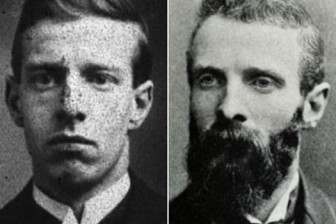
Fatima Elizabeth Cates (1865-1900) lived at "Granada", Victoria Road, in the town of West Kirby on the western side of...
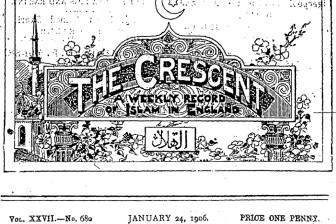
The first location of the printing offices of the first Muslim periodical published in Britain, the weekly Crescent (1893-1908), the...
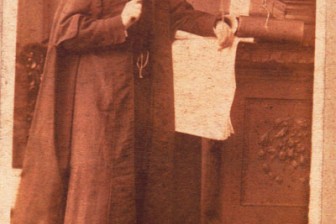
The Magistrates Courts (formerly known as the Police Courts) where the Muslim convert and solicitor William Henry Abdullah Quilliam (1856-1932)...
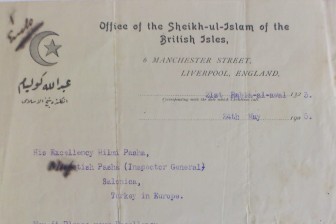
The chambers of Quilliam and Sons, headed by a convert to Islam, the lawyer and journalist, William Henry Abdullah Quilliam...
One nineteenth century couple are an early example of an intercultural Muslim marriage. They were Ali and Amy Mokaiesh who...
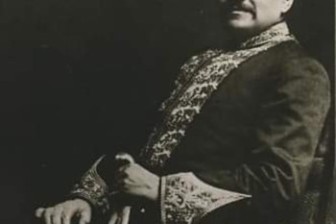
Mustapha Karsa (pictured circa 1900) was born in Damascus in around 1848 to a wealthy landowning family. In 1880-1, Karsa...
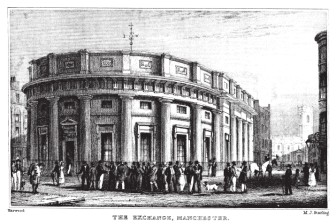
Abdullah Ydlibi [Idlibi] (c.1820-85) came from a family of Arab notables in administration, politics and trade, with branches in Damascus...
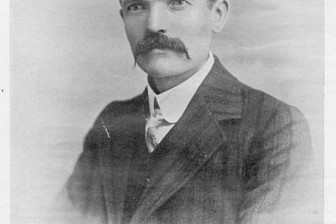
Yahya Parkinson (1874-1918), Scottish Muslim poet, essayist, and critic, was born in Kilwinning, Ayrshire, Scotland, of Irish descent. Born John...
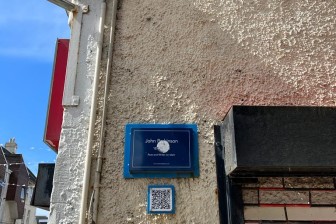
104 Main Street in Kilwinning, Ayrshire, was the birthplace and primary residence of John Parkinson (1874-1814), Britain's founding Muslim poet....
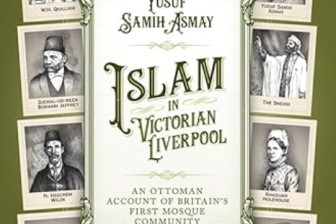
Islam in Victorian Liverpool is a unique eyewitness account dating from 1895 of Britain's first mosque community by an Ottoman...
1891
One nineteenth century couple are an early example of an intercultural Muslim marriage. They were Ali and Amy Mokaiesh who were listed as living at 53 High Lane, Chorlton, in the 1891 Census.
Amina Mokaiesh (b. 1865) was born Amy Ogden into an Anglican family from Rusholme, Lancashire, the fifth youngest of six children. Amy's father was a paper merchant, a manager at the Bombay Paper Mills in Manchester. In her early twenties, Amy met Ali Mokaiesh (Muhayyish, b. 1856), a Syrian cotton trader from a wealthy Beirut family. He came to Manchester in 1884 to launch the family business there. Amy and Ali were most likely married under Islamic law and had a child, Freda, in 1890, and lived in Didsbury, Chorlton-cum-Hardy, like other Levantine merchants did at the time. Amy was Ali's second wife (the first was back in Beirut). In 1892-3, Amy travelled to the Middle East (most likely to Beirut) with two other English Muslima converts, Fatima Elizabeth Cates (1865-1900) and Leah Zuleika Banks (b.1864), and probably also with Ali and Freda to see her in-laws who lived there. On 1 May 1895, Ali and Amina had a civil marriage in Liverpool, which was witnessed by two of Liverpool Muslim Institute members, Thomas Omar Byrne and George Selim Evans, and for reasons that are unclear, Ali gave Abdullah Quilliam's home address at 21 Fairfield Crescent as his own.
Like the other Syrian Ottoman traders in Manchester, Mokaiesh played an active role in the Liverpool Muslim Institute after its recognition by the Ottomans in 1890, and would travel to Liverpool to attend celebrations such as the two Eids, the Prophet's Birthday (Milad), celebrations for the Sultan's Birthday, or to attend upon Ottoman officials passing through the port and visiting the mosque en route to somewhere else. Sometimes Mokaiesh would led prayers at the Institute when he visited there.
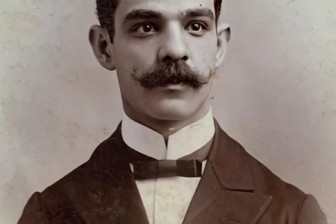
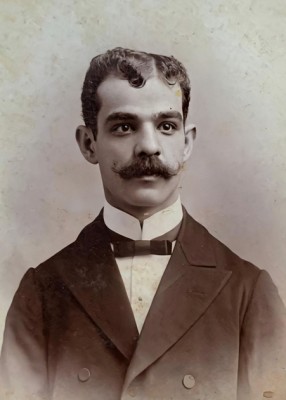
However, Ali's textile trading business did not fare well and he became bankrupt in 1896. He absconded with Amina and Freda to Beirut to escape his creditors. Quilliam would later defend him in absentia in court. Later on, Amina and Ali moved to Cairo where Freda had a career as a famous singer. A few years after Ali lift, the Mohayyish family sent his cousins, Kemal and Selim (pictured) to re-establish the family business in Manchester, which they did, successfully.

F. Halliday, "The Millet of Manchester", British Journal of Middle Eastern Studies, 19/2, 1992, 159-176.
R. Macnamara, “From Arab Millet to British Islam: Syrian Muslims in Victorian Manchester”, forthcoming.
Spotted an issue Report this record
Loading please wait