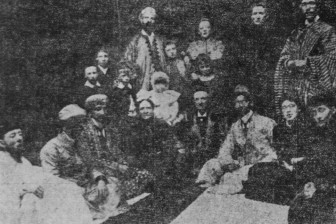
This entry includes information about the personal life of Abdullah Quilliam (1856-1932) and in particular about the two families in...
This is collection of places in Liverpool related to the life of Abdullah Quilliam (1856-1932), the founder of Britain's first attested mosque community in 1887, covering his multiple roles as a religious leader, as a lawyer, as a journalist, as a trade unionist and political activist, as well as his personal life.
This entry includes information about the personal life of Abdullah Quilliam (1856-1932) and in particular about the two families in...
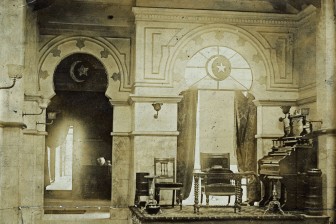
8 Brougham Terrace was the site of Britain's first attested mosque community, called the Liverpool Muslim Institute (LMI). It was...
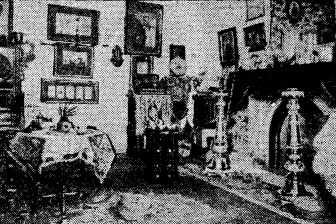
Built by the Quilliam Family, four generations lived in this house from the 1870s to the 1950s. Includes some biographical...
-Lord-Mayor-Liverpool,-MQRWU-President-and-founder-of-Liverpool-FC-overview.jpg)
A philanthropic body under the Poor Law Reform Act of 1832. Built workhouses, housing, schools and hospitals, including the famous...
The Medina Home for Children was the first orphanage founded by Muslims in the UK, and was established in 1896....
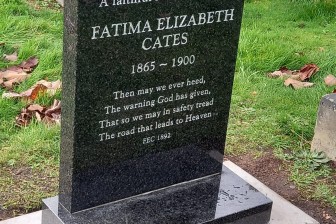
Fatima Elizabeth Cates (5 January 1865-29 October 1900) was probably the first woman to convert to Islam in Merseyside, who...
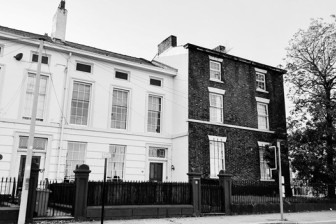
This was the residence of Fatima Elizabeth Cates (1865-1900), as listed in the 1891 Census, among the first women to...
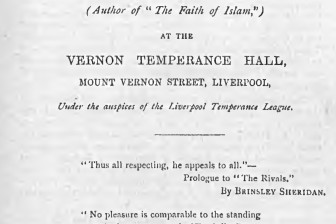
This was the site of the first Muslim prayer hall in the UK, which was formally established as the Liverpool...
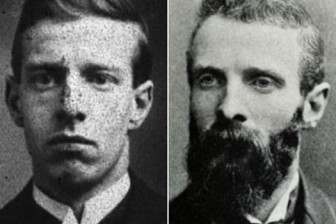
Fatima Elizabeth Cates (1865-1900) lived at "Granada", Victoria Road, in the town of West Kirby on the western side of...
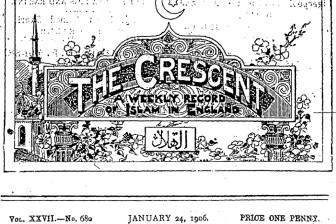
The first location of the printing offices of the first Muslim periodical published in Britain, the weekly Crescent (1893-1908), the...
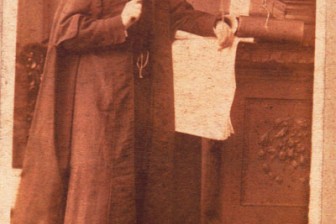
The Magistrates Courts (formerly known as the Police Courts) where the Muslim convert and solicitor William Henry Abdullah Quilliam (1856-1932)...
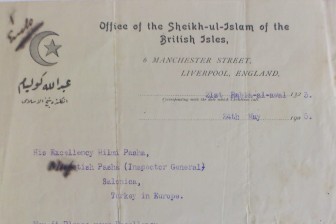
The chambers of Quilliam and Sons, headed by a convert to Islam, the lawyer and journalist, William Henry Abdullah Quilliam...
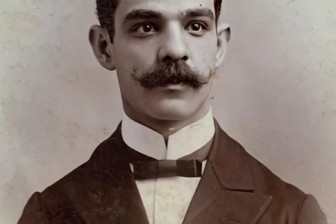
One nineteenth century couple are an early example of an intercultural Muslim marriage. They were Ali and Amy Mokaiesh who...
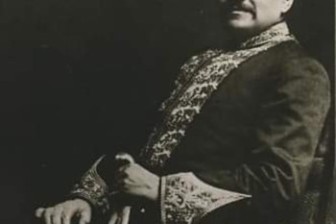
Mustapha Karsa (pictured circa 1900) was born in Damascus in around 1848 to a wealthy landowning family. In 1880-1, Karsa...
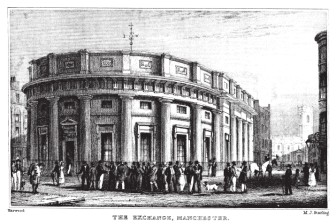
Abdullah Ydlibi [Idlibi] (c.1820-85) came from a family of Arab notables in administration, politics and trade, with branches in Damascus...
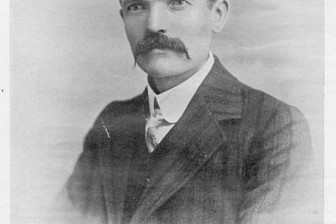
Yahya Parkinson (1874-1918), Scottish Muslim poet, essayist, and critic, was born in Kilwinning, Ayrshire, Scotland, of Irish descent. Born John...
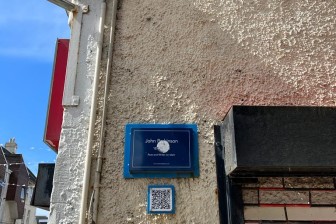
104 Main Street in Kilwinning, Ayrshire, was the birthplace and primary residence of John Parkinson (1874-1814), Britain's founding Muslim poet....
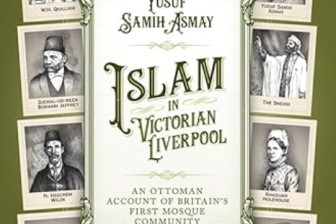
Islam in Victorian Liverpool is a unique eyewitness account dating from 1895 of Britain's first mosque community by an Ottoman...
17 February 1874
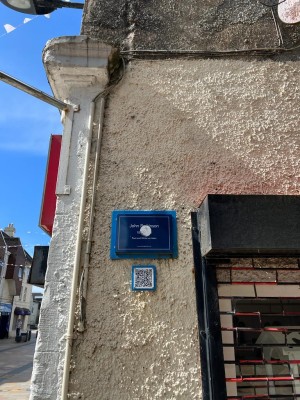

104 Main Street in Kilwinning, Ayrshire, was the birthplace and primary residence of John Parkinson (1874-1814), Britain's founding Muslim poet. Both his parents were born in County Down in Ulster, Samuel, a quarryman, and Margaret, a dressmaker. Parkinson's mother died when he was only seven months and his father returned to Northern Ireland and remarried. Thereafter, Parkinson was brought up by his grandparents, but had to fend for himself from the age of 16, after they died in 1889 and 1890. From 14, he worked for the rest of his life at the Busby Spinning Company in Kilwinning, eventually rising to the position of foreman, but it was his extracurricular activists for which he became best known. Tutored by a local physician and dentist, Dr. A. Milroy, Parkinson became quickly adept as an amateur astronomer, botanist and linguist, picking up Greek within weeks. He also began to compose poetry, some of which was deemed sufficiently good to be included in John MacIntosh's anthology, Poets of Ayrshire from the Fourteenth Century down to the Present Day (1910).
His surviving poetry comes not only in his only published anthology, Lays of Love and War (1904), and in the second half of Muslim Chivalry (1909), but is also scattered in various Muslim periodicals published from Liverpool, Woking, Lahore, Calcutta and Rangoon. That said, aside from published sections, his epic poems on the Ottomans and the Muslim warriors who opposed the Crusaders are lost.
Parkinson's lifelong home at 104 Main St is marked by a plaque placed there by Kilwinning Heritage (pictured), which describes him accurately as a "poet and writer on Islam", although it doesn't mention that he was a convert to Islam. The plaque has a QR code but unfortunately the link at the time of writing.
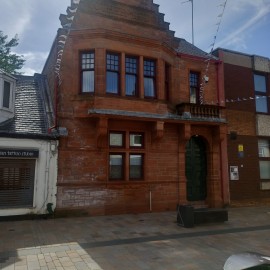
Directly opposite Parkinson's home is Mother Grand Lodge of Kilwinning (pictured), Number "0", which claims to be the oldest Freemasonry lodge in existence, claiming its foundation date as 1140, the year that Kilwinning Abbey was built. Of course, the Muslims of the Liverpool Muslim Institute and Parkinson himself saw Freemasonry and Islam as perfectly compatible. In 1902, Parkinson joined the breakaway Freemasonry lodge, the Order of the Zuzimites, that Abdullah Quilliam had founded (prior to converting to Islam in 1886) in the 1880s or even earlier in the 1870s when he was a teenager. Like Parkinson, many of the other male converts to Islam in Liverpool were active members of the order.
For more on Parkinson's life, see the entry on his grave.
Birt, Yahya, "Abdullah Quilliam’s obituary of Yahya Parkinson (1874-1918)", Yahya Birt's blog, 15 July 2016, https://yahyabirt1.wordpress.com/tag/yahya-parkinson/.
Bowen, Patrick D., 'Abdullah Quilliam and the Rise of International Esoteric-Masonic Islamophilia', in Jamie Gilham, and Ron Geaves (eds), Victorian Muslim: Abdullah Quilliam and Islam in the West (2017; online edn, Oxford Academic, 24 Aug. 2017), https://doi.org/10.1093/oso/9780190688349.003.0003, accessed 25 Aug. 2023.
Parkinson, Yahya, Selected Poems, selected and introduced by A.H. Murad (Cambridge: Cambridge Central Mosque, n.d.), https://cambridgecentralmosque.org/wp-content/uploads/2020/04/ccm-poetry-parkinson.pdf.
Spotted an issue Report this record
Loading please wait