-Lord-Mayor-Liverpool,-MQRWU-President-and-founder-of-Liverpool-FC-overview.jpg)
A philanthropic body under the Poor Law Reform Act of 1832. Built workhouses, housing, schools and hospitals, including the famous...
A philanthropic body under the Poor Law Reform Act of 1832. Built workhouses, housing, schools and hospitals, including the famous...
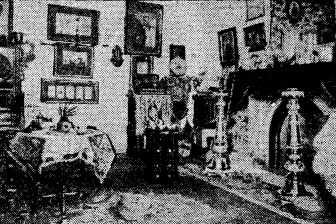
Built by the Quilliam Family, four generations lived in this house from the 1870s to the 1950s. Includes some biographical...
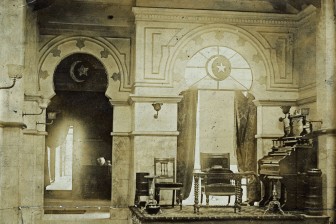
8 Brougham Terrace was the site of Britain's first attested mosque community, called the Liverpool Muslim Institute (LMI). It was...
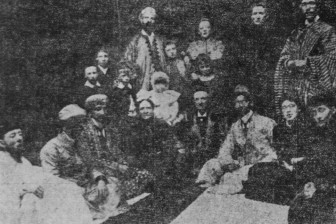
This entry includes information about the personal life of Abdullah Quilliam (1856-1932) and in particular about the two families in...
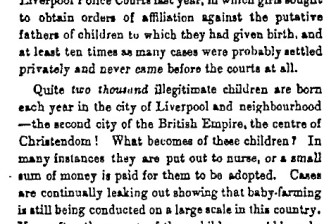
The Medina Home for Children was the first orphanage founded by Muslims in the UK, and was established in 1896....
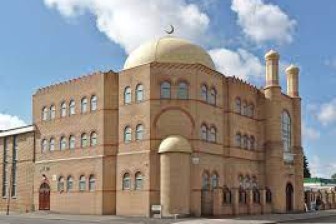
The Mosque was first founded in 1953 by the late Al-Haj Ali Hizzam, a house transformed into a mosque, Masjid...
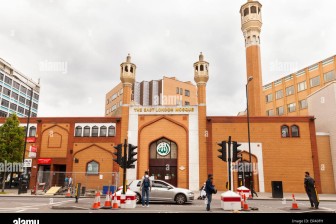
Located in the London Borough of Tower Hamlets, East London Mosque is a part of the London Muslim Centre and...
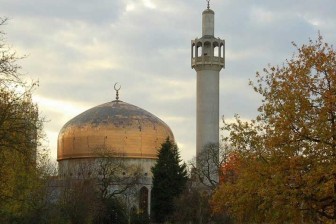
Located on the edge of Regent’s Park, the London Central Mosque, the land for the mosque was presented as a...
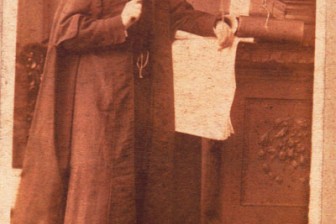
The Magistrates Courts (formerly known as the Police Courts) where the Muslim convert and solicitor William Henry Abdullah Quilliam (1856-1932)...
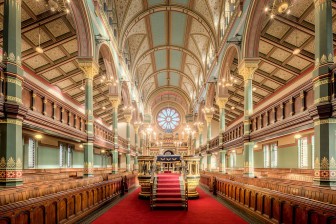
This is a Grade I listed building whose interior is built in an exuberant Orientalist style, a mix of Moorish,...
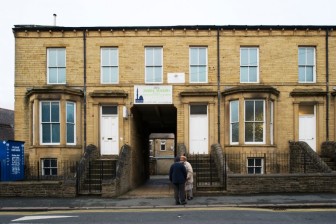
Bradford's oldest mosque was established by the Pakistani Muslim Association in 1958 at 30 Howard Street. It sits a row...
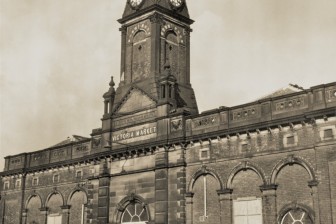
Robert Stanley led the project to build the Victoria Market Hall, just three years after he had been elected as...
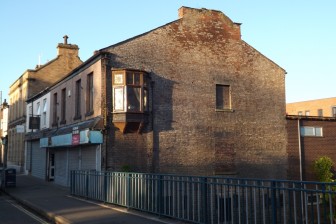
After getting married to Emma Meredith at the age of 19, Robert set up a grocers and tea shop with...
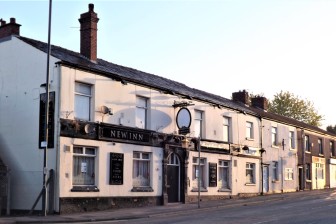
Shortly after stepping down as Mayor of Stalybridge, Robert, Emma, and some of his grown up children moved to the...
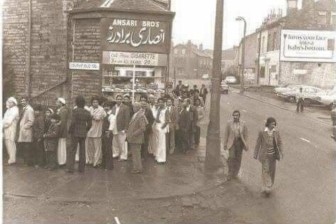
This masjid was established by Pir Maroof Hussain, a local spiritual leader who acknowledged the need for a place of...
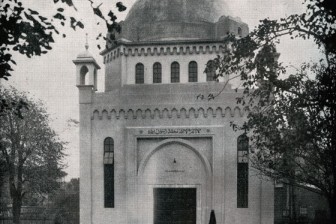
Located in Southfields, London near King George's Park and Southfields train station, the Fazl Mosque, also known as the London...
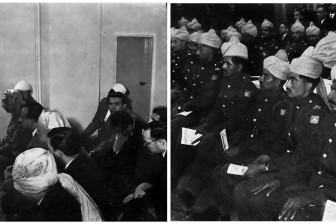
'The East London Mosque Trust has rich a history spanning more than a century. It is London’s oldest Mosque, serving...
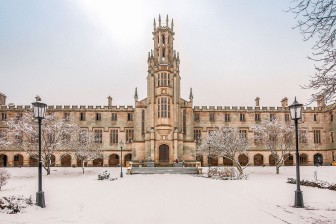
The grandiose building, which was finished in 1843, began life as the Lancashire Independent College, which belonged to the Congregational...
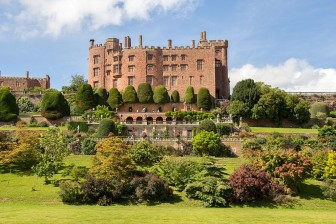
Tipu Sultan (r. 1782-1799) was the ruler of Mysore, an independent state in southern India. With his father, he was...
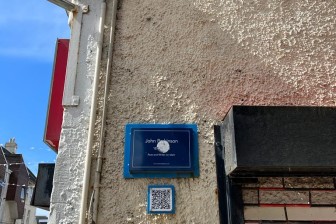
104 Main Street in Kilwinning, Ayrshire, was the birthplace and primary residence of John Parkinson (1874-1814), Britain's founding Muslim poet....
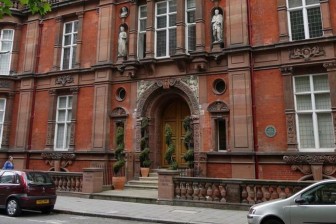
Caxton Hall is a location in which many momentous events occurred, including the assassination of Sir Michael O'Dwyer, the campaign...
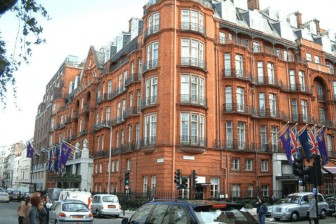
The history of Bangladesh's independence can be traced to the 1947 Partition of British India, and to the history of...
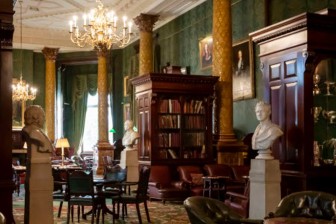
The National Liberal Club (NLC) was established by William Gladstone in 1882, to provide club facilities for Liberal Party campaigners. ...
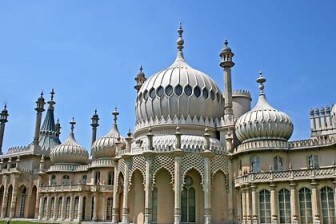
The Royal Pavilion, also known as the Brighton Pavilion, is a historic Grade I listed former royal residence situated in...
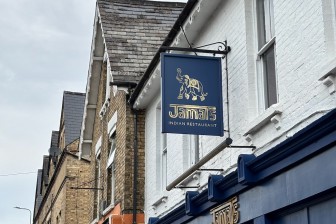
Jamal's Tandoori Restaurant has been a significant place of networking for Muslims across the city. During the 1950s and 1960s,...
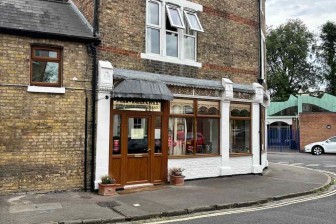
Al Shami restaurant was the site of Oxford's first halal butchers, and was established in the 1960s. Prior to its...
1972
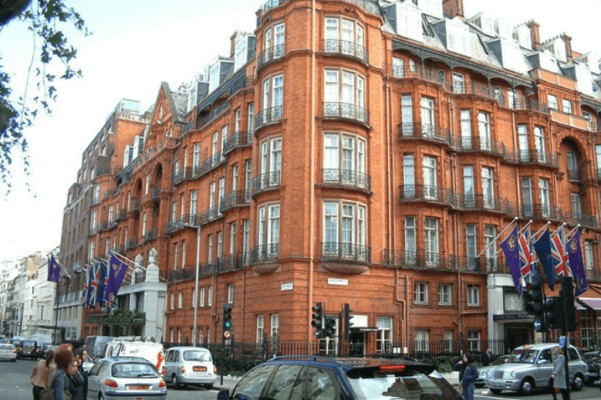
The history of Bangladesh's independence can be traced to the 1947 Partition of British India, and to the history of British colonialism in the subcontinent. As the British left India, in August 1947, the country was divided into the two states of India and Pakistan, Pakistan being split into two regions more than 1000 miles apart: West and East Pakistan (East Bengal). Despite sharing the same religion, East and West Pakistan were culturally and linguistically very different, and these differences, together with a centralised government which privileged West Pakistan, led to friction and eventually to the emergence of protests movements in East Pakistan (initially in response to the imposition of Urdu as the official language of Pakistan) which triggered a war of independence (Liberation War) in 1971.
The war was fought in East Bengal, but the Bengali diaspora in the UK also contributed to the war effort from abroad. At the time of the Liberation War, approximately 22,000 people of East Bengali origins were living in Britain, and around 3,000 of them were living in the East End of London (Glynn 2006, 7). The majority of the East Bengalis living in the UK had very strong links with their homeland, as most of them still retained strong family connections, while many still saw migration to the UK as a temporary experience, as they were expecting to return to their desh. The situation of East Bengal was therefore closely followed by the diaspora. In the 1960s and 1970s, as tensions between West and East Pakistani grew, the community in the UK started to get politically organised, and in the mid-1960s East Bengalis in Tower Hamlets founded the United Kingdom Awami League, the British branch of the political party that was championing the interests of East Pakistan, and eventually its independence (Eade and Garbin 2006, 184). Supporters of independence however cut across the political spectrum, and they would get together to discuss Pakistani politics and ways to support the cause of Bangla-Desh (Glynn 2006, 8- 9). Abdul Mannan Chowdhury’s The Green Mask restaurant in Old Brompton Road became a popular meeting point for East Bengalis in London, regularly hosting meetings with Sheikh Mujibur Rahman, the future first President of Bangladesh, during his visits to London. Mr Khan[1], interviewed by the Migrant Memory and the Postcolonial Imagination research project, recalled meeting him at the Green Mask in 1966:
I remember one day, that was 1966 I think, Sheikh Mujibur Rahman he was the leader, he was a great leader, he was in jail so many times, you must have heard about it and one time when he was kept in prison and then a barrister went from here to release him to get bail, and he was bailed out in 1966. And after he was bailed out, he came to UK and he was holding a meeting in one of the restaurants in Earl’s Court, a place called Green Mask […] And they were all something like between thirty, thirty-five, forty, fifty years of age. And I was the only one, eighteen years young boy, with them there, sitting in the corner.
Indeed, as recalled by Mr Khan, the Bengalis in East London often met with Sheikh Mujibur Rahman, and in 1968 campaigned for his release from prison, collecting money to send a British barrister, Sir Thomas Williams, to defend him from the accused of treason (Kibria 2011, 84; Ullah and Eversley 2010, 51). During the war, Bengalis in the UK raised money in support of the war effort and played a crucial role in raising awareness with the international community (Alexander et al. 2016, 109, 199) as they organised several peaceful protests and rallies, such as the “Recognise Bangla-Desh” rally in Trafalgar Square, on 8th August 1971.
The contribution of British Bengalis to the cause of Bangladesh was such that it is not surprising that it was in London that Sheikh Mujibur Rahman was declared President of Bangladesh, during a press conference organised in the ballroom of the Claridge’s Hotel, on 8th January 1972. More generally, it emphasises the intertwined character of British and East Bengal history, as the legacy of colonialism, and of the Partition of India, extends to this day.

Article by Dr Clelia Clini, Migrant Memory and the Postcolonial Imagination, Loughborough University.
Acknowledgements: Alexander, Claire, Chatterji, Joya, Jalais.
The Bengal Diaspora: Rethinking Muslim Migration.
London and New York: Routledge,2016.
Eade, John & David Garbin, Competing visions of identity and space: Bangladeshi Muslims in Britain, Contemporary South Asia, 15:2, 181-193, 2006.
Glynn Sarah. The Spirit of ’71: how the Bangladeshi War of Independence has haunted Tower Hamlets, online papers archived by the Institute of Geography, School of Geosciences, University of Edinburgh, 2006.
Kibria, Nazli. Muslims in Motion: Islam and National Identity in the Bangladeshi Diaspora, Rutgers University Press 2011.
Ullah, Ansar Ahmed and John Eversley. Bengalis in London’s East End. London: The Swadhinata Trust, 2010.
Spotted an issue Report this record
Loading please wait