-Lord-Mayor-Liverpool,-MQRWU-President-and-founder-of-Liverpool-FC-overview.jpg)
A philanthropic body under the Poor Law Reform Act of 1832. Built workhouses, housing, schools and hospitals, including the famous...
A philanthropic body under the Poor Law Reform Act of 1832. Built workhouses, housing, schools and hospitals, including the famous...
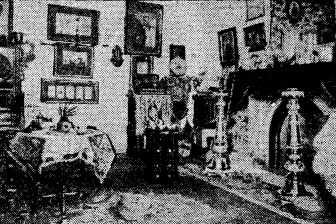
Built by the Quilliam Family, four generations lived in this house from the 1870s to the 1950s. Includes some biographical...
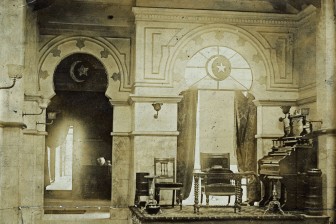
8 Brougham Terrace was the site of Britain's first attested mosque community, called the Liverpool Muslim Institute (LMI). It was...
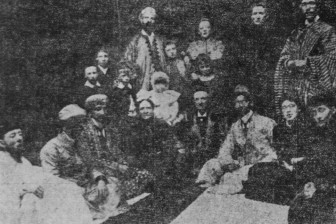
This entry includes information about the personal life of Abdullah Quilliam (1856-1932) and in particular about the two families in...
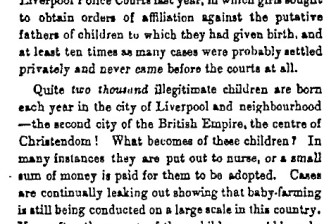
The Medina Home for Children was the first orphanage founded by Muslims in the UK, and was established in 1896....
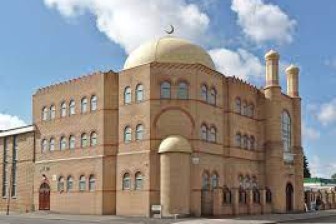
The Mosque was first founded in 1953 by the late Al-Haj Ali Hizzam, a house transformed into a mosque, Masjid...
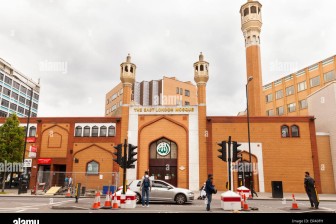
Located in the London Borough of Tower Hamlets, East London Mosque is a part of the London Muslim Centre and...
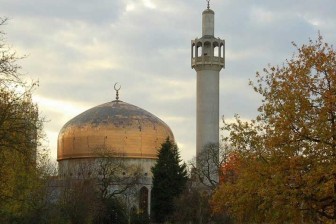
Located on the edge of Regent’s Park, the London Central Mosque, the land for the mosque was presented as a...
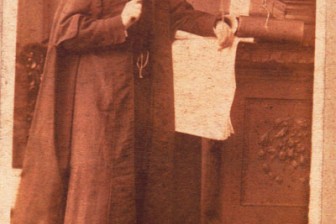
The Magistrates Courts (formerly known as the Police Courts) where the Muslim convert and solicitor William Henry Abdullah Quilliam (1856-1932)...
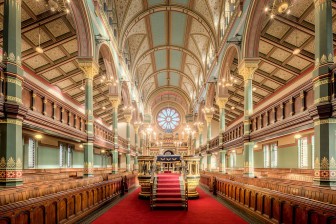
This is a Grade I listed building whose interior is built in an exuberant Orientalist style, a mix of Moorish,...
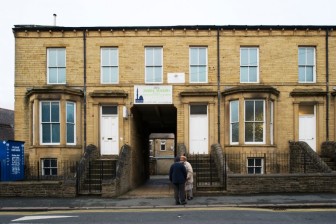
Bradford's oldest mosque was established by the Pakistani Muslim Association in 1958 at 30 Howard Street. It sits a row...
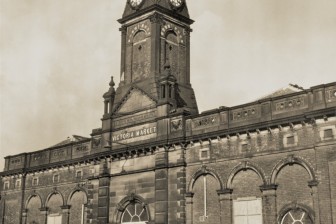
Robert Stanley led the project to build the Victoria Market Hall, just three years after he had been elected as...
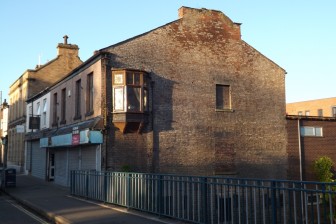
After getting married to Emma Meredith at the age of 19, Robert set up a grocers and tea shop with...
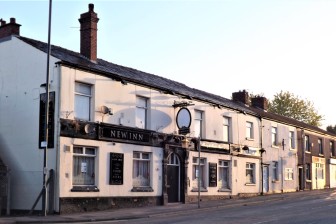
Shortly after stepping down as Mayor of Stalybridge, Robert, Emma, and some of his grown up children moved to the...
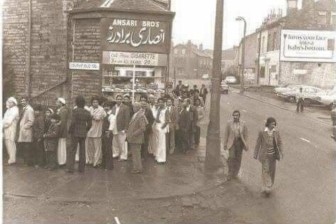
This masjid was established by Pir Maroof Hussain, a local spiritual leader who acknowledged the need for a place of...
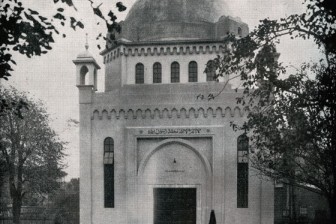
Located in Southfields, London near King George's Park and Southfields train station, the Fazl Mosque, also known as the London...
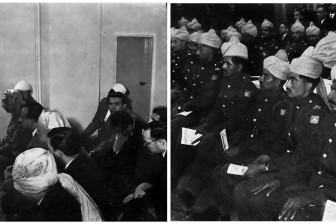
'The East London Mosque Trust has rich a history spanning more than a century. It is London’s oldest Mosque, serving...
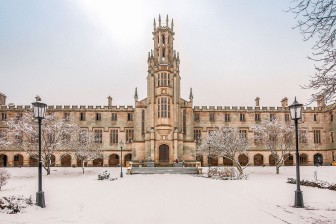
The grandiose building, which was finished in 1843, began life as the Lancashire Independent College, which belonged to the Congregational...
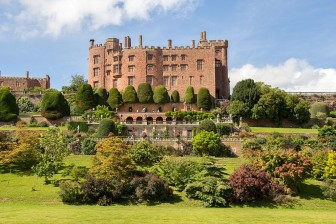
Tipu Sultan (r. 1782-1799) was the ruler of Mysore, an independent state in southern India. With his father, he was...
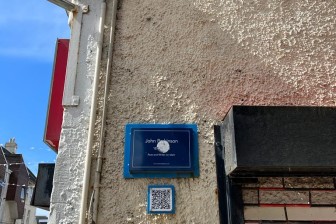
104 Main Street in Kilwinning, Ayrshire, was the birthplace and primary residence of John Parkinson (1874-1814), Britain's founding Muslim poet....
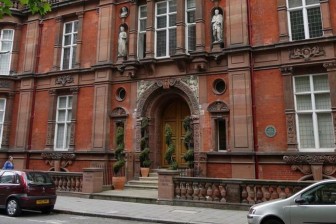
Caxton Hall is a location in which many momentous events occurred, including the assassination of Sir Michael O'Dwyer, the campaign...
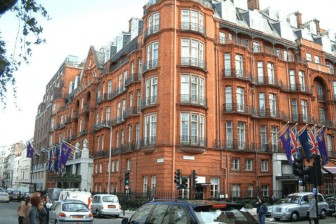
The history of Bangladesh's independence can be traced to the 1947 Partition of British India, and to the history of...
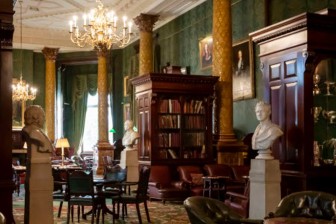
The National Liberal Club (NLC) was established by William Gladstone in 1882, to provide club facilities for Liberal Party campaigners. ...
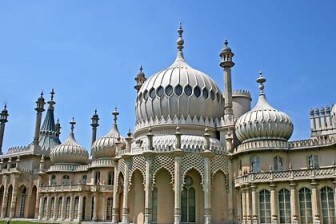
The Royal Pavilion, also known as the Brighton Pavilion, is a historic Grade I listed former royal residence situated in...
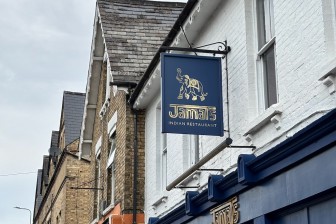
Jamal's Tandoori Restaurant has been a significant place of networking for Muslims across the city. During the 1950s and 1960s,...
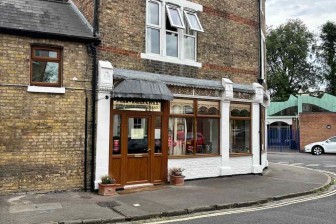
Al Shami restaurant was the site of Oxford's first halal butchers, and was established in the 1960s. Prior to its...
4 May 1799
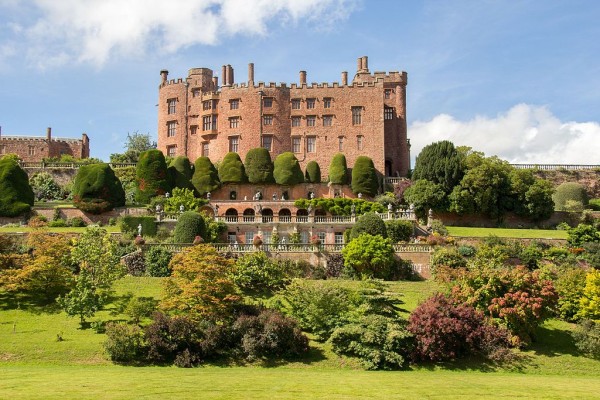

Tipu Sultan (r. 1782-1799) was the ruler of Mysore, an independent state in southern India. With his father, he was famous for defeating the English at the Battle of Pollilur in 1780. Thereafter, no Englishman was allowed to enter Mysore, and it remained a thorn in the side of the East India Company, both economically and militarily. Tipu even pioneered the use of iron rockets. Eventually, however, he was defeated and killed at the siege of Srirangapatna on 4 May 1799 by the English, supported by the Nizam of Hyderabad. Tipu's fortress was raised to the ground, although his summer palace and tomb at Srirangapatna remain intact. Tipu's belongings were looted by English soldiers and hundreds are now scattered around heritage sites in the UK.
One of the most important sites for Tipu's personal effects is Powis Castle. It is associated with Robert Clive (1725–74), or Clive of India, one of the key founders of the British Empire in India. He pioneered a method of imperial plunder in Bengal through tax farming, later deployed elsewhere, which also made him personally wealthy. His son, Edward, married Henrietta, the daughter of the first Earl of Powis, through which the Clives inherited the title and the castle. In 1798, Edward was made the Governor of Madras and with Henrietta collected hundreds of objects, including many that belonged to Tipu. These were collected on a trip she made to Mysore following Tipu's defeat. Some of these are displayed at the Clive Museum at Powis Castle. The labelling is generally quite poor and lacks detail and context. Until this changes, it is advisable to prepare a little in terms of background reading before visiting the collection in person.
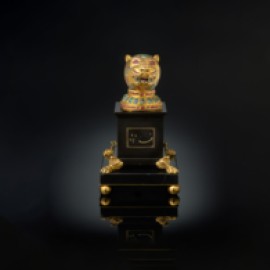
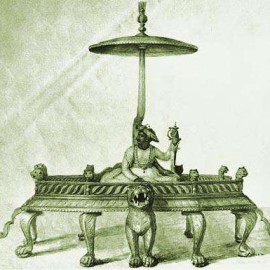
Important objects include the painting of Tipu's throne, which had to be reconstructed on the basis of eyewitness descriptions, as English soldiers had dismantled it, by the Italian governess of Henrietta's children, Anna Tonelli (see attached picture). A life-size tiger holds up the throne's octagonal seat, with eight tiger legs and tiger heads, made of gold and precious stones. On top of the throne is a glittering gold swift (huma) with a tail like a peacock's; swifts are traditionally associated with Persianate kingship. One of the eight tiger heads (finials) can be seen there, the only one that can be seen on public display in Britain (see attached picture). Other of Tipu's personal effects include two silver rosewater sprinklers, a French coffee set, and one of his gilded swords. The sword is decorated with tiger stripes, the motif of his reign, with five interlaced tiger heads on the hilt. The Persian inscription on the sword prays for victory and claims that the sword "is the lightning that flashes through the lives of the infidels". Outside can be seen two of Tipu's bronze cannon, ornamented with tiger heads. These were crafted by Ahmad Khosrau and made in Srirangapatna in 1790–1. On them, there is an Arabic inscription that reads "Asadullah Al-Ghalib", the victorious Lion of God.
Some items of Tipu's at Powis Castle remain too fragile to kept on public display such as a large white cotton tent that Tipu used for receptions; the Clives later used it as a marquee for garden parties at the castle (see images and video at the link below for the Clive Museum).
The castle, the gardens and the Clive Museum, one of the UK's most significant collections of South Asian artefacts dating between 1600 and 1840, was gifted to the National Trust in 1952 and is open to the public. Powis Castle is also famed for its large terraced gardens.
K. Brittleback, Tiger: The Life of Tipu Sultan (Swansea: Claritas Books, 2020).
F. Manji, Hidden Heritage: Rediscovering Britain's Lost Love of the Orient (London: Chatto & Windus, 2021), Ch. 3: The Tiger and the Lion.
Photos: Wikimedia Commons and gov.uk
Spotted an issue Report this record
Loading please wait