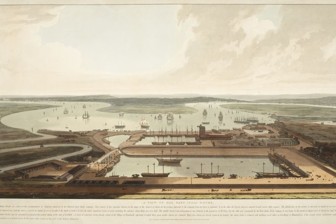
On the 31st of December 1600, Queen Elizabeth I granted a royal charter to more than two hundred City of...
The Remembering Partition Collection is dedicated to exploring the concepts of remembrance, commemoration, and education in relation to understanding and navigating the Empire's enduring impact on the South Asian community in Britain.
On the 31st of December 1600, Queen Elizabeth I granted a royal charter to more than two hundred City of...
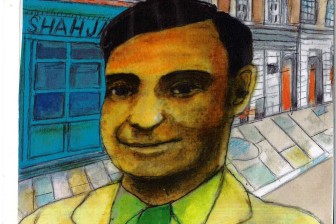
Ayub Ali was born 1st January in 1880, (precise date of birth unknown) in Sylhet, Bangladesh, then a part of...
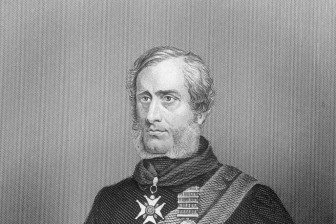
Sir Henry Havelock was a British general renowned for his involvement in India, particularly his successful recapture of Cawnpore from...
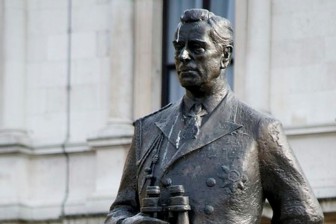
The bronze Mountbatten statue stands on Mountbatten Green, off Horse Guards Road in Whitehall, London. Depicted in his Admiral uniform...
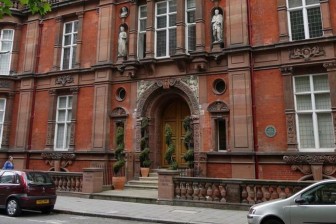
Caxton Hall is a location in which many momentous events occurred, including the assassination of Sir Michael O'Dwyer, the campaign...
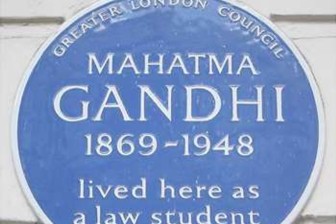
Mohandas Karamchand Gandhi born 2nd of October 1869, more commonly known as Mahatma Gandhi, was born in Porbandar, Kanthiawar, India....
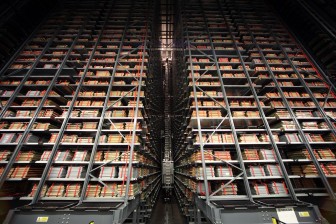
The British Library is home to the India Office Records collection, an extensive collection of archives relating to the administration...
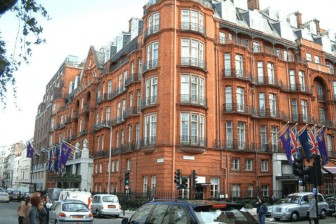
The history of Bangladesh's independence can be traced to the 1947 Partition of British India, and to the history of...
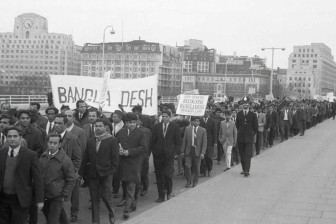
Millions of souls Nineteen seventy onehomeless on Jessore Road under the Gray sunA million dead, the millions who canWalk toward...
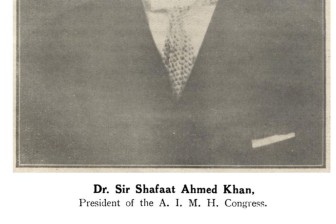
The India Round Table Conferences were a series of 3 talks between 1930-1932. The purpose of these talks was to...
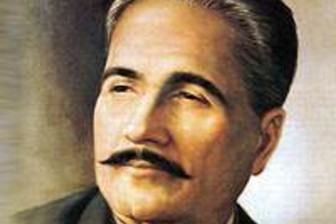
Allama Iqbal is widely considered one of the ideological founding figures of Pakistan and also holds the status of national...
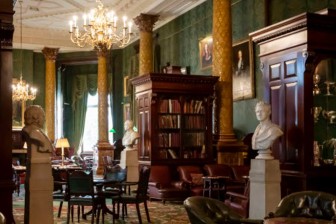
The National Liberal Club (NLC) was established by William Gladstone in 1882, to provide club facilities for Liberal Party campaigners. ...
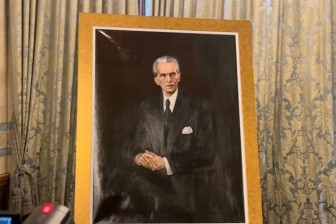
Muhammad Ali Jinnah (1876-1948), also revered as Quaid-i-Azam (Great Leader), was a barrister and politician who played a pivotal role...
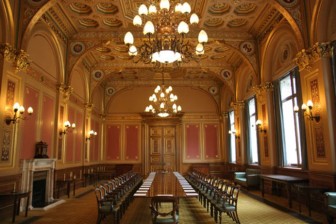
Originally constructed in 1868 as a set of government offices, including the India Office and later the Colonial and Home...
The Empire and Partition heritage trail is based on a collection of essays written by academics and historians to tell...
The Empire and Partition Collection and Trail were created for Everyday Muslim's Remembering Partition project to raise awareness of the...
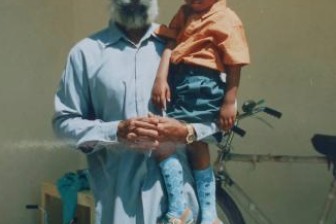
Chanan was born in 1926 in a village near Hoshiarpur. His family owned and farmed the land. He was the...
1878
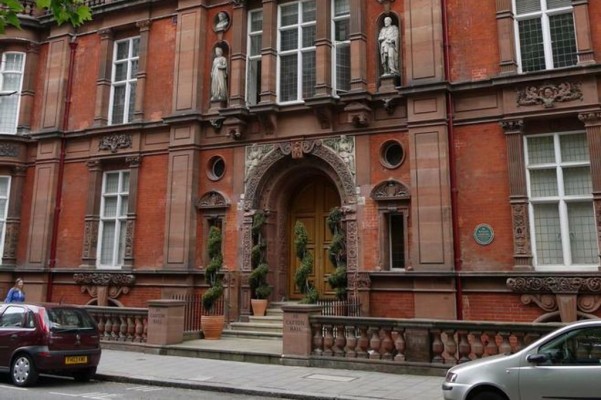
Caxton Hall is a location in which many momentous events occurred, including the assassination of Sir Michael O'Dwyer, the campaign for women's suffrage, and the inaugural meeting of the Muslim League party. Some of the first Jummah prayers were organised at Caxton Hall in 1908 by the actor and writer Duse Mohamed Ali.
Caxton Hall was the location of meetings of the British Cabinet Mission, which had been sent to India to find a solution to the political crises. The meetings were held between May and June 1946 and were important in negotiations between the Indian National Congress and Muslim League. The failure of the Cabinet Mission Plan led to the creation of two separate nations.
Indian Revolutionary Udham Singh assassinated the former Lieutenant Governor of Punjab in Caxton Hall to avenge the Jallianwala Bagh Massacre. When arrested, he said that he’d only meant to protest, not to kill anyone. ‘I just shot to make protest. I have seen people starving In India under British Imperialism. I done it, the pistol went off three or four times. I am not sorry for protesting.’
Singh was tried and convicted of murder and hanged in July 1940. Interestingly, while in custody, he adopted the name “Ram Muhammad Singh Azad” and signed many letters with this name. This title combines a Hindu, Muslim and Sikh name and ends with the Indian word for Freedom (Azad). The adoption of this name in itself was a powerful symbol of religious unity in opposition to British Rule. It depicts the shared struggles of Indians, regardless of religion and creed, against the British. This alias also depicts his deep anti-colonial sentiments and his desire to free India from imperialism.
The Times of London called him a "fighter for freedom", his actions "an expression of the pent-up fury of the downtrodden Indian people."

Article by Mazna Khan
https://www.everydaymuslim.org/projects/remembering-partition/
Spotted an issue Report this record
Loading please wait