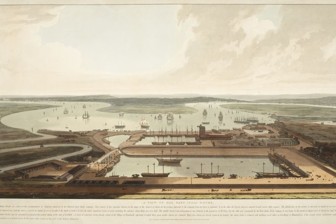
On the 31st of December 1600, Queen Elizabeth I granted a royal charter to more than two hundred City of...
The Remembering Partition Collection is dedicated to exploring the concepts of remembrance, commemoration, and education in relation to understanding and navigating the Empire's enduring impact on the South Asian community in Britain.
On the 31st of December 1600, Queen Elizabeth I granted a royal charter to more than two hundred City of...
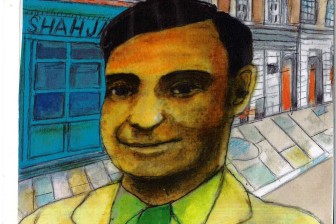
Ayub Ali was born 1st January in 1880, (precise date of birth unknown) in Sylhet, Bangladesh, then a part of...
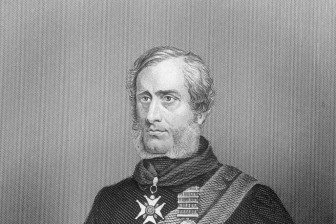
Sir Henry Havelock was a British general renowned for his involvement in India, particularly his successful recapture of Cawnpore from...
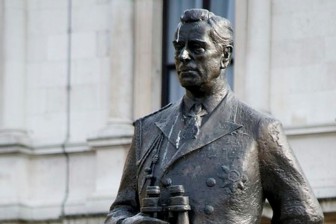
The bronze Mountbatten statue stands on Mountbatten Green, off Horse Guards Road in Whitehall, London. Depicted in his Admiral uniform...
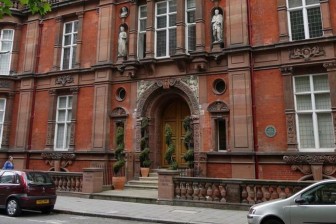
Caxton Hall is a location in which many momentous events occurred, including the assassination of Sir Michael O'Dwyer, the campaign...
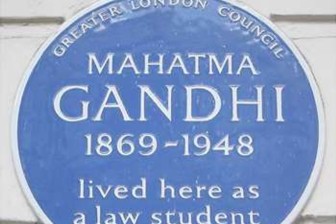
Mohandas Karamchand Gandhi born 2nd of October 1869, more commonly known as Mahatma Gandhi, was born in Porbandar, Kanthiawar, India....
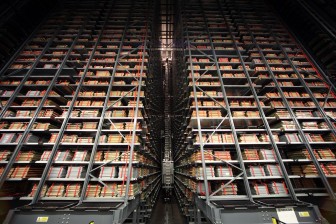
The British Library is home to the India Office Records collection, an extensive collection of archives relating to the administration...
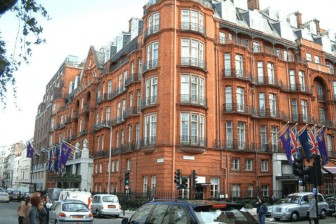
The history of Bangladesh's independence can be traced to the 1947 Partition of British India, and to the history of...
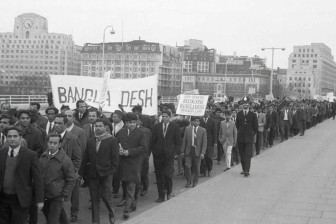
Millions of souls Nineteen seventy onehomeless on Jessore Road under the Gray sunA million dead, the millions who canWalk toward...
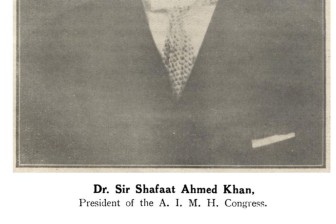
The India Round Table Conferences were a series of 3 talks between 1930-1932. The purpose of these talks was to...
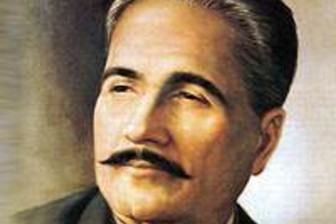
Allama Iqbal is widely considered one of the ideological founding figures of Pakistan and also holds the status of national...
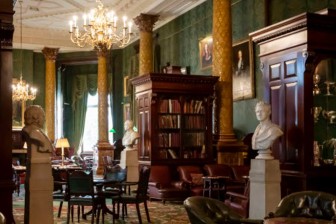
The National Liberal Club (NLC) was established by William Gladstone in 1882, to provide club facilities for Liberal Party campaigners. ...
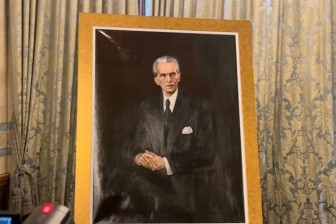
Muhammad Ali Jinnah (1876-1948), also revered as Quaid-i-Azam (Great Leader), was a barrister and politician who played a pivotal role...
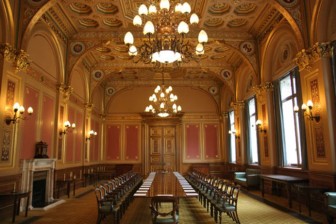
Originally constructed in 1868 as a set of government offices, including the India Office and later the Colonial and Home...
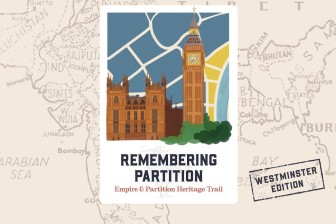
The Empire and Partition heritage trail is based on a collection of essays written by academics and historians to tell...
The Empire and Partition Collection and Trail were created for Everyday Muslim's Remembering Partition project to raise awareness of the...
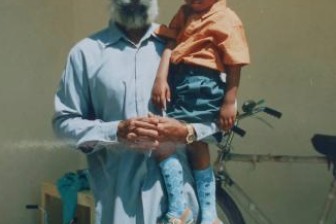
Chanan was born in 1926 in a village near Hoshiarpur. His family owned and farmed the land. He was the...
The Empire and Partition heritage trail is based on a collection of essays written by academics and historians to tell the shared history of the British Empire in India and the partition of India in 1947.
The collection tells the story of this story starting in 1600 when Queen Elizabeth I granted a charter on December 31, 1600, forming the East India Company (EIC). The company traded spices, textiles, and goods in India, gaining influence through territorial and tax control and even a private army.
Over time, the EIC became a ruling power in parts of India, exploiting India's resources, committing atrocities against Indian civilians and employing a "divide-and-rule" strategy, which created tension between ethnic and religious groups. Following the Indian Uprising of 1857, the British government took control of India from the company, turning it into a British colony.
By the mid-1900s, the movement for Indian independence grew stronger and was led by figures such as Mohandas Karamchand Gandhi, Jawaharlal Nehru and Muhammad Ali Jinnah. However, there were significant disagreements about the outcome of Indian independence. Jinnah wanted to secure rights for Muslims and, by 1940, demanded a separate nation for India’s Muslims, whilst Gandhi supported a united India. The British government eventually agreed to grant India its freedom and, later, accepted Jinnah’s demands.
On 15th August 1947, India gained independence, and the country was split into two separate nations: Hindu-majority India and Muslim-majority East and West Pakistan. Pakistan gained its independence a day earlier, on 14th August 1947.
Lord Louis Mountbatten- the last Viceroy of India- played a crucial role in overseeing the country's independence. Sir Cyril Radcliffe was appointed to draw a border between India and Pakistan; the contentious boundary is known as the ‘Radcliffe Line’. Later in 1971, East Pakistan declared its Independence from West Pakistan, and Bangladesh was born. The partition of India was hasty, resulting in the largest mass migration in history, communal violence, the tragic loss of lives and the displacement of millions of people.
Disclaimer: Views expressed in this content are solely those of the author and do not necessarily represent the opinions or beliefs of any organisation involved in the Remembering Partition project.

Spotted an issue Report this record
Loading please wait