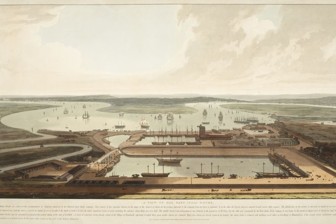
On the 31st of December 1600, Queen Elizabeth I granted a royal charter to more than two hundred City of...
The Remembering Partition Collection is dedicated to exploring the concepts of remembrance, commemoration, and education in relation to understanding and navigating the Empire's enduring impact on the South Asian community in Britain.
On the 31st of December 1600, Queen Elizabeth I granted a royal charter to more than two hundred City of...
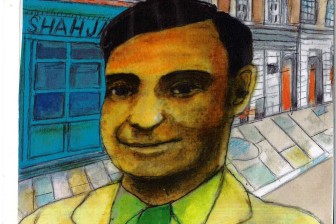
Ayub Ali was born 1st January in 1880, (precise date of birth unknown) in Sylhet, Bangladesh, then a part of...
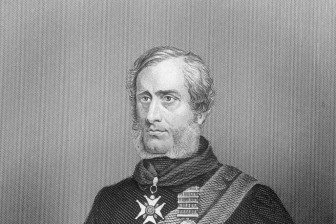
Sir Henry Havelock was a British general renowned for his involvement in India, particularly his successful recapture of Cawnpore from...
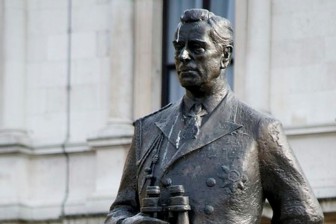
The bronze Mountbatten statue stands on Mountbatten Green, off Horse Guards Road in Whitehall, London. Depicted in his Admiral uniform...
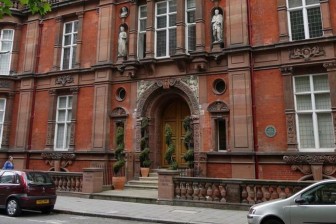
Caxton Hall is a location in which many momentous events occurred, including the assassination of Sir Michael O'Dwyer, the campaign...
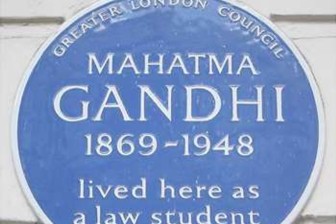
Mohandas Karamchand Gandhi born 2nd of October 1869, more commonly known as Mahatma Gandhi, was born in Porbandar, Kanthiawar, India....
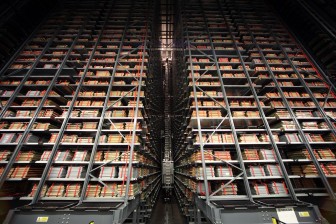
The British Library is home to the India Office Records collection, an extensive collection of archives relating to the administration...
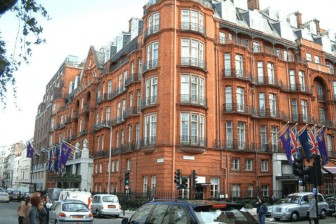
The history of Bangladesh's independence can be traced to the 1947 Partition of British India, and to the history of...
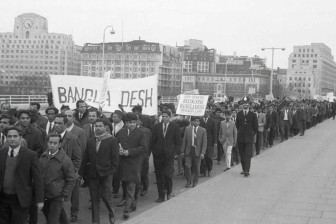
Millions of souls Nineteen seventy onehomeless on Jessore Road under the Gray sunA million dead, the millions who canWalk toward...
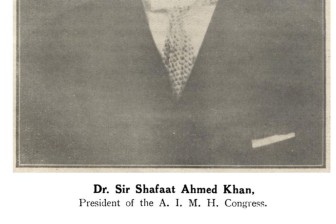
The India Round Table Conferences were a series of 3 talks between 1930-1932. The purpose of these talks was to...
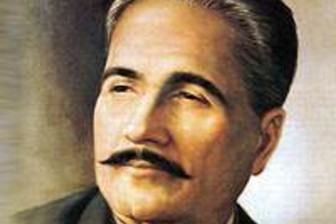
Allama Iqbal is widely considered one of the ideological founding figures of Pakistan and also holds the status of national...
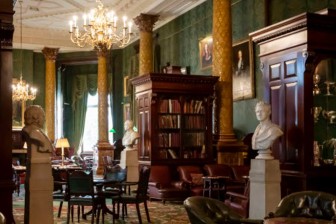
The National Liberal Club (NLC) was established by William Gladstone in 1882, to provide club facilities for Liberal Party campaigners. ...
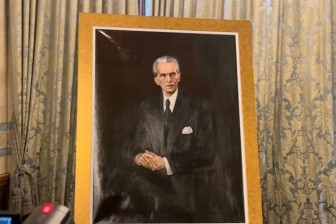
Muhammad Ali Jinnah (1876-1948), also revered as Quaid-i-Azam (Great Leader), was a barrister and politician who played a pivotal role...
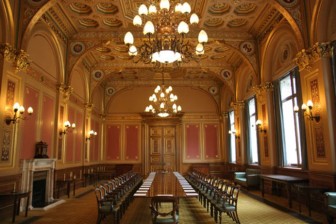
Originally constructed in 1868 as a set of government offices, including the India Office and later the Colonial and Home...
The Empire and Partition heritage trail is based on a collection of essays written by academics and historians to tell...
The Empire and Partition Collection and Trail were created for Everyday Muslim's Remembering Partition project to raise awareness of the...
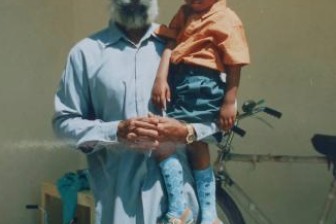
Chanan was born in 1926 in a village near Hoshiarpur. His family owned and farmed the land. He was the...
1972
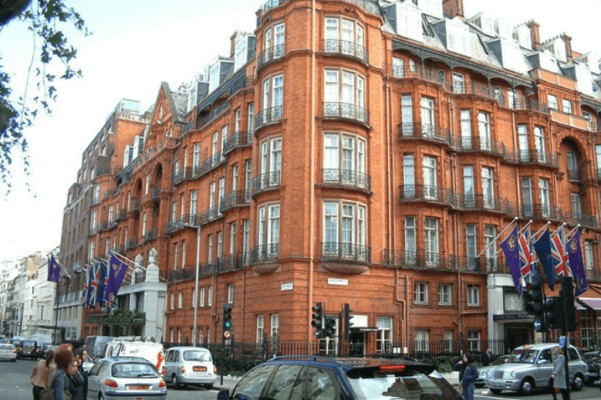
The history of Bangladesh's independence can be traced to the 1947 Partition of British India, and to the history of British colonialism in the subcontinent. As the British left India, in August 1947, the country was divided into the two states of India and Pakistan, Pakistan being split into two regions more than 1000 miles apart: West and East Pakistan (East Bengal). Despite sharing the same religion, East and West Pakistan were culturally and linguistically very different, and these differences, together with a centralised government which privileged West Pakistan, led to friction and eventually to the emergence of protests movements in East Pakistan (initially in response to the imposition of Urdu as the official language of Pakistan) which triggered a war of independence (Liberation War) in 1971.
The war was fought in East Bengal, but the Bengali diaspora in the UK also contributed to the war effort from abroad. At the time of the Liberation War, approximately 22,000 people of East Bengali origins were living in Britain, and around 3,000 of them were living in the East End of London (Glynn 2006, 7). The majority of the East Bengalis living in the UK had very strong links with their homeland, as most of them still retained strong family connections, while many still saw migration to the UK as a temporary experience, as they were expecting to return to their desh. The situation of East Bengal was therefore closely followed by the diaspora. In the 1960s and 1970s, as tensions between West and East Pakistani grew, the community in the UK started to get politically organised, and in the mid-1960s East Bengalis in Tower Hamlets founded the United Kingdom Awami League, the British branch of the political party that was championing the interests of East Pakistan, and eventually its independence (Eade and Garbin 2006, 184). Supporters of independence however cut across the political spectrum, and they would get together to discuss Pakistani politics and ways to support the cause of Bangla-Desh (Glynn 2006, 8- 9). Abdul Mannan Chowdhury’s The Green Mask restaurant in Old Brompton Road became a popular meeting point for East Bengalis in London, regularly hosting meetings with Sheikh Mujibur Rahman, the future first President of Bangladesh, during his visits to London. Mr Khan[1], interviewed by the Migrant Memory and the Postcolonial Imagination research project, recalled meeting him at the Green Mask in 1966:
I remember one day, that was 1966 I think, Sheikh Mujibur Rahman he was the leader, he was a great leader, he was in jail so many times, you must have heard about it and one time when he was kept in prison and then a barrister went from here to release him to get bail, and he was bailed out in 1966. And after he was bailed out, he came to UK and he was holding a meeting in one of the restaurants in Earl’s Court, a place called Green Mask […] And they were all something like between thirty, thirty-five, forty, fifty years of age. And I was the only one, eighteen years young boy, with them there, sitting in the corner.
Indeed, as recalled by Mr Khan, the Bengalis in East London often met with Sheikh Mujibur Rahman, and in 1968 campaigned for his release from prison, collecting money to send a British barrister, Sir Thomas Williams, to defend him from the accused of treason (Kibria 2011, 84; Ullah and Eversley 2010, 51). During the war, Bengalis in the UK raised money in support of the war effort and played a crucial role in raising awareness with the international community (Alexander et al. 2016, 109, 199) as they organised several peaceful protests and rallies, such as the “Recognise Bangla-Desh” rally in Trafalgar Square, on 8th August 1971.
The contribution of British Bengalis to the cause of Bangladesh was such that it is not surprising that it was in London that Sheikh Mujibur Rahman was declared President of Bangladesh, during a press conference organised in the ballroom of the Claridge’s Hotel, on 8th January 1972. More generally, it emphasises the intertwined character of British and East Bengal history, as the legacy of colonialism, and of the Partition of India, extends to this day.

Article by Dr Clelia Clini, Migrant Memory and the Postcolonial Imagination, Loughborough University.
Acknowledgements: Alexander, Claire, Chatterji, Joya, Jalais.
The Bengal Diaspora: Rethinking Muslim Migration.
London and New York: Routledge,2016.
Eade, John & David Garbin, Competing visions of identity and space: Bangladeshi Muslims in Britain, Contemporary South Asia, 15:2, 181-193, 2006.
Glynn Sarah. The Spirit of ’71: how the Bangladeshi War of Independence has haunted Tower Hamlets, online papers archived by the Institute of Geography, School of Geosciences, University of Edinburgh, 2006.
Kibria, Nazli. Muslims in Motion: Islam and National Identity in the Bangladeshi Diaspora, Rutgers University Press 2011.
Ullah, Ansar Ahmed and John Eversley. Bengalis in London’s East End. London: The Swadhinata Trust, 2010.
Spotted an issue Report this record
Loading please wait