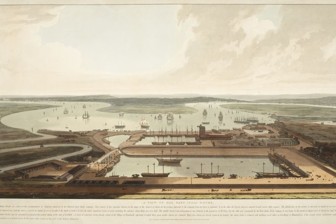
On the 31st of December 1600, Queen Elizabeth I granted a royal charter to more than two hundred City of...
The Remembering Partition Collection is dedicated to exploring the concepts of remembrance, commemoration, and education in relation to understanding and navigating the Empire's enduring impact on the South Asian community in Britain.
On the 31st of December 1600, Queen Elizabeth I granted a royal charter to more than two hundred City of...
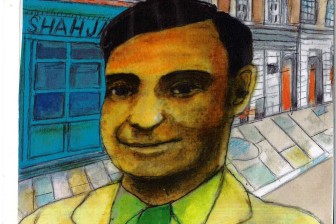
Ayub Ali was born 1st January in 1880, (precise date of birth unknown) in Sylhet, Bangladesh, then a part of...
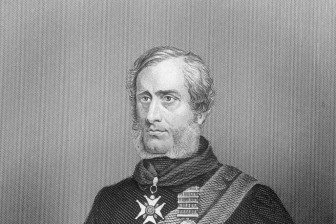
Sir Henry Havelock was a British general renowned for his involvement in India, particularly his successful recapture of Cawnpore from...
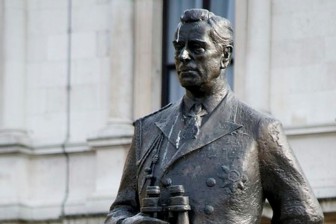
The bronze Mountbatten statue stands on Mountbatten Green, off Horse Guards Road in Whitehall, London. Depicted in his Admiral uniform...
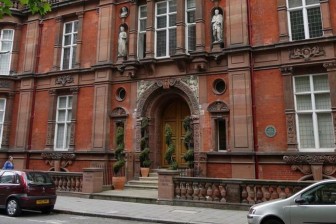
Caxton Hall is a location in which many momentous events occurred, including the assassination of Sir Michael O'Dwyer, the campaign...
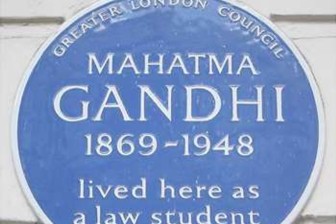
Mohandas Karamchand Gandhi born 2nd of October 1869, more commonly known as Mahatma Gandhi, was born in Porbandar, Kanthiawar, India....
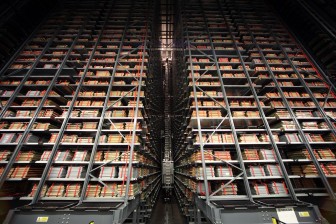
The British Library is home to the India Office Records collection, an extensive collection of archives relating to the administration...
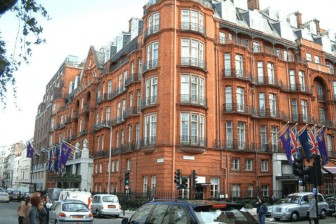
The history of Bangladesh's independence can be traced to the 1947 Partition of British India, and to the history of...
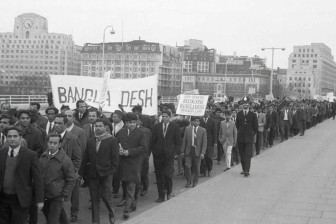
Millions of souls Nineteen seventy onehomeless on Jessore Road under the Gray sunA million dead, the millions who canWalk toward...
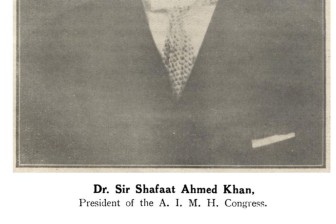
The India Round Table Conferences were a series of 3 talks between 1930-1932. The purpose of these talks was to...
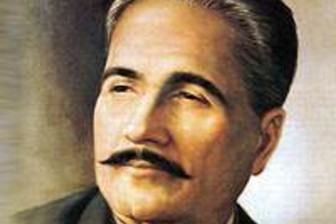
Allama Iqbal is widely considered one of the ideological founding figures of Pakistan and also holds the status of national...
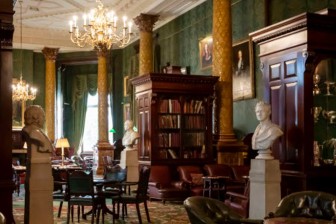
The National Liberal Club (NLC) was established by William Gladstone in 1882, to provide club facilities for Liberal Party campaigners. ...
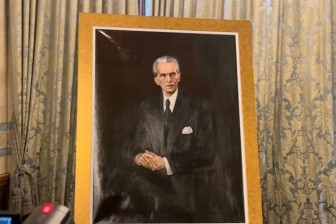
Muhammad Ali Jinnah (1876-1948), also revered as Quaid-i-Azam (Great Leader), was a barrister and politician who played a pivotal role...
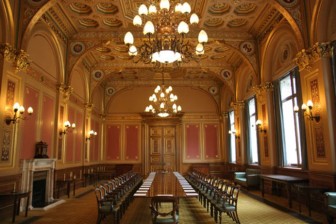
Originally constructed in 1868 as a set of government offices, including the India Office and later the Colonial and Home...
The Empire and Partition heritage trail is based on a collection of essays written by academics and historians to tell...

The Empire and Partition Collection and Trail were created for Everyday Muslim's Remembering Partition project to raise awareness of the...

Chanan was born in 1926 in a village near Hoshiarpur. His family owned and farmed the land. He was the...
2 November 1983
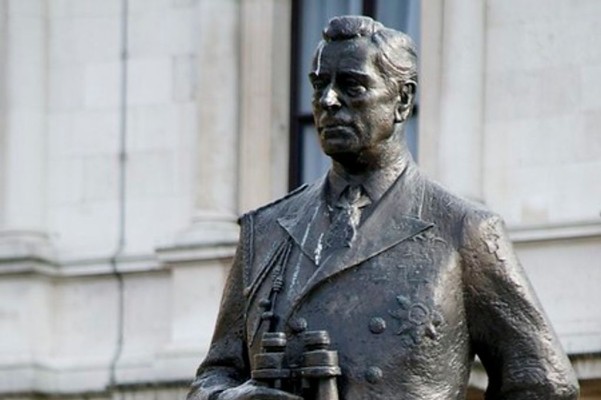
The bronze Mountbatten statue stands on Mountbatten Green, off Horse Guards Road in Whitehall, London. Depicted in his Admiral uniform and displaying his honours, including the Order of the Garter, the statue of Lord Mountbatten after his part played in the acceleration of Partition is certainly controversial.
Lord Albert Victor Nicholas Louis Francis Mountbatten (1900-1979) was the first Earl Mountbatten of Burma, a Naval officer, colonial administrator and relative of the British Royal Family. He was the last viceroy of British India and with full plenipotentiary power, oversaw the dishevelled transfer of power from British hands to an independent India and Pakistan. His involvement in Partition is repeatedly criticised and debated as he is often blamed for the disorganisation of the forced mass migration and carnage that accompanied British departure.
After Britain’s intense 200+ year exploitation of India, Viceroy Mountbatten was in position of absolute power. On 3rd June 1947, the ‘Mountbatten Plan’ was established and proposed several principles including two separate dominions for Pakistan and India, establishment of a Governor-General in each state and the establishment of their own constitution. In March 1947, Mountbatten arrived in India with an explicit mandate to achieve the transfer of power before June 1948 and Mountbatten soon appointed a very perplexed Sir Cyril Radcliffe to decide on border lines in just five weeks. No one anticipated that the enforced border and crystallization of national identities along religious lines would descend into chaos, rage and genocide.
August 14th and 15th 1947 were the declared appointed dates for the forced and rapid handover, with individuals, families and communities leaving their possessions and property behind to flee to their newly designated borders. From a purely British perspective, Mountbatten’s contribution was a certainly successful imperial exit.

Author: Saarah Ahmed https://military-history.fandom.com/wiki/Statue_of_the_Earl_Mountbatten,_London http://sotonopedia.wikidot.com/page-browse:mountbatten-statue:grosvenor-square https://www.ncbi.nlm.nih.gov/pmc/articles/PMC6753808/#:~:text=Mountbatten%20negotiated%20the%20partition%20plan,partition%20between%20India%20and%20Pakistan. https://www.nam.ac.uk/explore/independence-and-partition-1947#:~:text=Law%20and%20order,over%20to%20the%20Indian%20Army. https://www.newyorker.com/magazine/2007/08/13/exit-wounds
Spotted an issue Report this record
Loading please wait