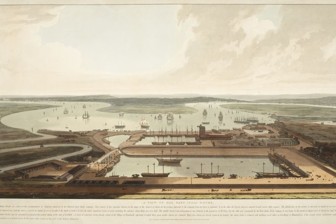
On the 31st of December 1600, Queen Elizabeth I granted a royal charter to more than two hundred City of...
The Remembering Partition Collection is dedicated to exploring the concepts of remembrance, commemoration, and education in relation to understanding and navigating the Empire's enduring impact on the South Asian community in Britain.
On the 31st of December 1600, Queen Elizabeth I granted a royal charter to more than two hundred City of...
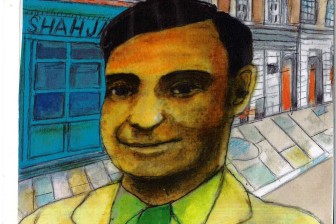
Ayub Ali was born 1st January in 1880, (precise date of birth unknown) in Sylhet, Bangladesh, then a part of...
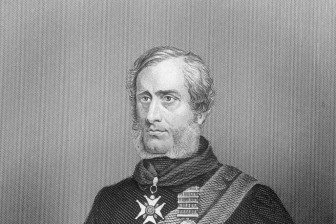
Sir Henry Havelock was a British general renowned for his involvement in India, particularly his successful recapture of Cawnpore from...
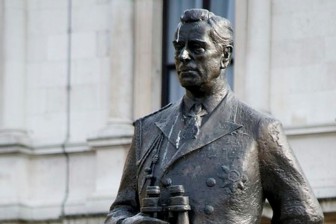
The bronze Mountbatten statue stands on Mountbatten Green, off Horse Guards Road in Whitehall, London. Depicted in his Admiral uniform...
Caxton Hall is a location in which many momentous events occurred, including the assassination of Sir Michael O'Dwyer, the campaign...
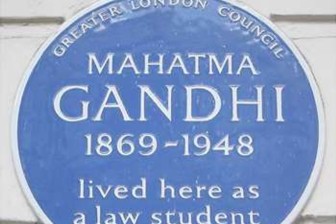
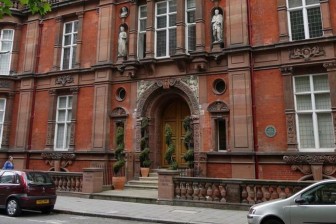
Mohandas Karamchand Gandhi born 2nd of October 1869, more commonly known as Mahatma Gandhi, was born in Porbandar, Kanthiawar, India....
The British Library is home to the India Office Records collection, an extensive collection of archives relating to the administration...
The history of Bangladesh's independence can be traced to the 1947 Partition of British India, and to the history of...
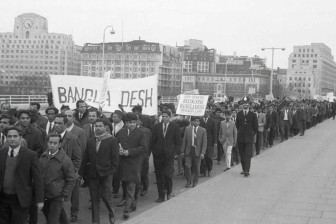
Millions of souls Nineteen seventy onehomeless on Jessore Road under the Gray sunA million dead, the millions who canWalk toward...
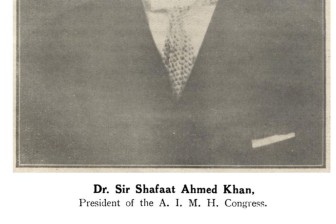
The India Round Table Conferences were a series of 3 talks between 1930-1932. The purpose of these talks was to...
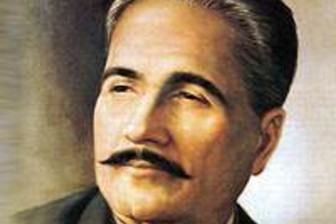
Allama Iqbal is widely considered one of the ideological founding figures of Pakistan and also holds the status of national...
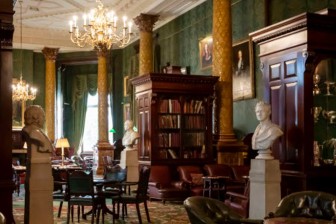
The National Liberal Club (NLC) was established by William Gladstone in 1882, to provide club facilities for Liberal Party campaigners. ...
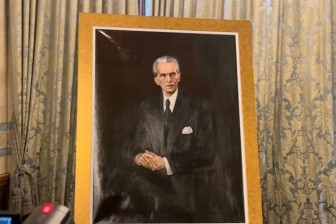
Muhammad Ali Jinnah (1876-1948), also revered as Quaid-i-Azam (Great Leader), was a barrister and politician who played a pivotal role...
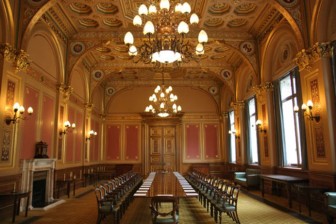
Originally constructed in 1868 as a set of government offices, including the India Office and later the Colonial and Home...
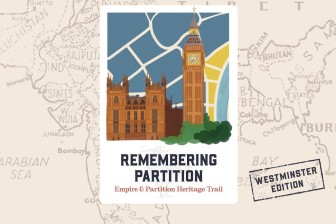
The Empire and Partition heritage trail is based on a collection of essays written by academics and historians to tell...

The Empire and Partition Collection and Trail were created for Everyday Muslim's Remembering Partition project to raise awareness of the...

Chanan was born in 1926 in a village near Hoshiarpur. His family owned and farmed the land. He was the...
1869 -
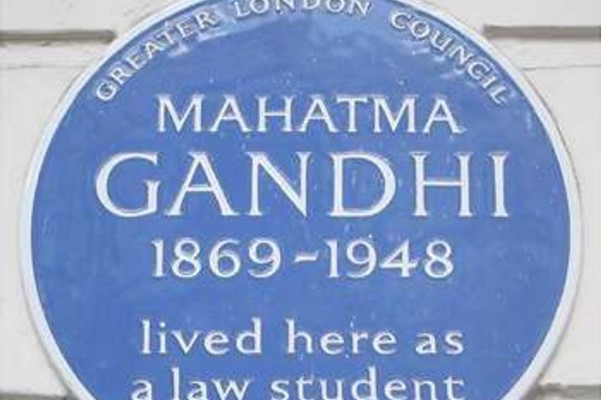
Mohandas Karamchand Gandhi born 2nd of October 1869, more commonly known as Mahatma Gandhi, was born in Porbandar, Kanthiawar, India. He was well-known for his politics and activism against colonial rule as well as for advocating for India’s self-independence. Particularly during the time of Partition, Gandhi was committed in spreading unity amongst the people of India. He did not let differences of religion divide the Indian people to regaining independence.
In 1888, Gandhi arrived in London to study Law. Gandhi resided in notable places in London, including addresses at 15 St Charles Square, northern Kensington, and 52 St Stephen’s Gardens (formerly St Stephen’s Square), Bayswater. He was also well acquainted with societies like the London Indian Society as well as the Pan-Islamic Society, the National Indian Association, and the Northbrook Indian Society.
As well as his politics in London. Gandhi was also active and vocal on speaking about the treatment of Asians in Africa. When doing this, Gandhi consulted Lord Elgin, General and Viceroy of India, to address the discrimination Indians were experiencing in South Africa.
What was quite unique about Gandhi’s approach to India’s self-determination was the practise of satyagraha, a method of not only non-violence but a mental endurance of governance through truth. This commitment enabled Gandhi to lead against the opposition to the Raj of India.
By 1931, Gandhi was impacting everyday life in India as well as political life and national life. He was particularly active during the second Round Table conference in 1931, taking place in London. This was a significant moment as Gandhi voiced the issues facing the people of India, or at least claimed to. However, many of the delegates felt that Gandhi misrepresented the struggles facing the Indian people. This consequently led to little support and aid of the people of India and did not provide enough grounding to the future of India. This therefore also continued civil unrest as India’s future appeared unstable.

Author: Sibia Akhtar Sources: https://www.english-heritage.org.uk/visit/blue-plaques/mahatma-gandhi/ https://www.open.ac.uk/researchprojects/makingbritain/content/mohandas-karamchand-gandhi
Spotted an issue Report this record
Loading please wait