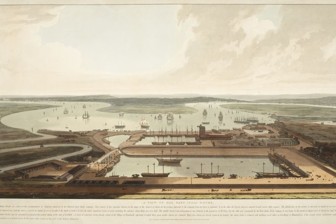
On the 31st of December 1600, Queen Elizabeth I granted a royal charter to more than two hundred City of...
The Remembering Partition Collection is dedicated to exploring the concepts of remembrance, commemoration, and education in relation to understanding and navigating the Empire's enduring impact on the South Asian community in Britain.
On the 31st of December 1600, Queen Elizabeth I granted a royal charter to more than two hundred City of...
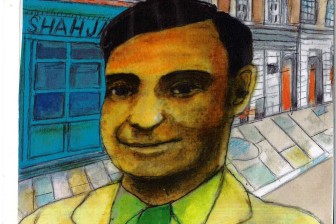
Ayub Ali was born 1st January in 1880, (precise date of birth unknown) in Sylhet, Bangladesh, then a part of...
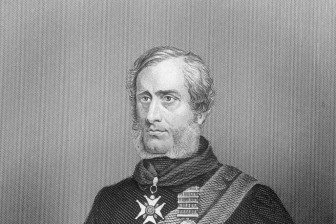
Sir Henry Havelock was a British general renowned for his involvement in India, particularly his successful recapture of Cawnpore from...
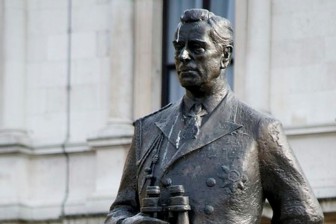
The bronze Mountbatten statue stands on Mountbatten Green, off Horse Guards Road in Whitehall, London. Depicted in his Admiral uniform...
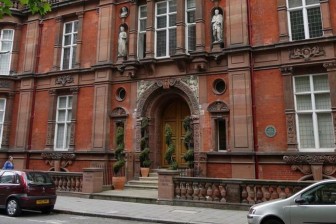
Caxton Hall is a location in which many momentous events occurred, including the assassination of Sir Michael O'Dwyer, the campaign...
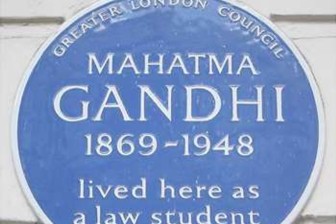
Mohandas Karamchand Gandhi born 2nd of October 1869, more commonly known as Mahatma Gandhi, was born in Porbandar, Kanthiawar, India....
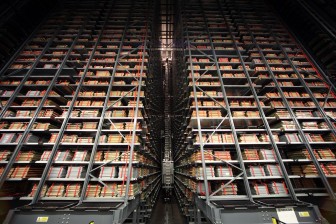
The British Library is home to the India Office Records collection, an extensive collection of archives relating to the administration...
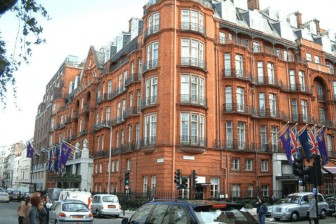
The history of Bangladesh's independence can be traced to the 1947 Partition of British India, and to the history of...
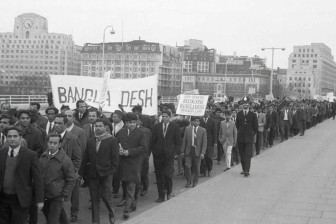
Millions of souls Nineteen seventy onehomeless on Jessore Road under the Gray sunA million dead, the millions who canWalk toward...
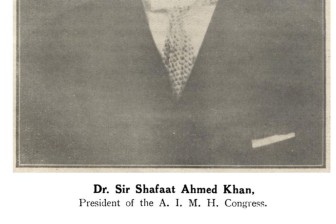
The India Round Table Conferences were a series of 3 talks between 1930-1932. The purpose of these talks was to...
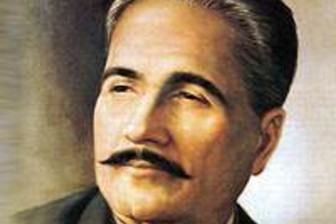
Allama Iqbal is widely considered one of the ideological founding figures of Pakistan and also holds the status of national...
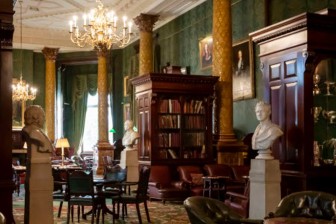
The National Liberal Club (NLC) was established by William Gladstone in 1882, to provide club facilities for Liberal Party campaigners. ...
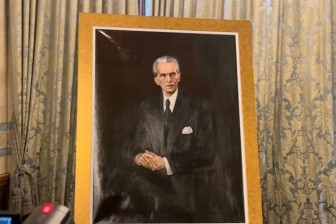
Muhammad Ali Jinnah (1876-1948), also revered as Quaid-i-Azam (Great Leader), was a barrister and politician who played a pivotal role...
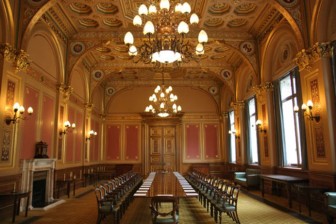
Originally constructed in 1868 as a set of government offices, including the India Office and later the Colonial and Home...
The Empire and Partition heritage trail is based on a collection of essays written by academics and historians to tell...
The Empire and Partition Collection and Trail were created for Everyday Muslim's Remembering Partition project to raise awareness of the...
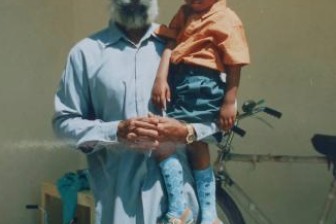
Chanan was born in 1926 in a village near Hoshiarpur. His family owned and farmed the land. He was the...
25 December 1876 - 11 September 1948
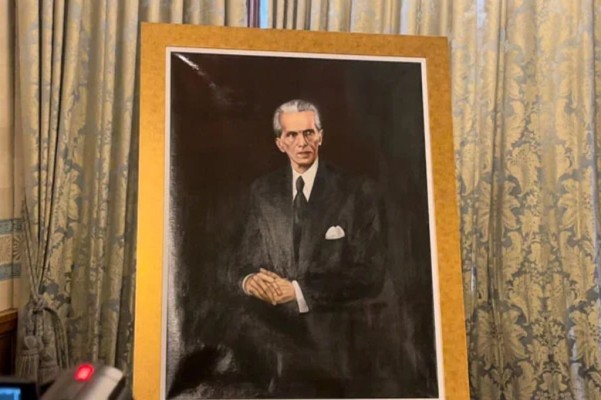
Muhammad Ali Jinnah (1876-1948), also revered as Quaid-i-Azam (Great Leader), was a barrister and politician who played a pivotal role in the founding of Pakistan. Born into a merchant family of modest means, Jinnah's Sindhi upbringing paved his desire towards a bright career. He possessed a striking and angular face and with his notorious karakul (hat), exuded an air of authority. His sister Fatima Jinnah remarks “even in the playground, my brother had a sense of superiority.” His stance on independence is one of the most contested ideas of Partition.
Muhammad Jinnah arrived in the UK in 1893, embarking on his study of Law and Politics at Lincoln’s inn. At just 19, he became the youngest Indian to be called to the bar in England. He resided in various lodgings including 35 Russell Road, Kensington, the home of Mrs. F. E. Page-Drake and her daughter. The residency now displays a blue plaque in his honour. In 1930, he moved to Hampstead, to West Heath House. It was here he entertained Liaquat Ali Khan (1895-1951), another of Pakistan’s first Prime Minister and one of its founding fathers.
From 1913, Jinnah assumed leadership of the All-India Muslim League until the establishment of an independent, Muslim-majority, Pakistan on August 14th, 1947. There is ongoing debate regarding Jinnah’s stance, with discussion revolving whether he championed the formation of a democratic modern Muslim state or fought for the rights of Muslims across an undivided India. Partition itself reflected as an inescapable consequence of differences between Muslims and Hindus instigated by the British. There were also many external factors including the Second World War, the British Raj, rising communal tensions in the 1930s, and politics at a national and provincial level, which in turn, can be traced back to British occupation and divide and conquer rule.
Known for his rapier wit and intellect, the National Congress of India took Jinnah in where he advanced in his political journey. Jinnah soon found himself in a prominent position within the chambers of John MacPherson and in 1909 was elected to the Imperial Legislative Council. In 1913, Jinnah joined the All-India Muslim League to advocate religious unity and led the controversial joint electorate, the Jinnah League. three years later, becoming its President. This was unusual for someone to simultaneously play a role in both factions, however in 1916, Jinnah established the Lucknow Pact, which can be recognised as a significant milestone in attempts to promote Muslim-Hindu unity. This suggests that Jinnah did not specifically argue for an independent Muslim-majority state, but ‘use the power of areas where the Muslims were a majority, to create a shield of protection for where they were in a minority.’ Jinnah was determined in consolidating a united front in India that respected the rights of Muslim and religious practise within India.
Gandhi’s rise as a key political figure in the 1920s marginalised Jinnah within Indian politics. By the 1940s, their mutual dislike became poisonous, and Jinnah became the prominent figure leading the Muslim League. This led to his advocation for a separate Muslim homeland in India, a stance he previously opposed, considering partition as merely a negotiating tool. By the late 1940s, the concept of partition was still only a potential possibility, however the second world war had exhausted the British of supplies, goods and sufficient finances. To extricate from further economic burden, India’s last viceroy Lord Mountbatten proposed the Indian independence Act on 3rd June 1947 and the publication of Radcliffe’s line that geographically mapped out the partition of India, accompanied unexplainable violence and genocide, which is one of the deadliest, forced mass-migrations in history.
On 14th August 1947, Pakistan was declared an independent state where Muhammad Ali Jinnah was sworn in as its first Governor-General.

Author: Saarah Ahmed
https://herald.dawn.com/news/1153717
https://en.wikipedia.org/wiki/Partition_of_India
https://www.newyorker.com/magazine/2015/06/29/the-great-divide-books-dalrymple
https://pakistan.gov.pk/Quaid/messages_page3.html
https://www.dawn.com/news/1704480
https://herald.dawn.com/news/1153717
http://www.jinnahofpakistan.com/2010/04/journey-to-london.html
Spotted an issue Report this record
Loading please wait