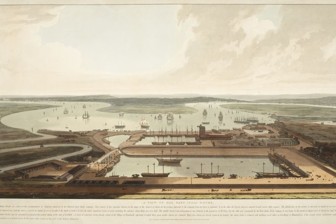
On the 31st of December 1600, Queen Elizabeth I granted a royal charter to more than two hundred City of...
The Remembering Partition Collection is dedicated to exploring the concepts of remembrance, commemoration, and education in relation to understanding and navigating the Empire's enduring impact on the South Asian community in Britain.
On the 31st of December 1600, Queen Elizabeth I granted a royal charter to more than two hundred City of...
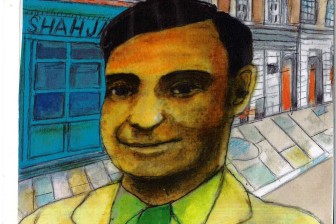
Ayub Ali was born 1st January in 1880, (precise date of birth unknown) in Sylhet, Bangladesh, then a part of...
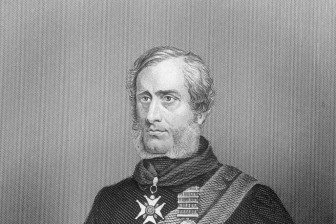
Sir Henry Havelock was a British general renowned for his involvement in India, particularly his successful recapture of Cawnpore from...
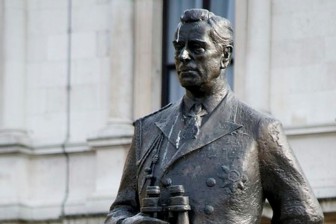
The bronze Mountbatten statue stands on Mountbatten Green, off Horse Guards Road in Whitehall, London. Depicted in his Admiral uniform...
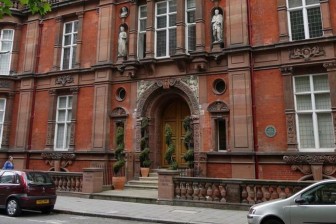
Caxton Hall is a location in which many momentous events occurred, including the assassination of Sir Michael O'Dwyer, the campaign...
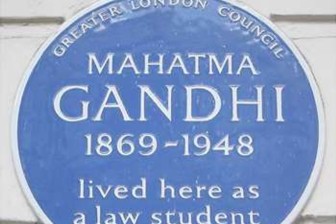
Mohandas Karamchand Gandhi born 2nd of October 1869, more commonly known as Mahatma Gandhi, was born in Porbandar, Kanthiawar, India....
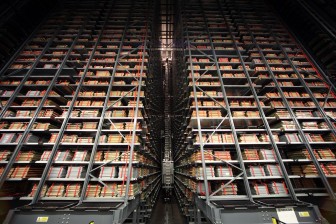
The British Library is home to the India Office Records collection, an extensive collection of archives relating to the administration...
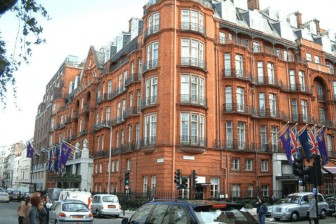
The history of Bangladesh's independence can be traced to the 1947 Partition of British India, and to the history of...
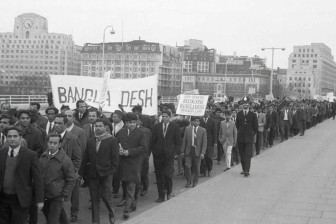
Millions of souls Nineteen seventy onehomeless on Jessore Road under the Gray sunA million dead, the millions who canWalk toward...
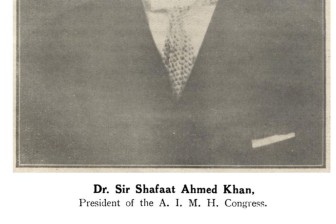
The India Round Table Conferences were a series of 3 talks between 1930-1932. The purpose of these talks was to...
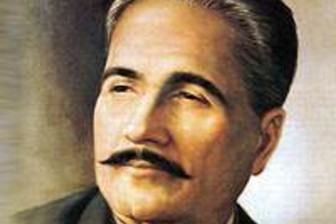
Allama Iqbal is widely considered one of the ideological founding figures of Pakistan and also holds the status of national...
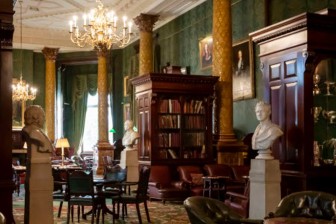
The National Liberal Club (NLC) was established by William Gladstone in 1882, to provide club facilities for Liberal Party campaigners. ...
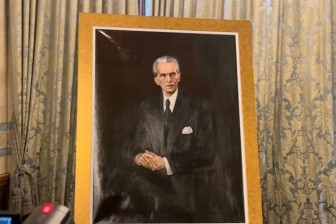
Muhammad Ali Jinnah (1876-1948), also revered as Quaid-i-Azam (Great Leader), was a barrister and politician who played a pivotal role...
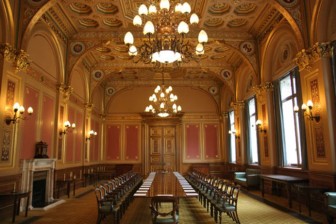
Originally constructed in 1868 as a set of government offices, including the India Office and later the Colonial and Home...
The Empire and Partition heritage trail is based on a collection of essays written by academics and historians to tell...
The Empire and Partition Collection and Trail were created for Everyday Muslim's Remembering Partition project to raise awareness of the...
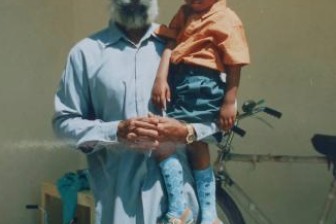
Chanan was born in 1926 in a village near Hoshiarpur. His family owned and farmed the land. He was the...
1930 - 1932
The India Round Table Conferences were a series of 3 talks between 1930-1932. The purpose of these talks was to put forth proposals for the next stage of India’s constitutional development, and discuss the future of the British Empire’s most prized possession.
Over 100 delegates came together, who, in official papers were broken down as the British Delegation, the Indian State Delegation and the British India Delegation.
Unfortunately, members of the Indian National Congress, including their leader Mahatma Gandhi, could not attend because of the Civil Disobedience Movement in India, which led to several members being incarcerated.
The first conference was not very successful, and the British Government saw it necessary to include the Indian National Congress. This in turn led to a second conference in 1931, which was also unsuccessful, and a third conference in 1932, which subsequently led to a similar failed conclusion. The conferences were widely recognised as a failure. However, the discussions and conclusions that took place did help lay the foundation of the Government of India Act (1935), which granted India partial autonomy from Britain.
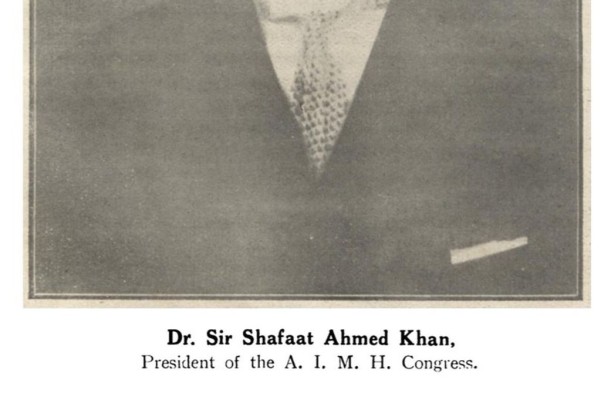
Dr Shafaat Ahmed Khan (1893-1947) was an influential figure dedicated to advocating for the rights of the Muslim minority in British India. He received his education at prestigious institutions such as Sidney Sussex College in Cambridge, Trinity College in Dublin, and the University of London. He was a renowned Professor of Modern History at the University of Allahabad, and amongst his many publications, started the Journal of Indian History in 1924. He was an active participant in all three sessions of the Round Table Conferences.
During the third session (December 17th and 19th, 1932), Khan, alongside K.B Hafiz Hidayat Husain, submitted a memorandum emphasising the importance of incorporating fundamental rights for minorities within the Indian Constitution.
Their memorandum stressed the right of the uninterrupted practice of Islam and equal treatment of Muslims in India. Khan also highlighted the significance of Muslim representation in public services to ensure the interests of the Muslim community were adequately considered. Khan firmly believed that Muslim representation in government was essential to restore the community's faith in the governance system. By having elected representatives who could advocate on their behalf, Muslims would feel that the government was working in their favour.
Khan was High Commissioner of South Africa between 1941-1944. In August 1946, he was stabbed seven times in the head, neck and chest in a politically motivated attack. He died in 1947, months before the partition of India. He left behind a wife and 3 daughters. His youngest daughter was only a few months old at the time of his passing, and currently lives in Redbridge, London. She did not get to know her father.
Place of Residence during the Conference:
First Session: 8 Chesterfield Gardens, W1.
Third Session: St James’s Court, Buckingham Gate, SW1.

Author: Sabrina Azim
Spotted an issue Report this record
Loading please wait