-Lord-Mayor-Liverpool,-MQRWU-President-and-founder-of-Liverpool-FC-overview.jpg)
A philanthropic body under the Poor Law Reform Act of 1832. Built workhouses, housing, schools and hospitals, including the famous...
A philanthropic body under the Poor Law Reform Act of 1832. Built workhouses, housing, schools and hospitals, including the famous...
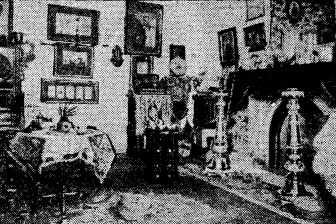
Built by the Quilliam Family, four generations lived in this house from the 1870s to the 1950s. Includes some biographical...
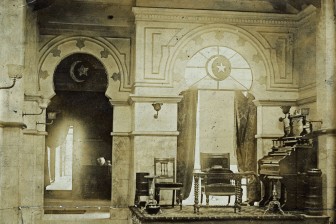
8 Brougham Terrace was the site of Britain's first attested mosque community, called the Liverpool Muslim Institute (LMI). It was...
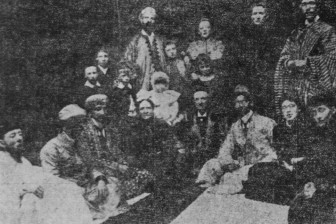
This entry includes information about the personal life of Abdullah Quilliam (1856-1932) and in particular about the two families in...
The Medina Home for Children was the first orphanage founded by Muslims in the UK, and was established in 1896....
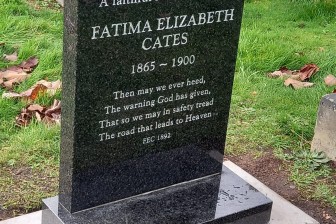
Fatima Elizabeth Cates (5 January 1865-29 October 1900) was probably the first woman to convert to Islam in Merseyside, who...
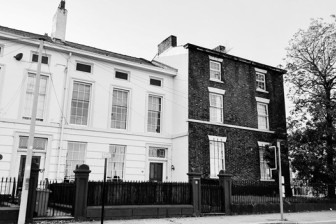
This was the residence of Fatima Elizabeth Cates (1865-1900), as listed in the 1891 Census, among the first women to...
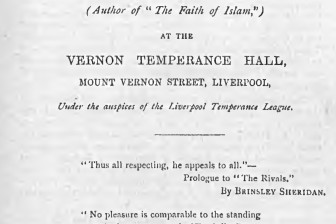
This was the site of the first Muslim prayer hall in the UK, which was formally established as the Liverpool...
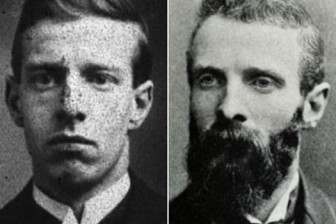
Fatima Elizabeth Cates (1865-1900) lived at "Granada", Victoria Road, in the town of West Kirby on the western side of...
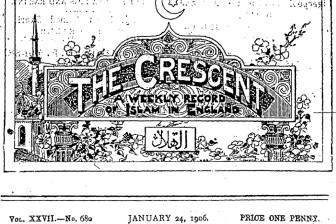
The first location of the printing offices of the first Muslim periodical published in Britain, the weekly Crescent (1893-1908), the...
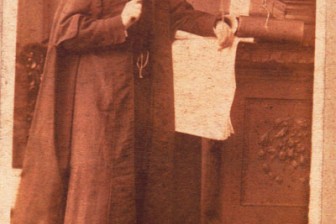
The Magistrates Courts (formerly known as the Police Courts) where the Muslim convert and solicitor William Henry Abdullah Quilliam (1856-1932)...
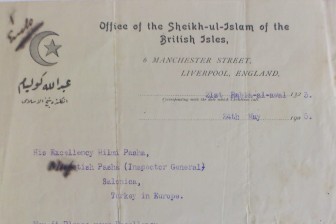
The chambers of Quilliam and Sons, headed by a convert to Islam, the lawyer and journalist, William Henry Abdullah Quilliam...
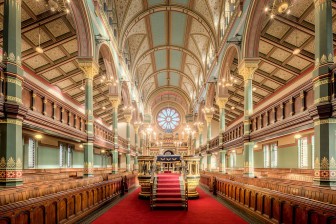
This is a Grade I listed building whose interior is built in an exuberant Orientalist style, a mix of Moorish,...
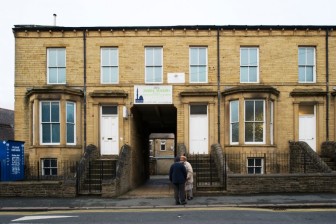
Bradford's oldest mosque was established by the Pakistani Muslim Association in 1958 at 30 Howard Street. It sits a row...
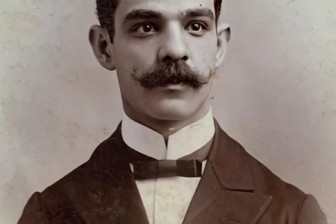
One nineteenth century couple are an early example of an intercultural Muslim marriage. They were Ali and Amy Mokaiesh who...
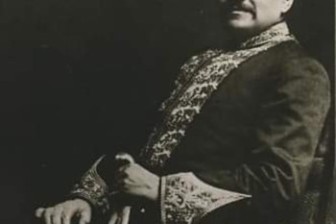
Mustapha Karsa (pictured circa 1900) was born in Damascus in around 1848 to a wealthy landowning family. In 1880-1, Karsa...
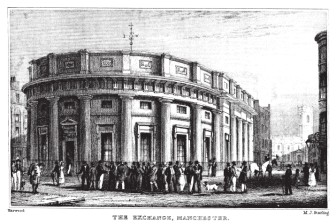
Abdullah Ydlibi [Idlibi] (c.1820-85) came from a family of Arab notables in administration, politics and trade, with branches in Damascus...
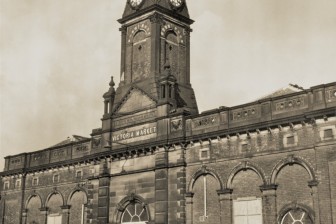
Robert Stanley led the project to build the Victoria Market Hall, just three years after he had been elected as...
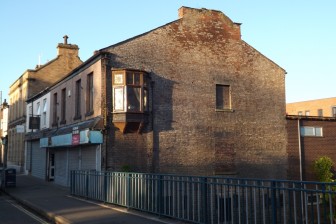
After getting married to Emma Meredith at the age of 19, Robert set up a grocers and tea shop with...
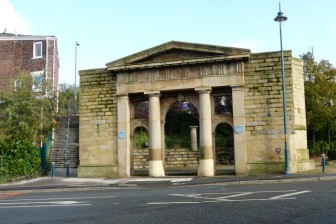
Stalybridge Town Hall was built in 1831. It saw two additional extensions during the Victorian period and was one of...
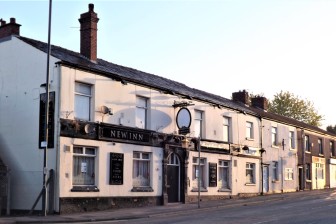
Shortly after stepping down as Mayor of Stalybridge, Robert, Emma, and some of his grown up children moved to the...
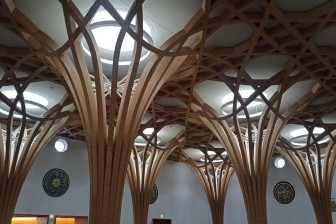
The Cambridge Central Mosque is the first purpose-built eco-mosque in Europe, completed at a cost of £24 million in March...
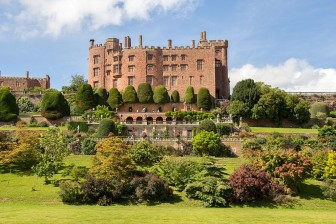
Tipu Sultan (r. 1782-1799) was the ruler of Mysore, an independent state in southern India. With his father, he was...
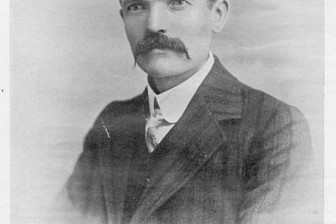
Yahya Parkinson (1874-1918), Scottish Muslim poet, essayist, and critic, was born in Kilwinning, Ayrshire, Scotland, of Irish descent. Born John...
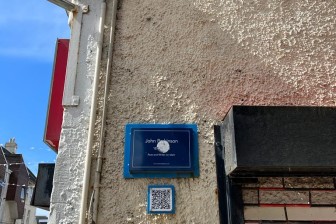
104 Main Street in Kilwinning, Ayrshire, was the birthplace and primary residence of John Parkinson (1874-1814), Britain's founding Muslim poet....
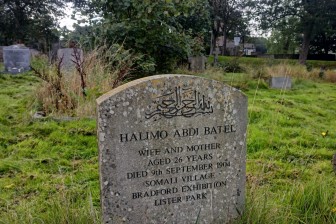
Halimo Abdi Betal (1878-1904) is probably the first Muslim to have been buried in Bradford; she died at the young...
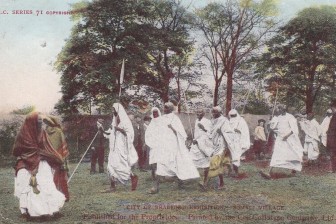
In 1904, the great Bradford Exhibition was held in Lister Park. It was held to inaugurate the newly-built Cartwright Hall,...
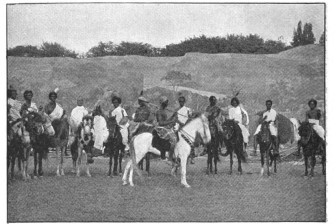
In late April 1895, a group of sixty-six Somalis arrived at the Tilbury Docks aboard the Clan Ross. They came...
24 April 2019
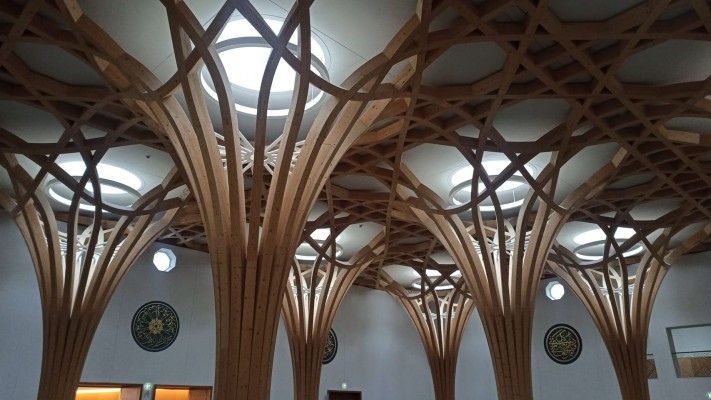

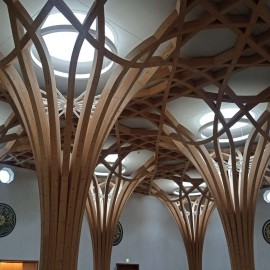
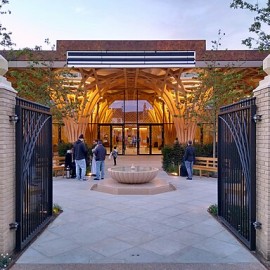
The Cambridge Central Mosque is the first purpose-built eco-mosque in Europe, completed at a cost of £24 million in March 2019, with a zero carbon footprint. A project led by Cambridge Muslim scholar, Sheikh Abdal Hakim Murad (b.1960, also known as Dr. Timothy J. Winter, Shaykh Zayed Lecturer of Islamic Studies in the Faculty of Divinity at Cambridge University), the mosque opened on 24 April 2019. Its lighting, ventilation, power, and water usage partly draw on harvested sunlight and rain, as well as good design to generate unpowered air circulation. Its main hall can accommodate 1000 worshippers. The impetus to create a larger central mosque came after it was recognised in the mid-2000s that the oldest mosque, the Abu Bakr Mosque, established in 1981 in Mawston Road, could no longer accommodate growing demand.
Architecturally, the new mosque incorporates aspects of local Cambridge and traditional Islamic design, seen in the defining feature of the mosque, the tree-columns that support the whole structure, using sustainable spruce. The eight-pointed octagonal vaulting is a traditional Islamic motif that also draws directly on the English gothic fan vaulting seen in King's College Chapel, Cambridge. Another feature is the typical Cambridge yellow brickwork, which incorporates - in red Dutch brickwork - Kufic calligraphy with repetitions of the phrase, Qul huwa'Llahu ahad (Say: He is God, the One). Conceived by Alfred Marks (1952–2017), who also designed the iconic London Eye and treetop walkway at Kew Gardens, in consultation with Islamic architectural and art experts, the mosque trust won the Royal Institute of British Architects (RIBA) award for RIBA Client of the Year 2021 recognising "exemplar clients who champion and commission outstanding architecture".
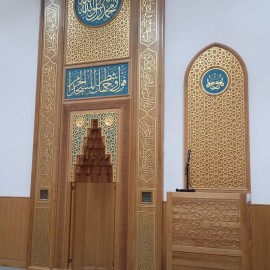
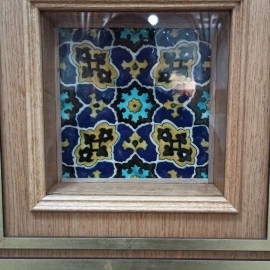
As the mosque complex is entered from the Mill Road, the garden designed by Emma Clarke, professor of traditional garden design at the Prince of Wales Institute for Traditional Arts, faces on to the road. It features some plants mentioned in the Quran, such as the British climate allows for, as well as the yew hedges seen in old English churchyards. Next comes the Portico offering a transition from the garden's trees to the first row of the "symbolic forest of the interior". Entering the building, next comes the Atrium, both a hallway and a multi-purpose space for conferences, weddings, exhibitions, etc. with a seminar room on the left and a cafe on the right. The marble floor was designed by Keith Critchlow, a renowned expert in traditional including Islamic geometry. The rows of "trees" continue through the Atrium into the main Prayer Hall, where there are 12 in total. These symbolise the four imams of Sunni Islam and the 12 imams of Shi'i Islam. Decorating the main hall is calligraphy by Turkish master Huseyin Kutlu, embroidery from the Kaaba in Makkah, and two tiles on either side of the mihrab (prayer niche) from the Dome of the Rock in Jerusalem.
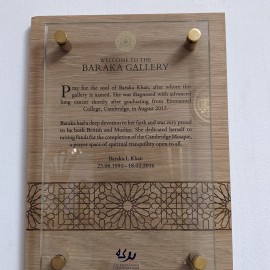
The mosque was funded by 10,000 individual donations. One of the galleries is named after Baraka I. Khan (1991‒2016), who did much to raise money for the mosque. Diagnosed with advanced lung cancer shortly after graduating from Emmanuel College, Cambridge, she died at the young age of 24. Two-thirds of the funding came from Turkey, the major sources being the Directorate of Religious Affairs and the construction company Yapi Merkezi. This was facilitated by a meeting arranged by one of the mosque trustees, the pop star and convert to Islam, Yusuf Islam (b.1948, also known as Cat Stevens), and the then Turkish Prime Minister, Recep Erdoğan (b.1954), in 2013. Islam and Erdoğan were old acquaintances. Erdoğan later attended the official inauguration of the mosque on 5 December 2019.
Cambridge Central Mosque Media Pack
Cambridge Central Mosque (Website)
"Cambridge Mosque Trust named RIBA Client of the Year 2021", Architecture.com, 14 Oct 2021.
D. Luxon, "Who exactly paid for Cambridge's new eco-mosque?", Cambridge News, 7 December 2019.
Photos: Author's Collection and Wikimedia Commons.
Spotted an issue Report this record
Loading please wait