-Lord-Mayor-Liverpool,-MQRWU-President-and-founder-of-Liverpool-FC-overview.jpg)
A philanthropic body under the Poor Law Reform Act of 1832. Built workhouses, housing, schools and hospitals, including the famous...
A philanthropic body under the Poor Law Reform Act of 1832. Built workhouses, housing, schools and hospitals, including the famous...
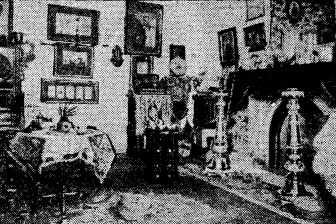
Built by the Quilliam Family, four generations lived in this house from the 1870s to the 1950s. Includes some biographical...
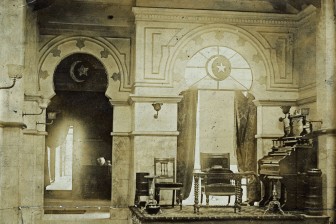
8 Brougham Terrace was the site of Britain's first attested mosque community, called the Liverpool Muslim Institute (LMI). It was...
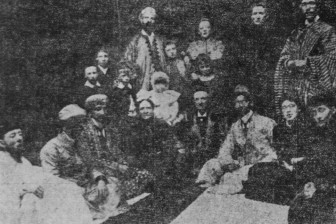
This entry includes information about the personal life of Abdullah Quilliam (1856-1932) and in particular about the two families in...
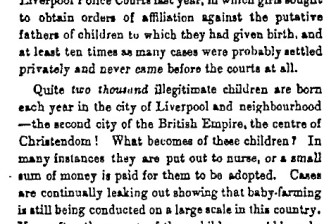
The Medina Home for Children was the first orphanage founded by Muslims in the UK, and was established in 1896....
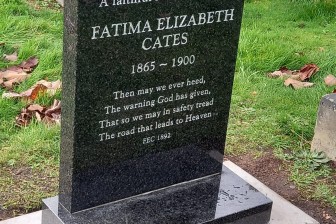
Fatima Elizabeth Cates (5 January 1865-29 October 1900) was probably the first woman to convert to Islam in Merseyside, who...
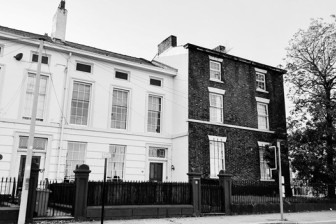
This was the residence of Fatima Elizabeth Cates (1865-1900), as listed in the 1891 Census, among the first women to...
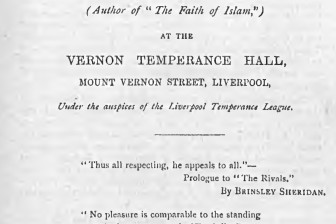
This was the site of the first Muslim prayer hall in the UK, which was formally established as the Liverpool...
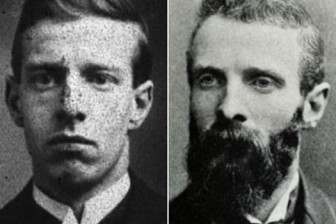
Fatima Elizabeth Cates (1865-1900) lived at "Granada", Victoria Road, in the town of West Kirby on the western side of...
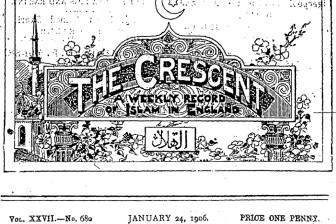
The first location of the printing offices of the first Muslim periodical published in Britain, the weekly Crescent (1893-1908), the...
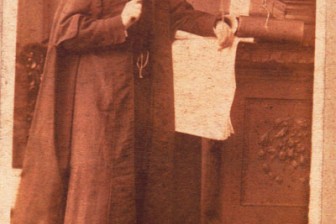
The Magistrates Courts (formerly known as the Police Courts) where the Muslim convert and solicitor William Henry Abdullah Quilliam (1856-1932)...
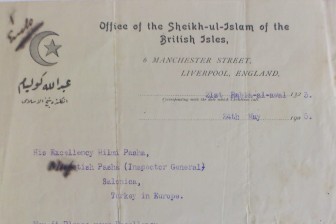
The chambers of Quilliam and Sons, headed by a convert to Islam, the lawyer and journalist, William Henry Abdullah Quilliam...
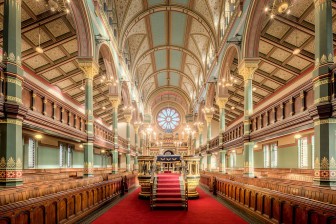
This is a Grade I listed building whose interior is built in an exuberant Orientalist style, a mix of Moorish,...
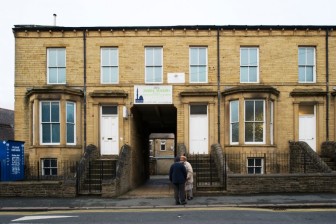
Bradford's oldest mosque was established by the Pakistani Muslim Association in 1958 at 30 Howard Street. It sits a row...
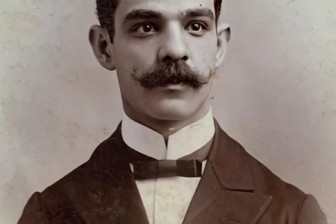
One nineteenth century couple are an early example of an intercultural Muslim marriage. They were Ali and Amy Mokaiesh who...
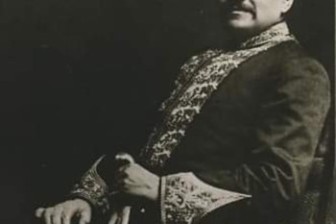
Mustapha Karsa (pictured circa 1900) was born in Damascus in around 1848 to a wealthy landowning family. In 1880-1, Karsa...
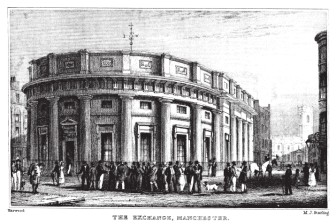
Abdullah Ydlibi [Idlibi] (c.1820-85) came from a family of Arab notables in administration, politics and trade, with branches in Damascus...
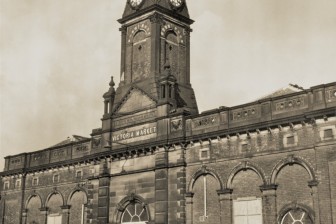
Robert Stanley led the project to build the Victoria Market Hall, just three years after he had been elected as...
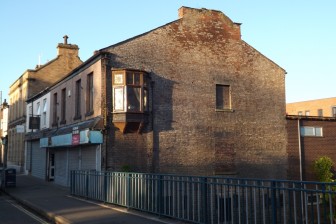
After getting married to Emma Meredith at the age of 19, Robert set up a grocers and tea shop with...
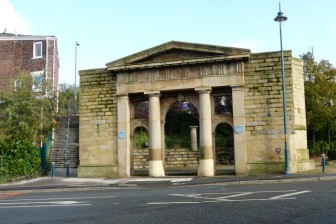
Stalybridge Town Hall was built in 1831. It saw two additional extensions during the Victorian period and was one of...
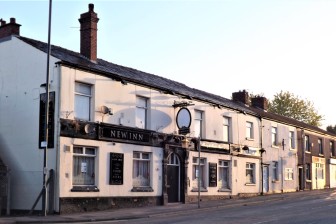
Shortly after stepping down as Mayor of Stalybridge, Robert, Emma, and some of his grown up children moved to the...
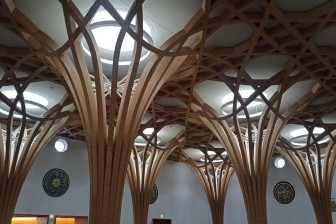
The Cambridge Central Mosque is the first purpose-built eco-mosque in Europe, completed at a cost of £24 million in March...
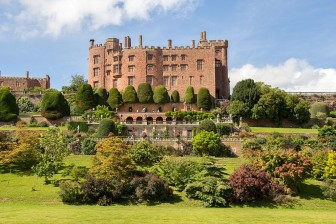
Tipu Sultan (r. 1782-1799) was the ruler of Mysore, an independent state in southern India. With his father, he was...
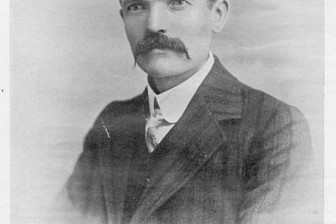
Yahya Parkinson (1874-1918), Scottish Muslim poet, essayist, and critic, was born in Kilwinning, Ayrshire, Scotland, of Irish descent. Born John...
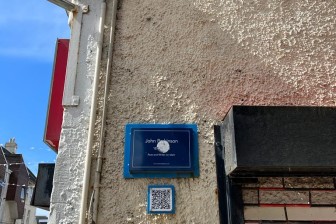
104 Main Street in Kilwinning, Ayrshire, was the birthplace and primary residence of John Parkinson (1874-1814), Britain's founding Muslim poet....
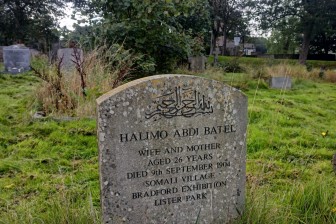
Halimo Abdi Betal (1878-1904) is probably the first Muslim to have been buried in Bradford; she died at the young...
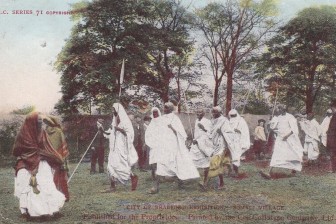
In 1904, the great Bradford Exhibition was held in Lister Park. It was held to inaugurate the newly-built Cartwright Hall,...
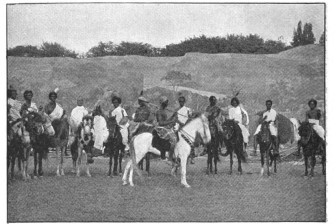
In late April 1895, a group of sixty-six Somalis arrived at the Tilbury Docks aboard the Clan Ross. They came...
1901
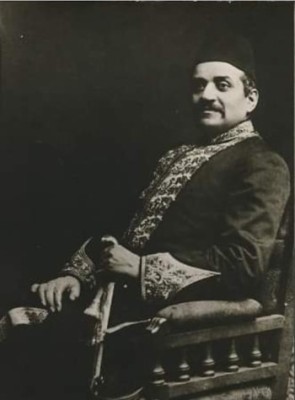

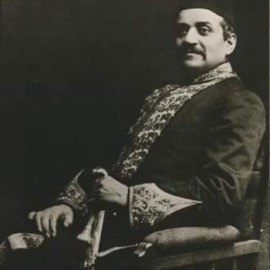
Mustapha Karsa (pictured circa 1900) was born in Damascus in around 1848 to a wealthy landowning family. In 1880-1, Karsa came to Manchester to develop the family's textile business, leaving his first wife and their children behind in Syria. He settled in Chorlton-cum-Medlock, lodging with a Jewish clerk from Beirut. He met and married Helen Saunders (1870-1939) under Islamic law and had eight children by her. They would later travel to Beirut to register their Islamic union formally but in Manchester, Helen insisted that the children were all baptized as Anglicans. The Karsas settled in Sale, first at 71 Broad Road and later to a larger residence, "The Sycamores" on Wardle Rd; neither house has survived. Sale was by that time the suburb of choice for Manchester's well-to-do merchants, and Karsa was one of them, enjoying great success with his textile business, which developed branches in Izmir, Alexandria, Smyrna and Beirut. In 1903, Karsa was appointed the Ottoman Consul for Manchester, and he would often provide accommodation for other Ottoman officials at the Sycamores like Kiamil Bey, the Ottoman Consul for Liverpool, and Faid Ibrahim, the First Secretary to the Imperial Ottoman Embassy. Karsa presented himself as an Anglicized, assimilated Muslim, but one who remained faithful at heart. He remained Consul until his death in 1907.
As his second wife under Islamic rites, Helen relocated to Beirut with her five youngest children after Karsa's death. Her daughter, Emimie (Amina) married into a wealthy Beirut family, the Ardatis. Helen's oldest son, Cecil Mustapha, continued the family business in Manchester. Cecil married the daughter of a bristle manufacturer at a local Wesleyan chapel, and had two sons, Anthony and Joseph. He gave distinguished service to the Royal Garrison Artillery during the First World War for which he was given a medal. He continued the family business thereafter and died in 1951. He was given a Muslim burial (janaza) at the Victoria Park Mosque in Rusholme, Manchester, which had opened three years previously. Cecil's youngest sister, Fizie, joined him from Beirut and was also buried like him by the Victoria Park Mosque. Another sister, Lily married a Christian merchant, Alexander Hamrah, from a Beirut family who had settled in New York, and they had six children, Elias, Edna, Alice, Claire, Louise and George.
Karsa took a third wife, Beatrice, whom he married under Islamic rites in Liverpool, but she charged him for breach of promise in court, claiming that she hadn't known he was already married. As he couldn't defend polygamy in an English legal setting, he had to deny he had proposed to her. He was found guilty and fined £200.
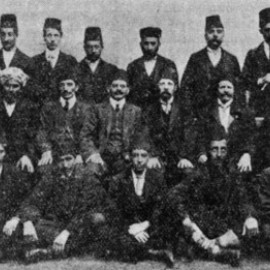
Some 24 Syrian Muslim visitors are mentioned in the pages of the Liverpool Muslim Institute's weekly newspaper, the Crescent (see picture with some of them with Quilliam and Karsa sat next to each other in the centre). After the Liverpool Muslim Institute was recognised by the Ottomans in 1890, it gained the support of the Ottoman Muslim citizens in Manchester who had set up textile trading businesses there. Karsa and his wife Helen hastened to sign the Institute's Book of Allegiance and did so in 1891. Karsa was the eight born Muslim to sign the register, and Helen was the 29th convert to do so. Karsa became an honorary vice-president of the Institute until his death and he contributed generously to it. The Karsas became close to the Quilliams, visiting them on the Isle of Man during their summer vacations. The Quilliams returned the favour by visiting Karsa family members when passing through Smyrna on their way to Istanbul. Like the other Syrian Muslims, Karsa would travel to Liverpool to attend the Eid prayers, the Mawlid, the celebration of the Sultan's birthday, and he also attended upon Ottoman officials who were passing through Liverpool en route to some other destination, who would stop by the mosque while in port. Riordan Macnamara suggests that Quilliam gained the loyalty of these Syrian Muslim traders because they regarded him as a fellow Ottoman notable, as someone who had his own status in society and who enjoyed the favour of the Ottoman authorities.
The large house where the Karsas lived in 1901, the Sycamores, on Wardle Road in Sale, no longer exists, but its original location is marked on the map above. The 1901 Census lists the family and their two distinguished visitors in the following way:
Mustapha Karsa, 53, cotton merchant, b. Damascus (Turkish subject),
Helen Karsa, wife, 31, b. Manchester
Mustapha, son, 12, b. Cheshire, Sale
Emimie, dau, 9, b. Cheshire, Sale
Rudah, son, 8, b. Cheshire, Sale
Yuseph, son, 6, b. Cheshire, Sale
Filzie, dau, 1, b. Cheshire, Sale
Kamiel, son, 4 months, b. Cheshire, Sale
Kamiel Bey, visitor, married, 33, Consul [for Liverpool] to the Imperial Ottoman [Domains]
Faid Ibrahim, visitor, single, 34, First Secretary to the Imperial Ottoman Embassy
+ Four domestic servants
Ancestry.co.uk (subscription only)
F. Halliday, "The Millet of Manchester", British Journal of Middle Eastern Studies, 19/2, 1992, 159-176.
R. Macnamara, "From Arab Millet to British Islam: Syrian Muslims in Victorian Manchester", forthcoming.
H. Mahmood and Y. Birt, Our Fatima of Liverpool (Oldham: Beacon Books, 2023).
Spotted an issue Report this record
Loading please wait