-Lord-Mayor-Liverpool,-MQRWU-President-and-founder-of-Liverpool-FC-overview.jpg)
A philanthropic body under the Poor Law Reform Act of 1832. Built workhouses, housing, schools and hospitals, including the famous...
A philanthropic body under the Poor Law Reform Act of 1832. Built workhouses, housing, schools and hospitals, including the famous...
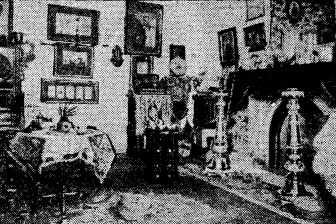
Built by the Quilliam Family, four generations lived in this house from the 1870s to the 1950s. Includes some biographical...
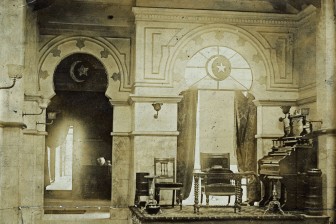
8 Brougham Terrace was the site of Britain's first attested mosque community, called the Liverpool Muslim Institute (LMI). It was...
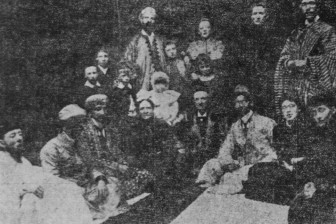
This entry includes information about the personal life of Abdullah Quilliam (1856-1932) and in particular about the two families in...
The Medina Home for Children was the first orphanage founded by Muslims in the UK, and was established in 1896....
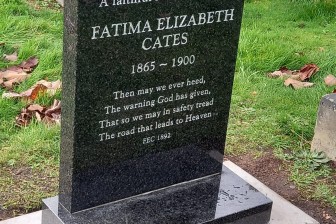
Fatima Elizabeth Cates (5 January 1865-29 October 1900) was probably the first woman to convert to Islam in Merseyside, who...
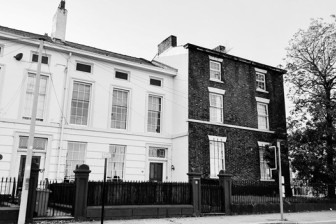
This was the residence of Fatima Elizabeth Cates (1865-1900), as listed in the 1891 Census, among the first women to...
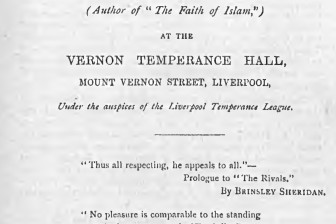
This was the site of the first Muslim prayer hall in the UK, which was formally established as the Liverpool...
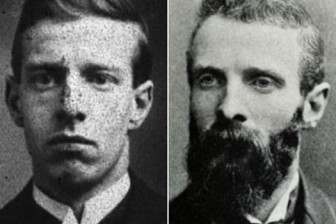
Fatima Elizabeth Cates (1865-1900) lived at "Granada", Victoria Road, in the town of West Kirby on the western side of...
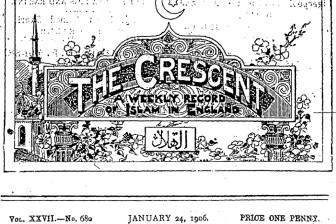
The first location of the printing offices of the first Muslim periodical published in Britain, the weekly Crescent (1893-1908), the...
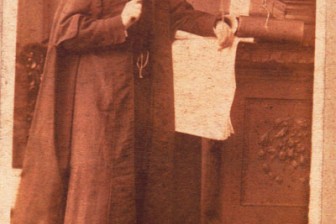
The Magistrates Courts (formerly known as the Police Courts) where the Muslim convert and solicitor William Henry Abdullah Quilliam (1856-1932)...
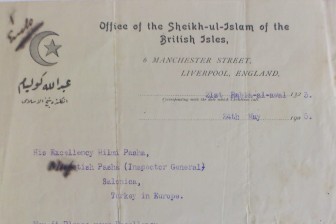
The chambers of Quilliam and Sons, headed by a convert to Islam, the lawyer and journalist, William Henry Abdullah Quilliam...
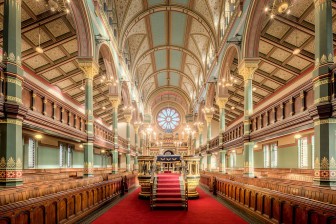
This is a Grade I listed building whose interior is built in an exuberant Orientalist style, a mix of Moorish,...
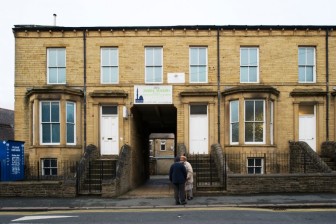
Bradford's oldest mosque was established by the Pakistani Muslim Association in 1958 at 30 Howard Street. It sits a row...
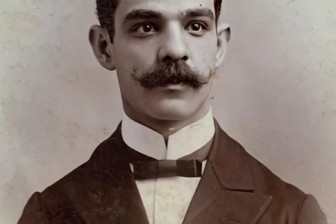
One nineteenth century couple are an early example of an intercultural Muslim marriage. They were Ali and Amy Mokaiesh who...
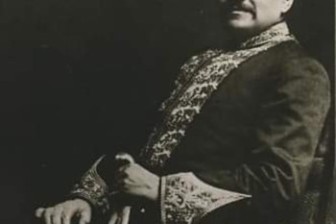
Mustapha Karsa (pictured circa 1900) was born in Damascus in around 1848 to a wealthy landowning family. In 1880-1, Karsa...
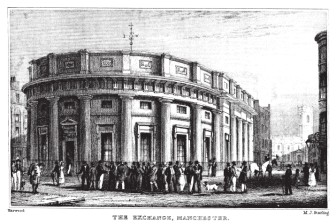
Abdullah Ydlibi [Idlibi] (c.1820-85) came from a family of Arab notables in administration, politics and trade, with branches in Damascus...
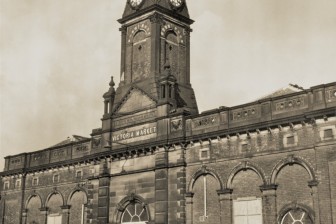
Robert Stanley led the project to build the Victoria Market Hall, just three years after he had been elected as...
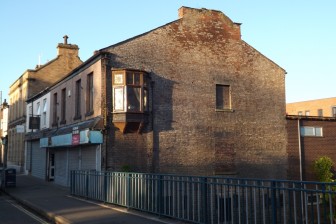
After getting married to Emma Meredith at the age of 19, Robert set up a grocers and tea shop with...
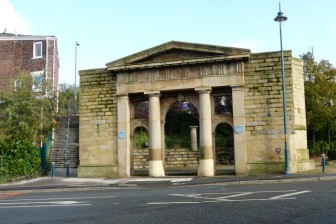
Stalybridge Town Hall was built in 1831. It saw two additional extensions during the Victorian period and was one of...
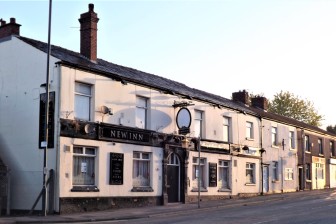
Shortly after stepping down as Mayor of Stalybridge, Robert, Emma, and some of his grown up children moved to the...
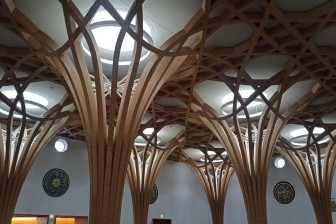
The Cambridge Central Mosque is the first purpose-built eco-mosque in Europe, completed at a cost of £24 million in March...
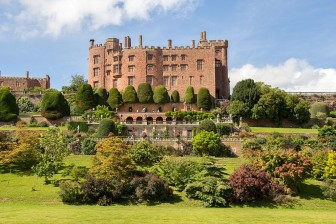
Tipu Sultan (r. 1782-1799) was the ruler of Mysore, an independent state in southern India. With his father, he was...
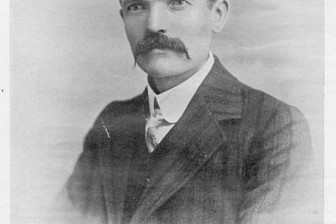
Yahya Parkinson (1874-1918), Scottish Muslim poet, essayist, and critic, was born in Kilwinning, Ayrshire, Scotland, of Irish descent. Born John...
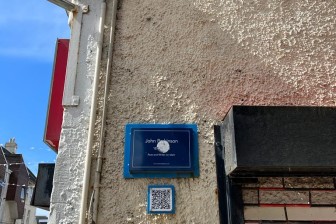
104 Main Street in Kilwinning, Ayrshire, was the birthplace and primary residence of John Parkinson (1874-1814), Britain's founding Muslim poet....
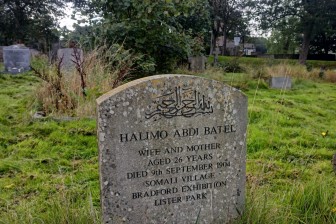
Halimo Abdi Betal (1878-1904) is probably the first Muslim to have been buried in Bradford; she died at the young...
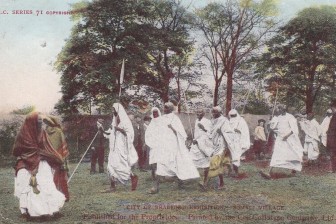
In 1904, the great Bradford Exhibition was held in Lister Park. It was held to inaugurate the newly-built Cartwright Hall,...
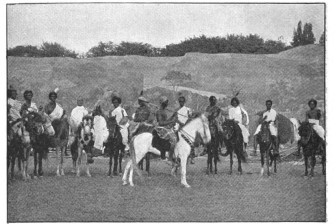
In late April 1895, a group of sixty-six Somalis arrived at the Tilbury Docks aboard the Clan Ross. They came...
3 December 1918

---Copy-thumb.jpg)
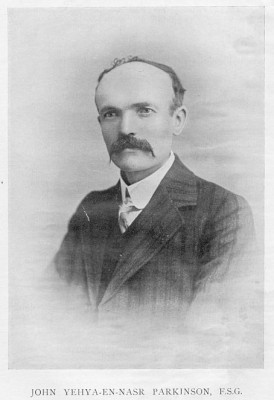
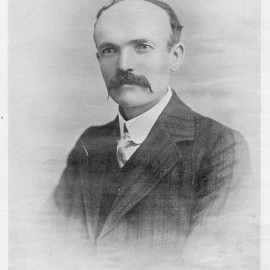
Yahya Parkinson (1874-1918), Scottish Muslim poet, essayist, and critic, was born in Kilwinning, Ayrshire, Scotland, of Irish descent. Born John Parkinson, he adopted the name Yehya-en-Nasr after privately converting to Islam in ca.1901 after a correspondence with Abdullah Quilliam in Liverpool. Recognising his talent, Quilliam quickly appointed him Vice-President of the Liverpool Muslim Institute. Although relatively isolated in Scotland, Parkinson maintained contact with the Institute between 1901 and 1908 which helped to establish his literary reputation by publishing his early work, after which he developed connections with literary and learned Muslim circles in British India (in Lahore, Calcutta and Rangoon), as well others closer to home in London and Woking, Surrey.
In 1906, Parkinson composed a long epic poem which he styled the Osmanli Nameh, in imitation of Firdawsi’s Shah Nameh, in praise of the Ottoman Sultans from Osman, the founder of the dynasty, down to Sultan Abdul-Hamid II. A bound copy of the Osmanli Nameh was presented to Abdul Hamid by Quilliam, for which Parkinson was awarded the fourth class of the Order of the Medjidie. Parkinson's formal investiture later took place at the Liverpool Muslim Institute. Currently this and other of Parkinson's epic poetry remains lost except for a few published fragments, although perhaps one day it may be rediscovered in the archives of Istanbul or Rangoon.
Parkinson's published books and pamphlets included Lays of Love and War (Ardrossan, 1904), Muslim Chivalry (Rangoon, 1909), Essays on Muslim Philosophy (Rangoon, 1909), Outward Bound (Rangoon, 1909) and Al-Ghazali (Woking, ca.1913). He was a regular contributor of poetry and prose to a number of journals including The Islamic World (Liverpool), The Crescent (Liverpool), Journal of the Moslem Institute (Calcutta), Crescent (Lahore), The Review of Religions (Qadian, Punjab) and The Islamic Review (Woking). Parkinson worked for nearly all of his adult life as a wool-spinner at the Busby Spinning Company with a two-year sojourn in Burma as a deputy editor of a Rangoon newspaper in 1908-10; ill-health forced him to return to Scotland. With the Liverpool Muslim Institute having collapsed during his time abroad, Parkinson became Vice-President of the British Muslim Society (later renamed as the Muslim Society of Great Britain) run from Woking and headed by Lord Headley. He died in December 1918 after a short bout of pneumonia.
While he achieved some fame within local and some international Muslim literary circles, Parkinson has been largely forgotten until a recent revival of interest in his work among historians including Timothy Winter (Cambridge), Yaqub Zaki (Scotland) and Brent D. Singleton (California). Singleton recently republished a number of Parkinson’s poems in an anthology of poems by Muslim converts during the late Victorian and Edwardian periods, The Convert’s Passion (2009), and a number of them have also been set to music by Abdal Hakim Murad in Muslim Songs of the British Isles (2005).
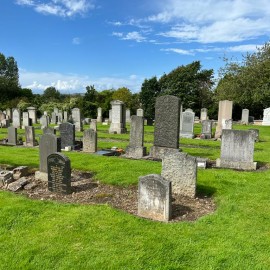
Parkinson's unmarked grave was located in 2021 by Omar Sheikh, founder of the pioneering Colourful Heritage based in Glasgow. As you walk into the cemetery, you will see a low wall at the back, go through it into a second section. Turn right and go to end of the second row. In the cemetery the practice was to bury three people in one plot over time. The gravestone right at the end of the second row, marked by John and Ann Dodds's headstone, also marks Parkinson's as yet unmarked (as of 2023) resting place.
Yahya Birt, "Abdullah Quilliam’s obituary of Yahya Parkinson (1874-1918)", Yahya Birt's blog, 15 July 2016, https://yahyabirt1.wordpress.com/tag/yahya-parkinson/.
Yahya Parkinson, Selected Poems, selected and introduced by A.H. Murad (Cambridge: Cambridge Central Mosque, n.d.), https://cambridgecentralmosque.org/wp-content/uploads/2020/04/ccm-poetry-parkinson.pdf.
Spotted an issue Report this record
Loading please wait