-Lord-Mayor-Liverpool,-MQRWU-President-and-founder-of-Liverpool-FC-overview.jpg)
A philanthropic body under the Poor Law Reform Act of 1832. Built workhouses, housing, schools and hospitals, including the famous...
A philanthropic body under the Poor Law Reform Act of 1832. Built workhouses, housing, schools and hospitals, including the famous...
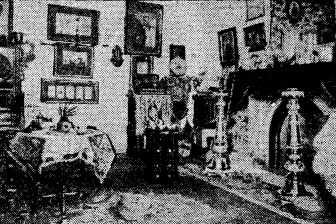
Built by the Quilliam Family, four generations lived in this house from the 1870s to the 1950s. Includes some biographical...
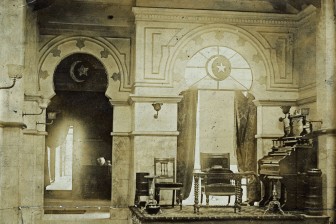
8 Brougham Terrace was the site of Britain's first attested mosque community, called the Liverpool Muslim Institute (LMI). It was...
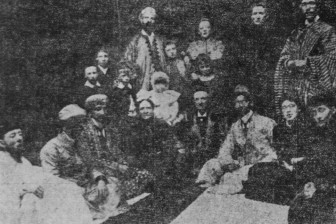
This entry includes information about the personal life of Abdullah Quilliam (1856-1932) and in particular about the two families in...
The Medina Home for Children was the first orphanage founded by Muslims in the UK, and was established in 1896....
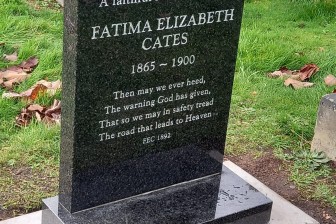
Fatima Elizabeth Cates (5 January 1865-29 October 1900) was probably the first woman to convert to Islam in Merseyside, who...
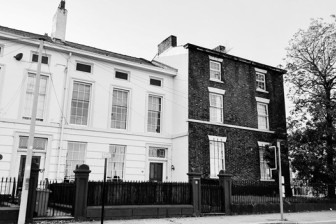
This was the residence of Fatima Elizabeth Cates (1865-1900), as listed in the 1891 Census, among the first women to...
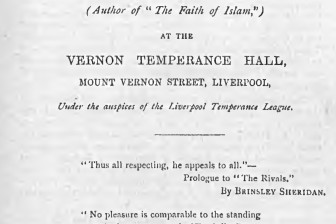
This was the site of the first Muslim prayer hall in the UK, which was formally established as the Liverpool...
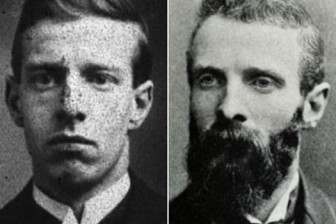
Fatima Elizabeth Cates (1865-1900) lived at "Granada", Victoria Road, in the town of West Kirby on the western side of...
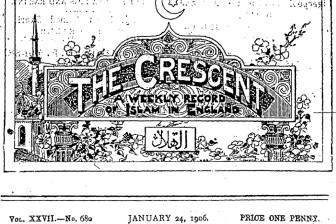
The first location of the printing offices of the first Muslim periodical published in Britain, the weekly Crescent (1893-1908), the...
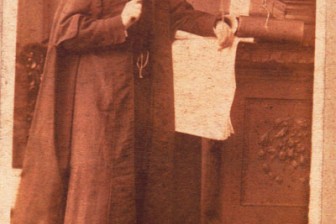
The Magistrates Courts (formerly known as the Police Courts) where the Muslim convert and solicitor William Henry Abdullah Quilliam (1856-1932)...
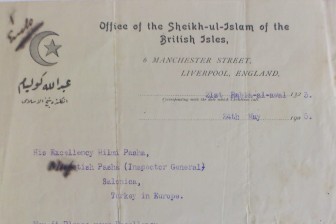
The chambers of Quilliam and Sons, headed by a convert to Islam, the lawyer and journalist, William Henry Abdullah Quilliam...
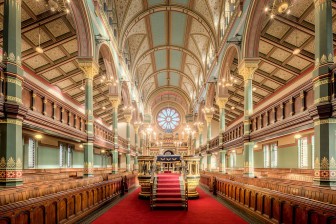
This is a Grade I listed building whose interior is built in an exuberant Orientalist style, a mix of Moorish,...
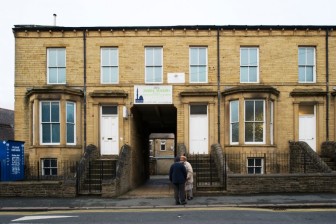
Bradford's oldest mosque was established by the Pakistani Muslim Association in 1958 at 30 Howard Street. It sits a row...
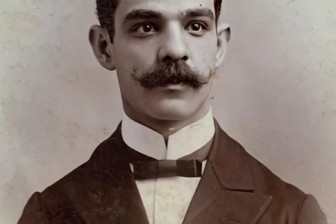
One nineteenth century couple are an early example of an intercultural Muslim marriage. They were Ali and Amy Mokaiesh who...
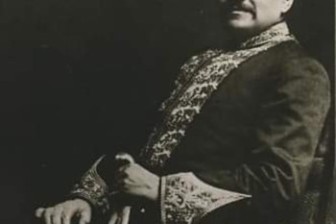
Mustapha Karsa (pictured circa 1900) was born in Damascus in around 1848 to a wealthy landowning family. In 1880-1, Karsa...
Abdullah Ydlibi [Idlibi] (c.1820-85) came from a family of Arab notables in administration, politics and trade, with branches in Damascus...
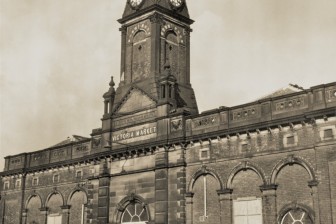
Robert Stanley led the project to build the Victoria Market Hall, just three years after he had been elected as...
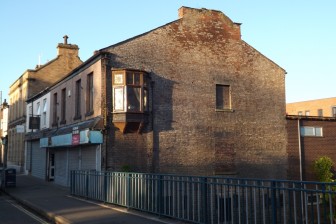
After getting married to Emma Meredith at the age of 19, Robert set up a grocers and tea shop with...
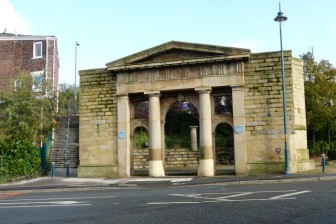
Stalybridge Town Hall was built in 1831. It saw two additional extensions during the Victorian period and was one of...
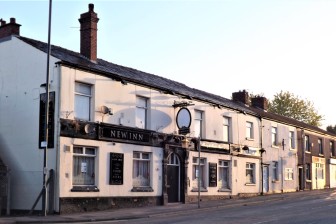
Shortly after stepping down as Mayor of Stalybridge, Robert, Emma, and some of his grown up children moved to the...
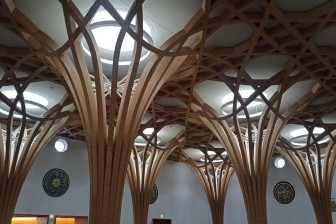
The Cambridge Central Mosque is the first purpose-built eco-mosque in Europe, completed at a cost of £24 million in March...
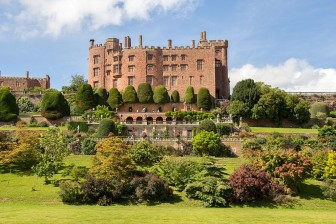
Tipu Sultan (r. 1782-1799) was the ruler of Mysore, an independent state in southern India. With his father, he was...
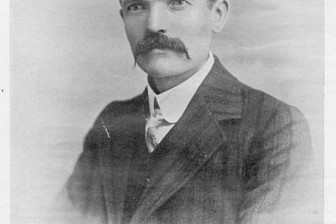
Yahya Parkinson (1874-1918), Scottish Muslim poet, essayist, and critic, was born in Kilwinning, Ayrshire, Scotland, of Irish descent. Born John...
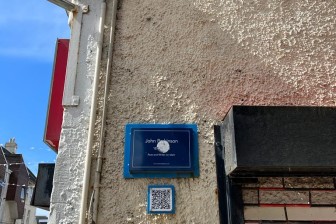
104 Main Street in Kilwinning, Ayrshire, was the birthplace and primary residence of John Parkinson (1874-1814), Britain's founding Muslim poet....
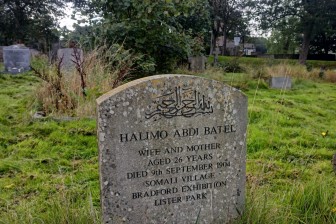
Halimo Abdi Betal (1878-1904) is probably the first Muslim to have been buried in Bradford; she died at the young...
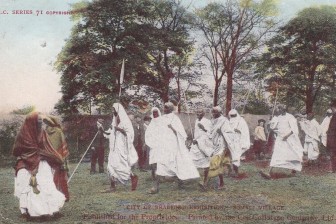
In 1904, the great Bradford Exhibition was held in Lister Park. It was held to inaugurate the newly-built Cartwright Hall,...
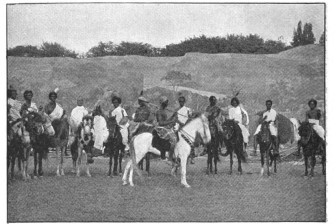
In late April 1895, a group of sixty-six Somalis arrived at the Tilbury Docks aboard the Clan Ross. They came...
1840 - 1865

Abdullah Ydlibi [Idlibi] (c.1820-85) came from a family of Arab notables in administration, politics and trade, with branches in Damascus and Beirut, who originally hailed, as their name suggests, from Idlib. Born in Damascus, Ydlibi arrived in Manchester in around 1840 where he set up the family trading business. He was appointed the first Ottoman Consul for Manchester in 1846 and was styled at the time as "the only Mahommedan inhabitant of the town", and in 1855 he was awarded the Order of the Medjidie for his services. (The historical truth is that Ydlibi was preceded by Moroccan cotton traders in Manchester who were already established when he arrived in around 1840.) Ydlibi married Amelia Jones of Hulme that same year at the Holy Trinity Church. They settled at 3 Moss Side Terrace where three generations of Ydlibis would live. They had a son Ali who was baptized privately as an Anglican. Amelia died three years later. He and his son Ali then moved to Chorlton.
With an English partner, Paul Crabbe, Ydlibi developed a near monopoly of trade in textiles between England and Aleppo. He also exported shipping yarns, prints and shirtings to Damscus and Beirut and imported black madder roots and other Middle Eastern produce. The Ydlibi-Crabbe partnership was the first large Syrian-led import-export business between England and the Levant. Ydlibi came to act as a middleman between Middle Eastern dignitaries looking to increase trade with Manchester, and took Persian and Ottoman diplomats around the city's factories. During the Lancashire Cotton Famine of 1861-5, where thousands and thousands of workers in Lancashire faced starvation for showing solidarity with the abolitionist North in the American Civil War and refusing to take the Southern slaver's cotton, Ydlibi took advantage in 1863 of the desperate search for alternative sources of cotton. He exported steam-powered cotton spinning wheels to Beirut and Damascus, along with cottonseed, to build up cotton growing in the Levant.
Although Ydlibi's role as Consol was meant to have primarily an economic focus in protecting the trading interests of Ottoman citizens in Manchester, he role became politicized as these economic interests were often the subject of political attacks, in particular upon the rights of Christian minorities within the Ottoman domains. In public correspondence, Ydlibi refuted the charge that anti-Christian violence had any official Ottoman sanction, and argued that, to the contrary, the Ottomans were liberal towards their Christian subjects. As Consul, Ydlibi held numerous entertainments at the grand house and grounds, Arlington Place on the Oxford Road, he had been granted. These included celebrations for the British-Ottoman-French-Sardinian victory over the Russians at Sebastopol during the Crimean War for over 200 guests, who were entertained by the city's brass band. While Ydlibi stood out on the streets of Manchester for his penchant for wearing a fez, he was very much part of the Manchester's wealthy trader middle class and its social life. He was a patron of the Theatre Royal of Manchester and donated to the city's Patriotic Fund.
Despite his efforts to find alternatives during the Lancashire Cotton Famine, it wiped him out financially, and he went to Constantinople and entered into the service of Sultan Abdul Aziz, taking his son, Ali, and his new wife, Emma, with him. Emma and Ydlibi had a son, Hassib, who later pursued a successful career as a concession-chaser in Ethiopia. The Ydlibi firm continued to operate out of Marseilles. Abdullah Ydibli was paralyzed by a stoke and died in 1885.
His son Ali married Rebecca Hinchley, an Irishwoman, with whom he had a son, Abdullah James (b. 1871). When the family returned to the Middle East, Abdullah James was educated at the British Protestant College in Beirut. Later he moved to Llandaff in Wales to a pioneering school for the Deaf and Dumb, where he adapted the manual alphabet to Arabic for the first time. He later settled in England where he married Edith Eleanor in 1915, giving up his first name, "Abdullah".
Rebecca agreed to her spouse Ali taking a second wife, who was Syrian. He had two sons by this second marriage, Ozzat (b.1879) and Abdulgani (b.1887), who went back to Manchester at the beginning of the twentieth century where they joined another trading relative, Selim Idielbe, to carry on with the family business. Now known as James Iddleby, he died in Cheshire in 1952.
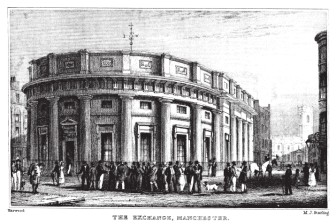
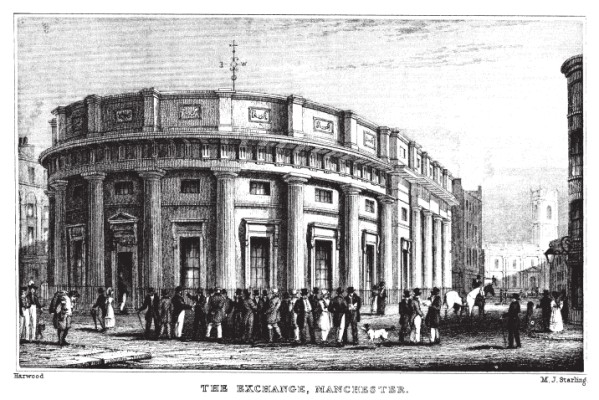
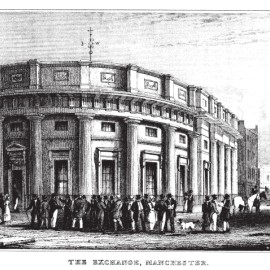
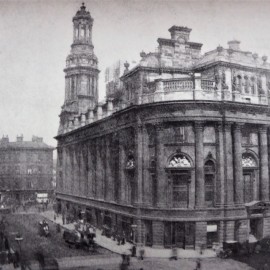
Marked on the map is the Manchester Royal Exchange. The first exchange (pictured) was built on this site in 1809, where Ydlibi and the other Manchester Arab cotton traders made their deals. Queen Victoria granted the exchange its royal charter in 1851. At its peak, 11,000 licensed cotton traders would come to the Exchange to conduct their business on Tuesdays and Fridays. In its heyday as "King Cotton", Manchester was also known as the Cottonopolis. The original Exchange was knocked down and the expanded, current building (see second picture, dated 1891) was constructed between 1867 and 1874.
Ancestry.co.uk (subscription only)
Britishnewspaperarchive.co.uk (subscription only)
F. Halliday, "The Millet of Manchester", British Journal of Middle Eastern Studies, 19/2, 1992, 159-176.
N. Longmate, The Hungry Mills (London: Temple Smith, 1978).
R. Macnamara, "From Arab Millet to British Islam: Syrian Muslims in Victorian Manchester", forthcoming
Spotted an issue Report this record
Loading please wait