Key
- Building
- Blue plaque
- People
- Walks / Tours / Trails
- Museum and Archive
- Heritage Project
- Organisation or Family History
- Cemeteries & graves
- Academia
- Publication and Articles
- Place
- Digital Resources
- Art & Culture
- Film and TV
- Mosques and Shrines
- Monuments /Memorials
As you move and zoom the map this panel will show you all the records that are currently in view on the map.
-Lord-Mayor-Liverpool,-MQRWU-President-and-founder-of-Liverpool-FC-thumb.jpg)
-(1)-thumb.jpg)

-thumb.jpg)

-thumb.jpg)





-thumb.jpg)

-(1)-thumb.jpg)












-thumb.jpg)


























1878
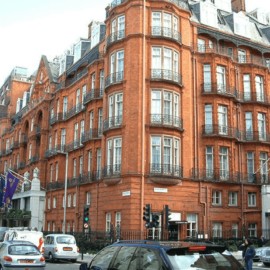
Caxton Hall
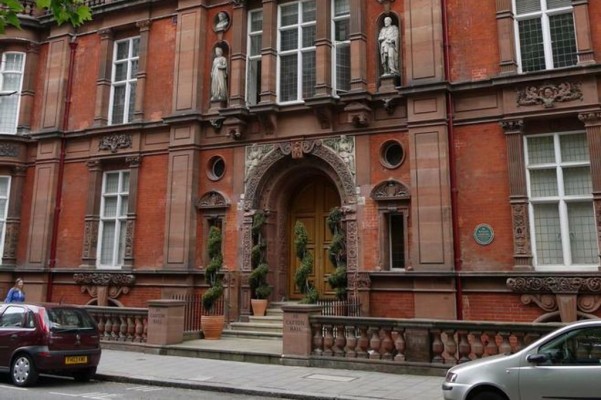
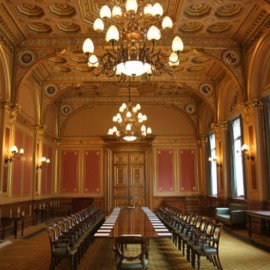
Caxton Hall is a location in which many momentous events occurred, including the assassination of Sir Michael O'Dwyer, the campaign for women's suffrage, and the inaugural meeting of the Muslim League party. Some of the first Jummah prayers were organised at Caxton Hall in 1908 by the actor and writer Duse Mohamed Ali.
Caxton Hall was the location of meetings of the British Cabinet Mission, which had been sent to India to find a solution to the political crises. The meetings were held between May and June 1946 and were important in negotiations between the Indian National Congress and Muslim League. The failure of the Cabinet Mission Plan led to the creation of two separate nations.
Indian Revolutionary Udham Singh assassinated the former Lieutenant Governor of Punjab in Caxton Hall to avenge the Jallianwala Bagh Massacre. When arrested, he said that he’d only meant to protest, not to kill anyone. ‘I just shot to make protest. I have seen people starving In India under British Imperialism. I done it, the pistol went off three or four times. I am not sorry for protesting.’
Singh was tried and convicted of murder and hanged in July 1940. Interestingly, while in custody, he adopted the name “Ram Muhammad Singh Azad” and signed many letters with this name. This title combines a Hindu, Muslim and Sikh name and ends with the Indian word for Freedom (Azad). The adoption of this name in itself was a powerful symbol of religious unity in opposition to British Rule. It depicts the shared struggles of Indians, regardless of religion and creed, against the British. This alias also depicts his deep anti-colonial sentiments and his desire to free India from imperialism.
The Times of London called him a "fighter for freedom", his actions "an expression of the pent-up fury of the downtrodden Indian people."

Collections this record belongs to
Sources and Attribution
Article by Mazna Khan
https://www.everydaymuslim.org/projects/remembering-partition/
Licensing
Spotted an issue Report this record