
Key
- Building
- Blue plaque
- People
- Walks / Tours / Trails
- Museum and Archive
- Heritage Project
- Organisation or Family History
- Cemeteries & graves
- Academia
- Publication and Articles
- Place
- Digital Resources
- Art & Culture
- Film and TV
- Mosques and Shrines
- Monuments /Memorials
As you move and zoom the map this panel will show you all the records that are currently in view on the map.






-Lord-Mayor-Liverpool,-MQRWU-President-and-founder-of-Liverpool-FC-thumb.jpg)


-(1)-thumb.jpg)










-thumb.jpg)



-thumb.jpg)
























-thumb.jpg)




-(1)-thumb.jpg)



































-thumb.jpg)










































1377
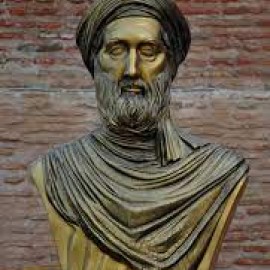
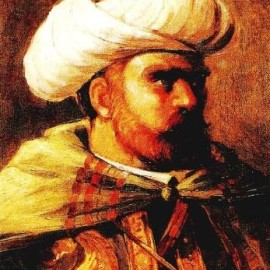
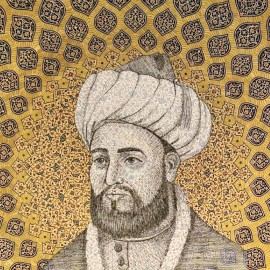
Ibn Khaldun (1332-1406)
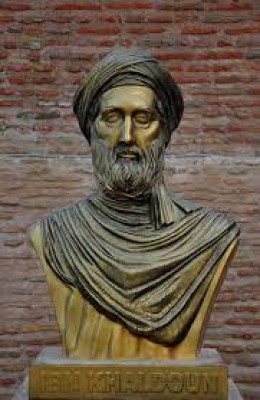

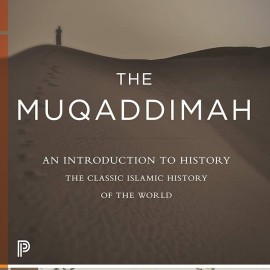
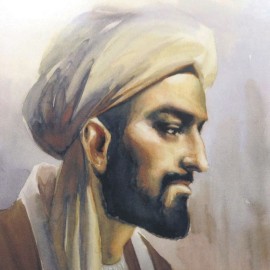
Abd Ar Rahman bin Muhammed ibn Khaldun (1332 – 1406) is considered the Muslim father of Sociology. His contributions to the Social Sciences prove to be significant through his many pieces of work, his most famous being The Muqaddimah, an introduction to history, in 1377. It depicts the Islamic history of the world and presents Ibn Khaldun’s main philosophy on social cohesion. The text seeks an explanation rather than solely describing events, and, in doing so, Khaldun discovers a pattern in the changes that occur in man’s political and social organisation. Khaldun discusses the concept of ‘asabiyyah’, meaning solidarity, in that society can flourish if they share a common ‘group feeling.’ Human beings need to cooperate, that is, live in a society where they share permanent relationships with each other through a division of labour. The neologism 'asabiyyah' permeates through Khaldun's work, and acts as a thread which ties his theories together scientifically.
The Muqaddimah is one of the first pieces of empirical research, where Khaldun used history as a form of data collection, excising myth and rumour. His theories are discussed through rational and scientific means, thus he is said to be the first scholar to take such an empirical approach. In taking a decolonised approach to the Social Sciences, we find that Muslim academics like Ibn Khaldun have been at the forefront of providing academic insights from the 14th century, significantly earlier than the Western academics we typically associate such insights with. While credit has been given to scholars like Vico (1668-1744) and Montesquieu (1689-1755), Italian and French respectively, we understand that Khaldun was the first scholar to study history like the sciences, using observation, criticism, comparison and research.
Khaldun discussed many areas which remain of interest to academics today, including his theory on social conflict, nomadic versus sedentary lifestyles, and his description of political economy. His work remains valuable today in understanding social cohesion, as he discussed that “civilization and its well-being, as well as business prosperity, depend on productivity and people’s efforts in all directions in their own interest and profit”. He remains a paradigm in understanding the wide scope of the Social Sciences, both its past and future.
Sources and Attribution
Ibn Khaldun [F. Rosenthal] (2015) The Muqaddimah: An Introduction to History. Princeton: Princeton University Press
https://philosophynow.org/issues/50/Ibn_Khaldun_and_the_Philosophy_of_History
Licensing
Spotted an issue Report this record