Key
- Building
- Blue plaque
- People
- Walks / Tours / Trails
- Museum and Archive
- Heritage Project
- Organisation or Family History
- Cemeteries & graves
- Academia
- Publication and Articles
- Place
- Digital Resources
- Art & Culture
- Film and TV
- Mosques and Shrines
- Monuments /Memorials
As you move and zoom the map this panel will show you all the records that are currently in view on the map.
-Lord-Mayor-Liverpool,-MQRWU-President-and-founder-of-Liverpool-FC-thumb.jpg)
-(1)-thumb.jpg)
-thumb.jpg)


-thumb.jpg)


-thumb.jpg)
-(1)-thumb.jpg)





-thumb.jpg)














1600
Empire and Partition - Remembering Partition
The Empire and Partition Collection and Trail were created for Everyday Muslim's Remembering Partition project to raise awareness of the historical connections between Britain and the Indian subcontinent. It is a collection of essays written by academics and historians to tell the shared history of the British Empire in India and the partition of India in 1947.
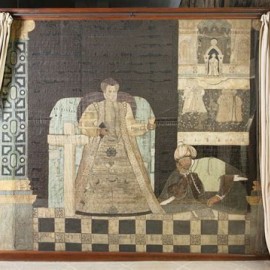
The collection tells this story starting in 1600 when Queen Elizabeth I granted a charter on December 31, 1600, forming the East India Company (EIC). The company traded spices, textiles, and goods in India, gaining influence through territorial and tax control and even a private army.
Over time, the EIC became a ruling power in parts of India, exploiting India's resources, committing atrocities against Indian civilians and employing a "divide-and-rule" strategy, which created tension between ethnic and religious groups. Following the Indian Uprising of 1857, the British government took control of India from the company, turning it into a British colony.
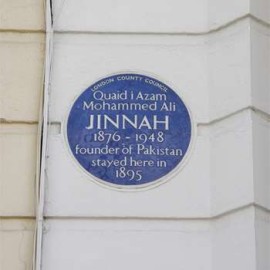
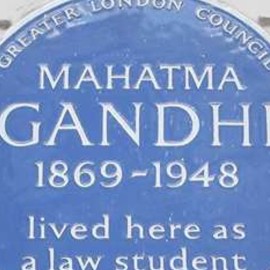
By the mid-1900s, the movement for Indian independence grew stronger and was led by figures such as Mohandas Karamchand Gandhi, Jawaharlal Nehru and Muhammad Ali Jinnah. However, there were significant disagreements about the outcome of Indian independence. Jinnah wanted to secure rights for Muslims and, by 1940, demanded a separate nation for India’s Muslims, whilst Gandhi supported a united India. The British government eventually agreed to grant India its freedom and, later, accepted Jinnah’s demands.
On 15th August 1947, India gained independence, and the country was split into two separate nations: Hindu-majority India and Muslim-majority East and West Pakistan. Pakistan gained its independence a day earlier, on 14th August 1947.
Lord Louis Mountbatten- the last Viceroy of India- played a crucial role in overseeing the country's independence. Sir Cyril Radcliffe was appointed to draw a border between India and Pakistan; the contentious boundary is known as the ‘Radcliffe Line’. Later in 1971, East Pakistan declared its Independence from West Pakistan, and Bangladesh was born. The partition of India was hasty, resulting in the largest mass migration in history, communal violence, the tragic loss of lives and the displacement of millions of people.
Disclaimer: Views expressed in this content are solely those of the author and do not necessarily represent the opinions or beliefs of any organisation involved in the Remembering Partition project.

Collections this record belongs to
Sources and Attribution
https://www.everydaymuslim.org/projects/remembering-partition/
Licensing
Spotted an issue Report this record