
Key
- Building
- Blue plaque
- People
- Walks / Tours / Trails
- Museum and Archive
- Heritage Project
- Organisation or Family History
- Cemeteries & graves
- Academia
- Publication and Articles
- Place
- Digital Resources
- Art & Culture
- Film and TV
- Mosques and Shrines
- Monuments /Memorials
As you move and zoom the map this panel will show you all the records that are currently in view on the map.








-Lord-Mayor-Liverpool,-MQRWU-President-and-founder-of-Liverpool-FC-thumb.jpg)




-(1)-thumb.jpg)









-thumb.jpg)



-thumb.jpg)
























-thumb.jpg)




-(1)-thumb.jpg)







































-thumb.jpg)











































1100
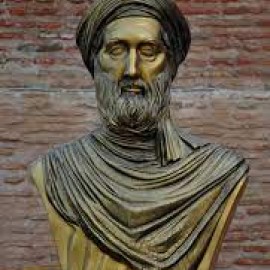
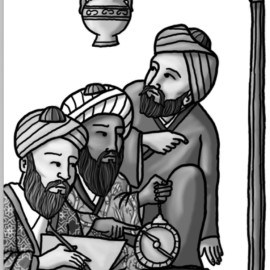
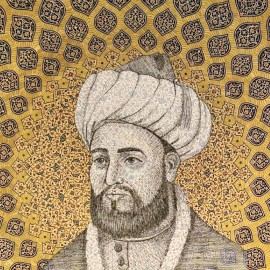
Imam Al-Ghazali
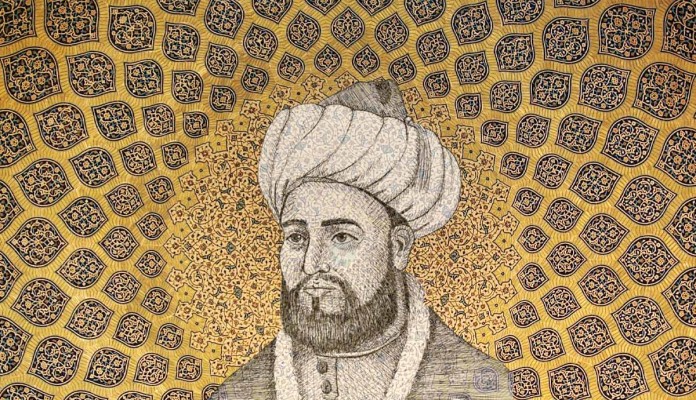

Imam al-Ghazali (1057-1111), honoured with the title of "Hujjatul Islam" or "Proof of Islam," was a renowned Islamic scholar and theologian. He made significant contributions to Islamic philosophy, offering a profound understanding of rationality and spirituality and how the two align. He adhered to an Islamic foundation, believing in tawhid (monotheism), the Prophethood of Muhammad (peace be upon him) and the resurrection on the Last Day. His argument centres on the integration of faith, intention and self-discipline as key components towards a meaningful life, focusing on the mind-body connection. He explores the self through the belief in monotheism and Allah's divinity, and how this is translated towards actionable steps.
His most famous work, Ihya Ulum al-Din (The Revival of the Religious Sciences), is considered one of the most influential works in Islamic scholarship. It provides a comprehensive guide to Islamic spirituality and practices. Al-Ghazali's deeply reflective and practical approach on guiding Muslims towards living a balanced life centred around Allah, uses Quranic verses and Hadiths to profoundly shape how Muslims can integrate outward practice and inner spirituality. Al-Ghazali's scholarship powerfully encapsulates the essence of sabr (patience) and shukr (gratitude), offering the conception of patience and trust in Allah as means of achieving true spirituality and well-being.
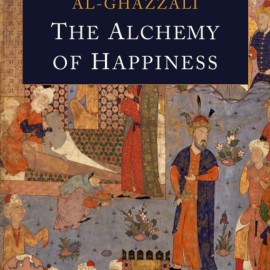
In The Alchemy of Happiness, Al-Ghazali encapsulates the idea that happiness is necessarily linked with the knowledge of God. This includes knowledge of this world and the afterlife, which ensures a believer remains accountable to themselves, such that they live a life centred around the pursuit of Jannah. Understanding that the purpose of this world is to prepare for the next helps Muslims to achieve inner peace and fulfilment, rooted in divine closeness and submission to Allah’s will and plan. As such, Al-Ghazali's works serve as a practical guidebook on attaining spiritual fulfilment and moral excellence by integrating faith, knowledge, and action.
Al-Ghazali's discourse transcends theory to a practical applicability to many domains, including therapeutic practices. Despite their historical roots in the early 12th century, Al-Ghazali's theories remain profoundly relevant for contemporary psychotherapy, offering a holistic approach that considers spirituality as a significant factor in shaping self-efficacy and well-being. This approach is not one that is appreciated enough in modern therapeutic contexts; nevertheless, his work endures relevance as it offers understandings beyond that of modern Psychology.
Related links
Sources and Attribution
Al-Ghazali, Iḥyāʾ ʿulūm al-dīn - https://www.ghazali.org/rrs-ovr/
Al-Ghazali, The Alchemy of Happiness - https://data.nur.nu/Kutub/English/Ghazali_Alchemy-of-Happiness.pdf
Licensing
Spotted an issue Report this record