Key
- Building
- Blue plaque
- People
- Walks / Tours / Trails
- Museum and Archive
- Heritage Project
- Organisation or Family History
- Cemeteries & graves
- Academia
- Publication and Articles
- Place
- Digital Resources
- Art & Culture
- Film and TV
- Mosques and Shrines
- Monuments /Memorials
As you move and zoom the map this panel will show you all the records that are currently in view on the map.

-Lord-Mayor-Liverpool,-MQRWU-President-and-founder-of-Liverpool-FC-thumb.jpg)
-(1)-thumb.jpg)



-thumb.jpg)


-thumb.jpg)




-thumb.jpg)


-(1)-thumb.jpg)



















-thumb.jpg)
























1895
Liverpool Magistrates Court or Police Court
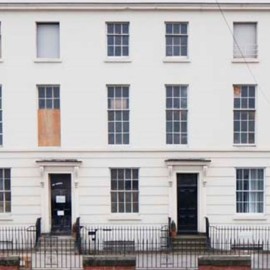
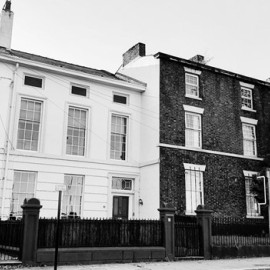
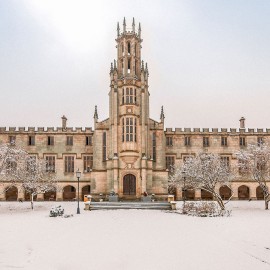
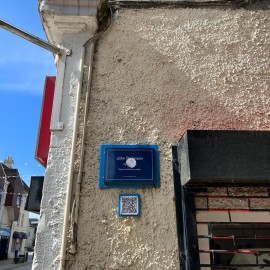
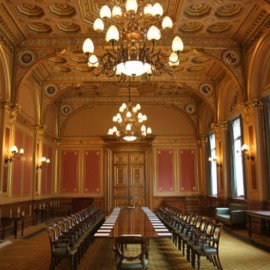
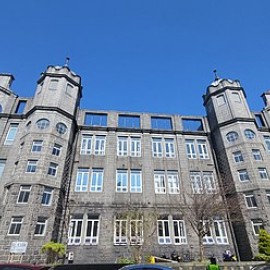
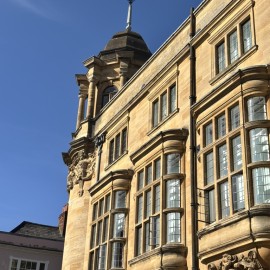
The Magistrates Courts (formerly known as the Police Courts) where the Muslim convert and solicitor William Henry Abdullah Quilliam (1856-1932) defended many of his cases on a weekly basis. (The Offices of Quilliam & Son nearby in Manchester Street no longer survive, see separate entry on Quilliam and Sons). Built in 1859, the Grade II listed building was used actively as a magistrate's court until 2015, but now stands disused.
As Ron Geaves writes, Quilliam took a number of high profile murder cases. He defended Dr Tomanzes, the black doctor tried at the Chester Assizes and won the case. He lost the defence of Bhagwan Jassawari, a Hindu sailor who murdered a captain and his wife at sea, but he successfully manage to argued for the commutation of the death sentence for life with penal servitude. He used his legal practice to argue against the death penalty and said that he only ever lost one man to the hangman. HIs most famous case was that of the dynamitards, Burton and Cunningham, tried at the Old Bailey for being involved in a conspiracy to cause simultaneous bomb explosions throughout England and Scotland in 1895. The two men supported the Irish independence cause and the case created national panic. Before they were caught, the country had been put on alert. Quilliam was approached late one night by a large American man who asked him to defend the two men, and when Quilliam stated his fee gave him cash on the spot. During the high profile trial in London, Quillam was guarded night and day by both Fenians and Government officials. One night on his way to Euston Station, Quilliam and his Fenian bodyguard were arrested on suspicion of terrorism. His small black legal case had aroused the suspicion of the police. Taken to Bridewell Police Station, a huge mob gathered outside and called for the two men to be lynched from a lamppost. Quilliam was held for nearly six hours before being released when a detective inspector recognised him as the defending lawyer in the dynamitards case. Abdurahman Abouhawas also provides a detailed account of Quilliam's legal cases that he undertook in his first decade or so as a lawyer after he was articled in 1878, see below for references to a couple of online articles.
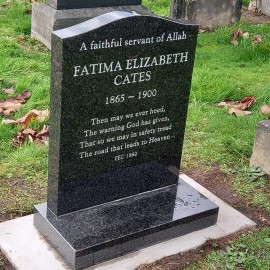
It was also at this court in December 1891 that Fatima Cates with her sister Clara reported the assault upon her by her husband Hubert Henry Cates (see entry on 2 Marmaduke Street to read more).

Collections this record belongs to
Sources and Attribution
A. Abouhawas, “The Extraordinary Life of Abdullah Quilliam: Part 1, 1856‒1885”, Muslim Vibe, 14 Sep 2019, https://themuslimvibe.com/faith-islam/in-history/the-life-of-abdullah-quilliam-one-of-britains-most-famous-converts-to-islam.
A. Abouhawas, “The Extraordinary Life of Abdullah Quilliam: Part 2, 1885‒1889”, Muslim Vibe, 15 Oct 2019, https://themuslimvibe.com/faith-islam/in-history/the-extraordinary-life-of-abdullah-quilliam-part-2-1885-1889.
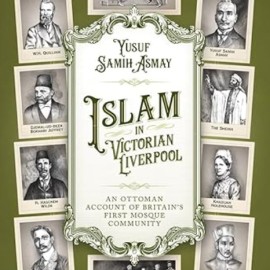
R. Geaves, Islam in Victorian Liverpool (Markfield: Kube, 2010).
H. Mahmood and Y. Birt, Our Fatima of Liverpool (Oldham: Beacon Books, 2023).
Licensing
Spotted an issue Report this record